
Synonyms for perfume can instantly transform how you describe scents in your daily writing and casual conversations.
Imagine walking past a bakery and smelling fresh vanilla, or catching a trail of jasmine on a spring afternoon.
Using the same word every single time makes your descriptions feel flat, repetitive, and dull to readers.
Swapping basic words with rich alternatives helps students, bloggers, writers, and daily English speakers express sensory details.
What Does “Perfume” Really Mean?
The word perfume refers to a sweet-smelling liquid made from essential oils and alcohol used to give a pleasant odor to the body or air. Native speakers understand it as a personal grooming product, a sensory experience, or a distinct aroma that lingers in a space.
It carries a deeply personal and often romantic emotional tone, conveying cleanliness, luxury, attraction, and self-care. You will commonly find it in fashion articles, beauty marketing, daily conversations, and literary descriptions.
- Part of Speech: Noun (also used as a verb)
- Definition: A fragrant liquid typically made from oils extracted from flowers and spices, used to impart a pleasant scent to the body.
Connotative Meaning
(Connotation is the emotional or cultural association attached to a word beyond its literal definition.)
- Positive tone: Evokes feelings of elegance, cleanliness, luxury, memories, and personal charm.
- Negative tone: Can imply overpowering smells, artificial chemical odors, or sensory overload when overapplied.
- Neutral tone: Refers objectively to a manufactured aromatic product or liquid cosmetic.
Etymology
The word originates from the Latin phrase per fumum, which literally translates to “through smoke,” referring to traditional incense burning.
- Old English (450–1100): The concept existed mainly as natural resins and incense burned during religious rituals.
- Middle English (1100–1500): Borrowed from Middle French parfum, as fragrant oils became popular among nobility.
- Modern English (1500–Present): Adapted to its current form, describing liquid sprays, fine fragrances, and cosmetic scent extracts.
Pronunciation
- US: /ˈpɜːr.fjuːm/
- UK: /ˈpɜː.fjuːm/
Syllables
per-fume
Root & Affixation Pattern
- Root: Fum (Latin fumus, meaning smoke)
- Prefix: Per- (Latin, meaning through or thoroughly)
- Suffix: None
Synonyms List
Fragrance (Noun) — US: /ˈfreɪ.ɡrəns/ | UK: /ˈfreɪ.ɡrəns/
- Meaning: A sweet or pleasant smell produced by a perfume, plant, or flower.
- Tone/Register: Formal / General
- Example: She sprayed a subtle floral fragrance before leaving for the evening dinner.
- Example: The flower shop was filled with a refreshing lavender fragrance.
Scent (Noun) — US: /sent/ | UK: /sent/
- Meaning: A distinctive smell, especially one that is pleasant or characteristic of something.
- Tone/Register: Neutral / Conversational
- Example: He recognized the familiar scent of woodsmoke in the crisp autumn air.
- Example: This soap leaves a soft citrus scent on your hands after washing.
Aroma (Noun) — US: /əˈroʊ.mə/ | UK: /əˈrəʊ.mə/
- Meaning: A distinctive, typically pleasant smell coming from food, spices, or hot drinks.
- Tone/Register: Warm / Informal
- Example: The rich aroma of freshly brewed coffee drifted through the cozy kitchen.
- Example: Spices were roasted in the pan, filling the room with a warm aroma.
Redolence (Noun) — US: /ˈred.əl.əns/ | UK: /ˈred.əl.əns/
- Meaning: A fragrant quality or scent that strongly recalls a specific memory or setting.
- Tone/Register: Literary / Academic
- Example: The redolence of old paper and leather bindings filled the historic library.
- Example: Summer rain on hot pavement brought a nostalgic redolence to her mind.
Cologne (Noun) — US: /kəˈloʊn/ | UK: /kəˈləʊn/
- Meaning: A lightly scented liquid cosmetic containing less concentrated aromatic oils, often marketed for men.
- Tone/Register: Daily / Business
- Example: He applied two sprays of classic citrus cologne before his job interview.
- Example: The bathroom counter held three different bottles of expensive male cologne.
Odor (Noun) — US: /ˈoʊ.dɚ/ | UK: /ˈəʊ.də/
- Meaning: A scent or smell of any kind, though modern usage often leans slightly negative.
- Tone/Register: Technical / Neutral
- Example: The scientist tested the gas sample for any unusual chemical odor.
- Example: Baking soda helps absorb lingering odor inside the sealed refrigerator.
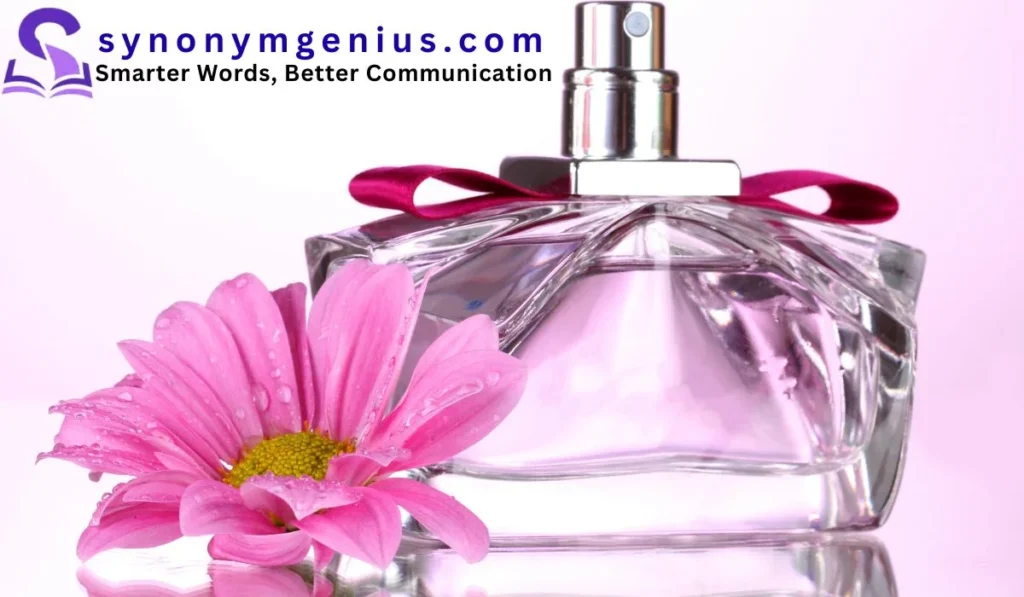
Eau de Toilette (Noun) — US: /ˌoʊ də twɑːˈlet/ | UK: /ˌəʊ də twɑːˈlet/
- Meaning: A lightly scented liquid used after bathing, weaker than concentrated perfume.
- Tone/Register: Formal / Commercial
- Example: She prefers a light eau de toilette during warm summer afternoons.
- Example: This store sells luxury eau de toilette options at accessible prices.
Eau de Parfum (Noun) — US: /ˌoʊ də pɑːˈfæk/ | UK: /ˌəʊ də pɑːˈfɜːm/
- Meaning: A scented liquid containing a higher concentration of aromatic oils than eau de toilette.
- Tone/Register: Professional / Luxury
- Example: Her preferred eau de parfum lasts for over twelve hours on woven fabrics.
- Example: He bought an expensive eau de parfum as an anniversary gift.
Parfum (Noun) — US: /pɑːˈfjuːm/ | UK: /pɑːˈfɜːm/
- Meaning: The most concentrated and long-lasting form of commercial fragrance available.
- Tone/Register: High-end / Formal
- Example: Only a single drop of pure parfum is needed for a lasting effect.
- Example: The boutique specializes in rare French parfum crafted by hand.
Essence (Noun) — US: /ˈes.əns/ | UK: /ˈes.əns/
- Meaning: A concentrated liquid extract that carries the pure smell of a plant or fruit.
- Tone/Register: Academic / Creative
- Example: Natural rose essence is extracted through steam distillation of fresh petals.
- Example: The room spray contained pure lavender essence for better sleep quality.
Attar (Noun) — US: /ˈæt.ɑːr/ | UK: /ˈæt.ɑː/
- Meaning: A natural essential oil derived from botanical sources, traditionally alcohol-free.
- Tone/Register: Cultural / Traditional
- Example: My grandfather always imported authentic sandalwood attar from southern India.
- Example: She collected small crystal bottles filled with herbal jasmine attar.
Incense (Noun) — US: /ˈɪn.sens/ | UK: /ˈɪn.sens/
- Meaning: A gum, spice, or substance burned to produce a sweet-smelling smoke.
- Tone/Register: Traditional / Spiritual
- Example: Soft clouds of incense filled the temple sanctuary during morning prayers.
- Example: He burned sandalwood incense to create a relaxing home atmosphere.
Bouquet (Noun) — US: /boʊˈkeɪ/ | UK: /buˈkeɪ/
- Meaning: A complex combination of scents, particularly associated with wine or floral blends.
- Tone/Register: Sophisticated / Literary
- Example: The vintage wine released a rich bouquet of oak and ripe blackberries.
- Example: She appreciated the floral bouquet lingering in the high-end boutique.
Balm (Noun) — US: /bɑːm/ | UK: /bɑːm/
- Meaning: A fragrant ointment or aromatic resin harvested from trees for soothing scents.
- Tone/Register: Literary / Historical
- Example: The ancient herbalist applied a fragrant pine balm to soothe tired muscles.
- Example: Trees along the mountain trail released a natural, aromatic balsam balm.
Musk (Noun) — US: /mʌsk/ | UK: /mʌsk/
- Meaning: A heavy, warm, and earthy base note scent commonly used in fine perfumery.
- Tone/Register: Neutral / Descriptive
- Example: The heavy musk scent gave the winter cologne a warm, comforting tone.
- Example: Synthetic musk is widely used in modern perfumery to replace animal sources.
Perfumery (Noun) — US: /pɚˈfjuː.mɚ.i/ | UK: /pəˈfjuː.mər.i/
- Meaning: The art, business, or process of making and blending scented products.
- Tone/Register: Professional / Industry
- Example: France has been a world leader in fine perfumery for centuries.
- Example: She studied the delicate chemical balance required for modern perfumery.
Extract (Noun) — US: /ˈek.strækt/ | UK: /ˈek.strækt/
- Meaning: A concentrated preparation obtained by dissolving active floral or plant aromatics.
- Tone/Register: Technical / Practical
- Example: Pure vanilla extract gives the bakery its delicious, sweet background scent.
- Example: The formula uses plant extract ingredients to avoid harsh chemicals.
Sweetness (Noun) — US: /ˈswiːt.nəs/ | UK: /ˈswiːt.nəs/
- Meaning: The pleasant, sugary quality of a smell or aromatic compound.
- Tone/Register: Informal / Expressive
- Example: The natural sweetness of ripe peaches floated across the summer porch.
- Example: I love the gentle honey sweetness of apple blossoms in spring.
Spirit (Noun) — US: /ˈspɪr.ɪt/ | UK: /ˈspɪr.ɪt/
- Meaning: A volatile liquid extract or tincture carrying an aromatic note.
- Tone/Register: Historical / Technical
- Example: The apothecary combined spirits of camphor and lavender for the tonic.
- Example: Old remedy formulas relied heavily on aromatic herbal spirits.
Vapor (Noun) — US: /ˈveɪ.pɚ/ | UK: /ˈveɪ.pər/
- Meaning: A diffuse mist or visible cloud carrying a light scent through the air.
- Tone/Register: Scientific / Visual
- Example: A gentle vapor of eucalyptus mist cleared the air in the sauna.
- Example: Thermal steam vents released a mineral vapor high in the mountains.
Atmosphere (Noun) — US: /ˈæt.məs.fɪr/ | UK: /ˈæt.məs.fɪər/
- Meaning: The surrounding ambient smell or aromatic mood created within a space.
- Tone/Register: Descriptive / Literary
- Example: The cozy shop maintained an inviting atmosphere filled with cinnamon spice.
- Example: Fresh sea salt air created a clean coastal atmosphere on the balcony.
Smell (Noun) — US: /smel/ | UK: /smel/
- Meaning: The general property of a thing that can be perceived by the olfactory sense.
- Tone/Register: Everyday / Informal
- Example: The fresh smell of clean laundry made the room feel welcoming.
- Example: I love the outdoor smell of fresh green grass after lawn mowing.
Whiff (Noun) — US: /wɪf/ | UK: /wɪf/
- Meaning: A brief, light gust or faint trace of a scent carried on the wind.
- Tone/Register: Casual / Conversational
- Example: I caught a brief whiff of fresh mint as I walked past the garden bed.
- Example: A faint whiff of diesel smoke hung near the busy bus station.
Trail (Noun) — US: /treɪl/ | UK: /treɪl/
- Meaning: The lingering path of scent left behind in the air as someone moves past.
- Tone/Register: Visual / Literary
- Example: She left a delicate trail of vanilla scent as she walked through the hall.
- Example: The dog followed the faint scent trail through the thick pine forest.
Air (Noun) — US: /er/ | UK: /eər/
- Meaning: An ambient, surrounding smell or natural draft present in an environment.
- Tone/Register: Simple / Everyday
- Example: Crisp mountain air greeted the hikers at the top of the steep ridge.
- Example: The night air carried a faint trace of sweet blooming night jasmine.
Breath (Noun) — US: /breθ/ | UK: /breθ/
- Meaning: A slight, barely perceptible breeze or gentle hint of an aromatic smell.
- Tone/Register: Poetic / Literary
- Example: A soft breath of sea wind swept over the quiet sandy beach.
- Example: The morning brought a fresh breath of pine into our campsite tent.
Fragrancy (Noun) — US: /ˈfreɪ.ɡrən.si/ | UK: /ˈfreɪ.ɡrən.si/
- Meaning: An archaic or formal term for the general state of being sweet-smelling.
- Tone/Register: Vintage / Formal
- Example: The garden was renowned throughout the county for its rich summer fragrancy.
- Example: Historic documents described the exceptional fragrancy of royal gardens.
Potpourri (Noun) — US: /ˌpoʊ.pʊˈriː/ | UK: /ˌpəʊ.pʊˈriː/
- Meaning: A mixture of dried, naturally fragrant plant material used to scent rooms.
- Tone/Register: Household / Informal
- Example: A small bowl of wooden potpourri sat atop the hallway entry table.
- Example: She made homemade potpourri using dried orange peels and cloves.
Pomander (Noun) — US: /ˈpɒm.æn.də/ | UK: /ˈpɒm.æn.də/
- Meaning: A ball of mixed aromatic spices used historically for personal scent.
- Tone/Register: Historical / Rare
- Example: Clove-studded orange pomanders hung inside the Victorian bedroom closets.
- Example: She crafted traditional winter pomanders as handmade holiday gifts.
Spice (Noun) — US: /spaɪs/ | UK: /spaɪs/
- Meaning: Pungent, warm, or aromatic notes derived from botanical bark or seeds.
- Tone/Register: Sensory / Descriptive
- Example: The winter cologne carried notes of warm spice and sweet vanilla bean.
- Example: A hint of dark spice added depth to the fresh floral fragrance blend.
Sillage (Noun) — US: /siːˈjɑːʒ/ | UK: /siːˈjɑːʒ/
- Meaning: The scent trail left behind in the air when a perfume wearer moves.
- Tone/Register: Specialized / Industry
- Example: This perfume has an impressive sillage that fills the entire corridor.
- Example: He preferred subtle fragrances with minimal sillage for small office environments.
Note (Noun) — US: /noʊt/ | UK: /nəʊt/
- Meaning: An individual scent layer within a complex perfume composition.
- Tone/Register: Technical / Professional
- Example: Bergamot is a common top note used to open modern citrus fragrances.
- Example: The dry-down revealed a rich woody note under the soft floral layers.
Eau de Cologne (Noun) — US: /ˌoʊ də kəˈloʊn/ | UK: /ˌəʊ də kəˈləʊn/
- Meaning: A light, refreshing scent solution containing roughly 2% to 5% essential oils.
- Tone/Register: Traditional / Formal
- Example: He splashed cool eau de cologne on his face after shaving in the morning.
- Example: European barbershop tradition often relies on classic lemon eau de cologne.
Spray (Noun) — US: /spreɪ/ | UK: /spreɪ/
- Meaning: A liquid mist applied using a fine atomizer or pressurized dispenser.
- Tone/Register: Daily / Practical
- Example: A quick spray of body mist was all she needed before heading out.
- Example: Keep a travel-sized perfume spray inside your purse for easy touch-ups.
Olfactory (Noun/Adj) — US: /ɑːlˈfæk.tɚ.i/ | UK: /ɒlˈfæk.tər.i/
- Meaning: Relating to or contributing to the physical sense of smell.
- Tone/Register: Academic / Scientific
- Example: The bakery provided an intense olfactory experience for every passing shopper.
- Example: Our olfactory memory often links scents directly to distant childhood moments.
Incantation (Noun) — US: /ˌɪn.kænˈteɪ.ʃən/ | UK: /ˌɪn.kænˈteɪ.ʃən/
- Meaning: Figuratively used to describe a mesmerizing, enchanting aromatic presence.
- Tone/Register: Metaphorical / Creative
- Example: The intoxicating floral mixture felt like an olfactory incantation in the garden.
- Example: Her signature scent held a quiet incantation over everyone in the room.
Nectar (Noun) — US: /ˈnek.tɚ/ | UK: /ˈnek.tər/
- Meaning: A delicious, sweet-smelling fluid produced by flowering plants.
- Tone/Register: Expressive / Literary
- Example: Bees buzzed around the rich floral nectar in the sunny orchard field.
- Example: The perfume smelled like pure fruit nectar squeezed into a glass bottle.
Ointment (Noun) — US: /ˈɔɪnt.mənt/ | UK: /ˈɔɪnt.mənt/
- Meaning: A smooth, oily, aromatic preparation applied directly to human skin.
- Tone/Register: Medical / Historical
- Example: The ancient queen bathed in scented oils and smooth cosmetic ointment.
- Example: Herbal ointment provided a clean lavender smell along with skin soothing.

Pungency (Noun) — US: /ˈpʌdʒ.ən.si/ | UK: /ˈpʌdʒ.ən.si/
- Meaning: A sharp, strong, penetrating smell quality that intensely hits the nose.
- Tone/Register: Analytical / Neutral
- Example: The sharpness and pungency of fresh eucalyptus leaves awakened his senses.
- Example: High spice pungency is a hallmark feature of animal fragrance profiles.
Elixir (Noun) — US: /iˈlɪk.sɚ/ | UK: /ɪˈlɪk.sər/
- Meaning: A highly concentrated, magical, or sweet-smelling liquid blend.
- Tone/Register: Dramatic / Marketing
- Example: The brand marketed its latest scent as a rare, golden night elixir.
- Example: She felt like she was wearing a magical potion or aromatic elixir.
Odorant (Noun) — US: /ˈoʊ.dɚ.ənt/ | UK: /ˈəʊ.dər.ənt/
- Meaning: Any chemical compound added to give a distinct smell to something.
- Tone/Register: Scientific / Industrial
- Example: Safety crews added a strong odorant to the odorless natural gas supply lines.
- Example: Industrial chemists test each odorant sample for safety and stability standards.
Vaporizer (Noun) — US: /ˈveɪ.pɚ.aɪ.zɚ/ | UK: /ˈveɪ.pər.aɪ.zər/
- Meaning: A device or vessel that diffuses fragrant liquids into room air as a mist.
- Tone/Register: Practical / Modern
- Example: An essential oil vaporizer kept the bedroom smelling like fresh pine needles.
- Example: Fill the vaporizer with water and lavender oil to help relax tonight.
Balminess (Noun) — US: /ˈbɑː.mi.nəs/ | UK: /ˈbɑː.mi.nəs/
- Meaning: The mild, pleasantly warm, and fragrant quality of ambient weather or air.
- Tone/Register: Descriptive / Atmospheric
- Example: We enjoyed the soft balminess of the tropical island evening air.
- Example: Spring evenings bring a unique balminess filled with early blossom scents.
Reek (Noun) — US: /riːk/ | UK: /riːk/
- Meaning: An extremely strong, unpleasant smell (used negatively or humorously).
- Tone/Register: Informal / Negative
- Example: The reek of old cheap cologne made everyone want to open a window.
- Example: He stepped away from the kitchen to escape the reek of burned oil.
Stench (Noun) — US: /stentʃ/ | UK: /stentʃ/
- Meaning: A foul, offensive, or repulsive smell that causes discomfort.
- Tone/Register: Strong / Negative
- Example: The garbage bin left a terrible stench in the narrow alleyway behind us.
- Example: Chemical fumes created a harsh stench near the industrial plant factory.
Body Mist (Noun) — US: /ˈbɑː.di mɪst/ | UK: /ˈbɒd.i mɪst/
- Meaning: A very light, diluted fragrance spray intended for casual, all-over body use.
- Tone/Register: Casual / Commercial
- Example: She sprayed a refreshing floral body mist on her skin right after taking a morning shower.
- Example: Body mist is ideal for gym workouts because it feels fresh and never overpowering.
Eau Fraîche (Noun) — US: /ˌoʊ freɪʃ/ | UK: /ˌəʊ freɪʃ/
- Meaning: The lightest category of fragrance solution, containing mostly water and minimal perfume oil.
- Tone/Register: Professional / Luxury
- Example: An eau fraîche provides a subtle burst of scent without lasting too many hours on skin.
- Example: He packed a bottle of citrus eau fraîche for his beach vacation in southern Italy.
Aromatics (Noun) — US: /ˌær.əˈmæt.ɪks/ | UK: /ˌær.əˈmæt.ɪks/
- Meaning: Natural substances, plants, or chemical compounds that release a noticeable fragrance.
- Tone/Register: Technical / Industry
- Example: Herbal aromatics like rosemary and thyme added a wonderful background scent to the room.
- Example: Modern cosmetic brands source organic aromatics directly from lavender farms.
Smitch (Noun) — US: /smɪtʃ/ | UK: /smɪtʃ/
- Meaning: A very small, barely noticeable trace or hint of a scent floating in the air.
- Tone/Register: Informal / Regional
- Example: There was just a smitch of vanilla scent left lingering in the living room after she left.
- Example: A small smitch of woodsmoke drifted over the backyard from our neighbor’s outdoor fireplace.
Perfume Water (Noun) — US: /ˈpɜːr.fjuːm ˈwɑː.t̬ɚ/ | UK: /ˈpɜː.fjuːm ˈwɔː.tər/
- Meaning: A literal translation of “eau de parfum,” describing a scented water preparation for daily wear.
- Tone/Register: Descriptive / General
- Example: Traditional rose perfume water is a simple cosmetic used for skin freshening across Mediterranean regions.
- Example: She bottled homemade flower-steeped perfume water to gift to her closest friends.
Synonyms by Tone
Positive
- Fragrance: Warm, inviting, and associated with beauty.
- Redolence: Evokes pleasant, nostalgic memories.
- Elixir: Sounds luxurious, high-end, and special.
- Bouquet: Conveys sophistication and floral richness.
Neutral
- Scent: Objective, clean, and versatile in any context.
- Note: Professional and technical in perfumery terms.
- Aroma: Neutral, though heavily associated with food and drink.
- Extract: Plainly describes a concentrated ingredient.
Negative
- Reek: Strong, offensive, or overpowering smell.
- Stench: Unpleasant, repulsive, and highly negative.
- Odor: Can sound clinical, stale, or undesirable.
Playful/Informal
- Whiff: Light, casual, and fleeting sensory observation.
- Spray: Simple everyday action word for quick application.
Understanding tone matters because using “stench” when you mean “fragrance” completely changes your sentence meaning!
Perfume vs. Fragrance vs. Scent
| Term | Concentration / Core Focus | Tone & Context | Best Used For |
| Perfume | Highest oil concentration (20-30%) | Luxurious, personal grooming | High-end personal scents |
| Fragrance | Broad umbrella term for sweet smells | Professional, polite, versatile | Industry products, cosmetics |
| Scent | General characteristic odor | Casual, universal, neutral | Natural smells, nature, everyday |
- When to use Perfume: Use when referring specifically to fine, concentrated liquid cosmetics applied to skin.
- When to use Fragrance: Use in professional writing, marketing, or general discussions about beauty products.
- When to use Scent: Use when describing natural smells like rain, pine forests, or subtle background odors.
How “Perfume” Changes by Context
Daily Conversation
In daily chat, people favor short, accessible words like scent or smell. Saying “I love your perfume” or “I catch a whiff of mint” sounds entirely natural and friendly.
Writing or Blogging
Bloggers often prefer descriptive terms like fragrance, notes, or sillage. These words add richness to product reviews, style guides, and beauty articles.
Professional or Academic Tone
In professional fields, use olfactory, concentrate, or odorant. These words maintain a neutral, objective, and precise analytical standard.
Creative or Informal Use
Poets and novelists use evocative terms like redolence, elixir, or bouquet to paint vivid imagery and evoke emotions in readers.
Common Mistakes & Native Usage
Misuse Scenarios
- Using “Aroma” for Beauty Products: Native speakers rarely say “your perfume has a great aroma.” Aroma is usually reserved for food, coffee, or spices.
- Confusing “Sillage” with “Scent”: Sillage refers specifically to the trail left behind, not the scent itself.
Overuse Warnings
Avoid repeating “perfume” three times in one paragraph. Rotate between fragrance, scent, and signature smell to keep your writing fluid and engaging.
Interested in polishing your writing structure? Check out our detailed vocabulary guides to master descriptive English words quickly!
Real-Life Mini Scenarios
- Workplace: “Her subtle citrus fragrance made the morning meeting feel fresh without overwhelming the small conference room.”
- Social Situations: “He caught a brief whiff of floral notes as his friend waved hello.”
- Media / Pop Culture: “Beauty magazines reviewed the new designer eau de parfum as the scent of the season.”
- Writing / Storytelling: “The ancient library retained a rich redolence of dried leather, oak, and old ink.”
Interactive Practice Quiz
- Which synonym best describes the smell of fresh coffee brewing in the morning?
A) Stench
B) Aroma
C) Perfume
D) Reek - If you are writing a technical beauty review, which word best describes a scent trail?
A) Whiff
B) Air
C) Sillage
D) Vapor - Which word carries a strong negative tone?
A) Redolence
B) Fragrance
C) Stench
D) Bouquet - Choose the best formal word to describe a perfume’s individual layer notes:
A) Whiff
B) Note
C) Reek
D) Breath - “A faint ________ of lavender blew through the window.”
A) Stench
B) Whiff
C) Odorant
D) Ointment - Which term indicates the highest concentration of perfume oil?
A) Eau de Toilette
B) Eau de Cologne
C) Parfum
D) Body Spray - Which word is best suited for food and spice smells?
A) Bouquet
B) Redolence
C) Aroma
D) Sillage - “The burning wood produced a soothing cloud of ________.”
A) Incense
B) Pomander
C) Eau de Parfum
D) Odorant - What is the original Latin meaning of the root behind perfume (per fumum)?
A) Through water
B) Through smoke
C) From flowers
D) Sweet liquid - Which word fits best in high-end literary descriptive writing?
A) Reek
B) Redolence
C) Smell
D) Odor
Short Reflection Task: Write 1 original sentence describing your favorite morning smell using any positive synonym from this guide.
Answer Key: 1-B, 2-C, 3-C, 4-B, 5-B, 6-C, 7-C, 8-A, 9-B, 10-B

Frequently Asked Questions
1. What is the most common synonym for perfume?
The most common and versatile synonym for perfume is “fragrance.” It works equally well in formal, professional, and casual contexts. “Scent” is another popular daily choice that native English speakers frequently use when talking about personal aromas or natural smells.
2. What is the difference between perfume, cologne, and fragrance?
Perfume contains a high concentration of essential oils, making it long-lasting. Cologne contains a lower oil concentration and feels lighter. Fragrance is an umbrella term encompassing perfumes, colognes, scented sprays, and other aromatic products.
3. How do native speakers describe a good perfume smell?
Native speakers often describe pleasant perfumes using words like “subtle,” “fresh,” “captivating,” “rich,” or “floral.” They frequently talk about individual “notes” or compliment someone by noticing their pleasant “scent trail” or “fragrance.”
4. Why is aroma usually not used for perfume?
Aroma is generally reserved for warm, rich sensory experiences related to food, hot beverages, and spices. While grammatically possible, using “aroma” for personal cosmetic perfumes sounds slightly unnatural to native English speakers.
5. What is the word for the trail a perfume leaves behind?
The precise word for the scent trail left in the air as someone walks by is “sillage” (pronounced see-yahzh). Perfume enthusiasts and industry professionals use this term to describe how far a scent projects around a person.
Conclusion
Expanding your vocabulary with rich synonyms for perfume makes your writing and speech far more colorful, precise, and expressive.
Using precise descriptive words allows you to paint clear sensory pictures that capture your reader’s imagination effortlessly.
When you choose the exact right word for each situation, your confidence in English communication grows naturally every day.
Try picking three new synonyms from this article and using them in your next email, blog post, or casual chat!

Samia Noor is the founder and lead writer at SynonymGenius.com, where she creates accurate, reader-focused English language content that helps people communicate with clarity and confidence. She specializes in synonyms, antonyms, word meanings, idioms, and practical vocabulary guides that make complex language concepts simple and easy to understand. Every article is thoroughly researched, carefully fact-checked, and written in clear, accessible language using reliable sources and real-world examples. Her mission is to provide trustworthy, high-quality content that supports students, writers, educators, professionals, and English learners at every stage of their language journey.
Her editorial approach emphasizes accuracy, transparency, and genuine value for readers while following modern E-E-A-T and content quality standards. She regularly reviews and updates published content to ensure it remains current, reliable, and easy to understand. Through SynonymGenius.com, Samia Noor is committed to publishing dependable language resources that help readers expand their vocabulary, strengthen their writing skills, improve communication, and build confidence in academic, professional, and everyday English.