
A synonym for commonness is an essential search for anyone looking to describe the everyday, the ordinary, or the widespread nature of life.
Imagine telling a story about daily routines where everything feels completely normal, familiar, and predictable to everyone involved.
When you describe these routine moments, repeating the same word over and over can make your writing feel dull and uninspired.
Learning a wide variety of synonyms allows writers to capture subtle differences between public frequency, plain simplicity, and standard features.
What Does “Commonness” Really Mean?
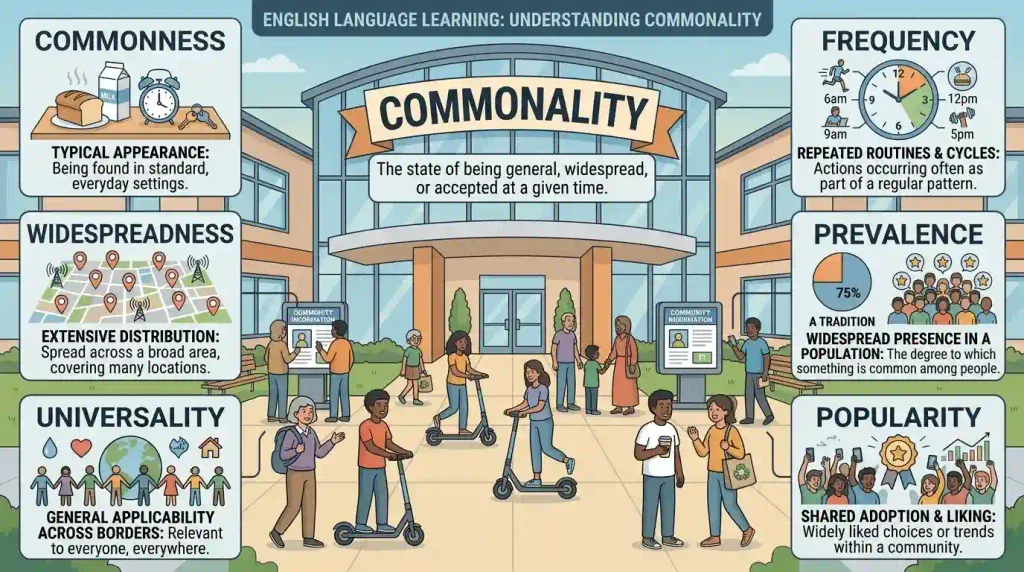
The word commonness refers to the state of being ordinary, widespread, frequent, or shared by many people or things within a group.
Native English speakers use this word when discussing widespread habits, average qualities, public access, or things that lack rarity or exclusivity. You will see it in sociology, literature, statistics, and daily conversation.
- Part of Speech: Noun (Uncountable)
- Definition: The condition or quality of occurring frequently, being ordinary, or lacking special or rare distinction.
Connotative Meaning
(Connotation is the emotional feeling or social association that a word carries beyond its literal dictionary definition.)
- Positive tone: Suggests comfort, familiarity, accessibility, shared unity, and grounded simplicity.
- Negative tone: Implies vulgarity, lack of sophistication, cheapness, or dull mediocrity when used to judge behavior or taste.
- Neutral tone: Refers purely to statistical frequency, prevalence, or standard occurrence without emotional judgment.
Etymology
The word comes from the Old French commun (shared, general) and the Latin communis (shared by all or many), combined with the Germanic noun suffix -ness.
- Old English (450–1100): The root was absent; Old English used terms like gemaennes to express shared or public property.
- Middle English (1100–1500): Middle English adopted comoun, using it to describe public grounds or shared community resources.
- Modern English (1500–Present): The suffix -ness was attached to form commonness, evolving to cover frequency, plainness, and social status.
Syllables & Structure
- Syllables: com-mon-ness (3 syllables)
- Root: common (meaning shared or ordinary)
- Prefix: None
- Suffix: -ness (noun suffix indicating state or quality)
Synonyms List
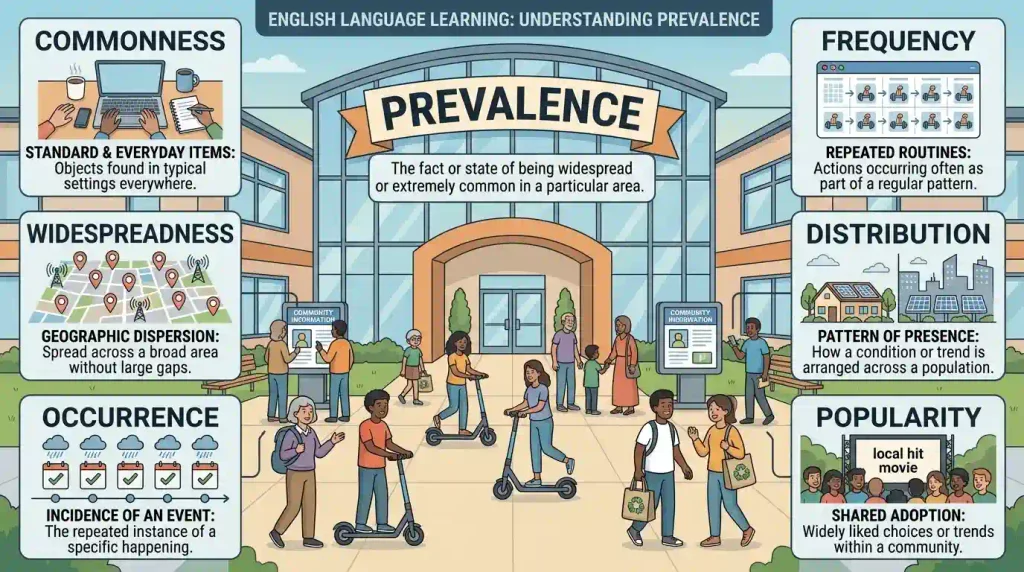
Prevalence (Noun)
- Meaning: The fact or state of being widespread or extremely common in a particular area.
- Tone/Register: Formal, Academic
- Example 1: The prevalence of smartphones has changed daily communication.
- Example 2: Researchers studied the prevalence of the flu this winter.
Frequency (Noun)
- Meaning: The rate at which something occurs or is repeated over a period.
- Tone/Register: Technical, Neutral
- Example 1: The frequency of train delays upset commuters.
- Example 2: We tracked the frequency of website visits.
Universality (Noun)
- Meaning: The quality of existing everywhere or involving all people globally.
- Tone/Register: Formal, Philosophical
- Example 1: Storytelling has a universality that connects all cultures.
- Example 2: The universality of basic human emotions is clear.
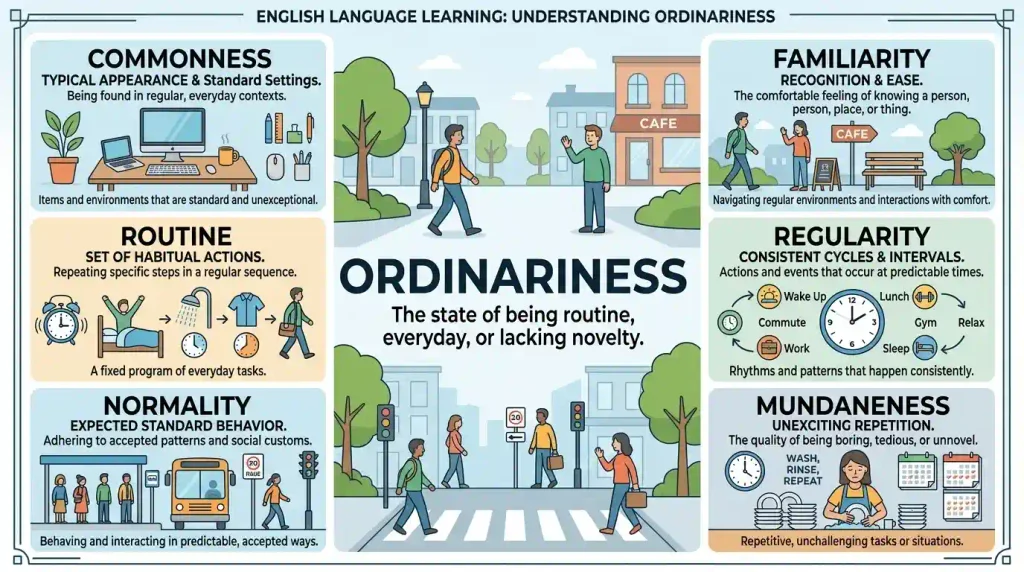
Ordinary Nature (Noun)
- Meaning: The quality of being normal and unexceptional in everyday life.
- Tone/Register: Conversational, Neutral
- Example 1: The ordinary nature of the town gave it peace.
- Example 2: Her strength lies in her ordinary nature.
Ubiquity (Noun)
- Meaning: The state of appearing or being present everywhere at once.
- Tone/Register: Academic, Literary
- Example 1: The ubiquity of coffee shops makes finding caffeine easy.
- Example 2: Digital screens have reached complete ubiquity today.
Regularity (Noun)
- Meaning: The state of happening at constant, predictable time intervals.
- Tone/Register: Professional, Technical
- Example 1: He checks his mail with absolute regularity.
- Example 2: The regularity of the tides helps coastal navigation.
Usualness (Noun)
- Meaning: The state of being customary, expected, or standard.
- Tone/Register: Informal, Descriptive
- Example 1: The usualness of the commute made it boring.
- Example 2: She missed the quiet usualness of home.
Familiarity (Noun)
- Meaning: Close acquaintance with something due to long experience or exposure.
- Tone/Register: Warm, Personal
- Example 1: The familiarity of her voice brought comfort.
- Example 2: Years of work gave him familiarity with the rules.
Routineness (Noun)
- Meaning: The quality of following a fixed, regular pattern of actions.
- Tone/Register: General, Neutral
- Example 1: The routineness of office life suits some workers.
- Example 2: Safety inspections require methodical routineness.
Currency (Noun)
- Meaning: The state of being general, widespread, or accepted at a given time.
- Tone/Register: Professional, Academic
- Example 1: That slang word lost currency ten years ago.
- Example 2: The idea gained currency among young artists.
Popularity (Noun)
- Meaning: The state of being liked, enjoyed, or supported by many people.
- Tone/Register: General, Everyday
- Example 1: The popularity of soccer spans every continent.
- Example 2: High popularity helped the song top the charts.
Generality (Noun)
- Meaning: The quality of applying to all or most items in a group.
- Tone/Register: Academic, Analytical
- Example 1: The generality of the rule makes it easy to apply.
- Example 2: He spoke in broad generality during the lecture.
Typicality (Noun)
- Meaning: The state of having the distinctive qualities of a specific group.
- Tone/Register: Technical, Scientific
- Example 1: The typicality of this symptom makes diagnosis fast.
- Example 2: Researchers verified the typicality of the sample.
Standardness (Noun)
- Meaning: The condition of conforming to established rules, sizes, or norms.
- Tone/Register: Business, Industrial
- Example 1: The standardness of the parts kept repair costs low.
- Example 2: We value standardness in our manufacturing workflow.
Plainness (Noun)
- Meaning: The quality of being simple, unadorned, or unpretentious.
- Tone/Register: Descriptive, Direct
- Example 1: The plainness of his speech made him trustworthy.
- Example 2: She appreciated the plainness of rural design.
Average Quality (Noun)
- Meaning: The state of being middle-grade, standard, or unexceptional.
- Tone/Register: Evaluative, Casual
- Example 1: The food was of average quality but reasonably priced.
- Example 2: Average quality goods suit temporary needs.
Normalcy (Noun)
- Meaning: The condition of being normal, stable, or expected.
- Tone/Register: General, Media
- Example 1: Life returned to normalcy after the storm passed.
- Example 2: Families sought normalcy during tough economic times.
Normality (Noun)
- Meaning: The state of conforming to a standard, regular pattern or expectation.
- Tone/Register: Formal, Technical
- Example 1: Tests showed a return to full health normality.
- Example 2: She longed for the simple normality of weekend trips.
Everydayness (Noun)
- Meaning: The condition of belonging to or occurring in ordinary daily life.
- Tone/Register: Literary, Conversational
- Example 1: The book captures the quiet everydayness of family life.
- Example 2: Art often finds beauty in pure everydayness.
Conventionality (Noun)
- Meaning: Adherence to traditional standards, customs, or social rules.
- Tone/Register: Formal, Critical
- Example 1: The conventionality of the design felt predictable.
- Example 2: He rebelled against the conventionality of his neighborhood.
Mundanity (Noun)
- Meaning: The quality of being dull, routine, or unexcitingly ordinary.
- Tone/Register: Critical, Literary
- Example 1: Escape the mundanity of daily chores with a getaway.
- Example 2: The movie highlighted the quiet mundanity of office jobs.
Vulgarity (Noun)
- Meaning: The state of lacking refinement, taste, or social grace.
- Tone/Register: Pejorative, Formal
- Example 1: Critics disliked the crude vulgarity of the joke.
- Example 2: True elegance avoids any trace of vulgarity.
Coarseness (Noun)
- Meaning: Roughness, lack of delicacy, or unrefined behavior.
- Tone/Register: Critical, Descriptive
- Example 1: The coarseness of his language offended guests.
- Example 2: The fabric had an unpolished coarseness.
Unremarkable Nature (Noun)
- Meaning: The state of being ordinary and not attracting special attention.
- Tone/Register: Neutral, Descriptive
- Example 1: The building’s unremarkable nature helped it blend in.
- Example 2: Despite his unremarkable nature, he was a great leader.
Prosaicness (Noun)
- Meaning: The quality of being matter-of-fact, straightforward, or unromantic.
- Tone/Register: Literary, Formal
- Example 1: The prosaicness of the report bored the board members.
- Example 2: She preferred real-world prosaicness over fantasy stories.
Workaday Nature (Noun)
- Meaning: The practical, routine, and unglamorous character of daily work.
- Tone/Register: Informal, Descriptive
- Example 1: The workaday nature of farming demands constant effort.
- Example 2: He accepted the workaday nature of his trade.
Customariness (Noun)
- Meaning: The state of being established by tradition or common practice.
- Tone/Register: Formal, Legal
- Example 1: The customariness of tipping varies by country.
- Example 2: Local customariness dictates holiday schedules.
Expectedness (Noun)
- Meaning: The state of being anticipated or unsurprising.
- Tone/Register: Analytical, Neutral
- Example 1: The expectedness of the outcome ruined the plot twist.
- Example 2: Predictable expectedness brings financial market calm.
Predictability (Noun)
- Meaning: The state of being easily foretold or consistent over time.
- Tone/Register: General, Analytical
- Example 1: Predictability in flight schedules keeps passengers happy.
- Example 2: He disliked the predictability of romantic comedies.
Uniformity (Noun)
- Meaning: Overall consistency, lack of variation, or identical form across items.
- Tone/Register: Formal, Technical
- Example 1: Wall color uniformity creates a clean office look.
- Example 2: Military units demand strict behavioral uniformity.
Widespread Nature (Noun)
- Meaning: The quality of being distributed across broad geographic areas.
- Tone/Register: Informative, Journalistic
- Example 1: The widespread nature of the trend surprised analysts.
- Example 2: Solar adoption shows a widespread nature today.
Commonplace Nature (Noun)
- Meaning: The state of being routine, everyday, or lacking novelty.
- Tone/Register: General, Descriptive
- Example 1: Mobile banking has a commonplace nature nowadays.
- Example 2: The commonplace nature of errors led to new checks.
Standard Quality (Noun)
- Meaning: A normal, baseline level of performance or material specification.
- Tone/Register: Commercial, Neutral
- Example 1: Basic models offer standard quality for daily tasks.
- Example 2: Standard quality lumber works well for framing.
Homogeneity (Noun)
- Meaning: The state of consisting of parts that are all of the same kind.
- Tone/Register: Scientific, Academic
- Example 1: Neighborhood homogeneity can lead to cultural isolation.
- Example 2: The alloy was refined to total homogeneity.
Lack of Distinction (Noun)
- Meaning: Absence of unique features, excellence, or striking traits.
- Tone/Register: Critical, Evaluative
- Example 1: The town suffered from a general lack of distinction.
- Example 2: His work failed due to a lack of distinction.
Lack of Rarity (Noun)
- Meaning: The state of being abundant and easily found everywhere.
- Tone/Register: Technical, Economic
- Example 1: The lack of rarity keeps quartz prices affordable.
- Example 2: High production caused a lack of rarity for the toy.
Mass Character (Noun)
- Meaning: Being produced for, used by, or representing large populations.
- Tone/Register: Sociological, Formal
- Example 1: Mass character entertainment appeals to broad crowds.
- Example 2: The mass character of modern transit helps cities.
Popular Character (Noun)
- Meaning: The quality of reflecting common taste or widespread public interest.
- Tone/Register: Cultural, General
- Example 1: Folk art maintains its popular character through centuries.
- Example 2: The popular character of the festival drew tourists.
Standard Character (Noun)
- Meaning: The condition of adhering to standard, baseline features.
- Tone/Register: Technical, Corporate
- Example 1: Software options display a standard character across versions.
- Example 2: Standard character design simplifies team training.
Shared Nature (Noun)
- Meaning: The condition of being held, experienced, or owned in common.
- Tone/Register: Warm, Sociological
- Example 1: The shared nature of community gardens brings unity.
- Example 2: Grief has a shared nature that unites people.
Public Access (Noun)
- Meaning: Availability for use or viewing by any member of society.
- Tone/Register: Civic, Administrative
- Example 1: Public access to coastal beaches is protected by law.
- Example 2: Park renovation expanded public access for families.
General Availability (Noun)
- Meaning: The state of being obtainable by the open market or public.
- Tone/Register: Business, Tech
- Example 1: The software reached general availability this morning.
- Example 2: High stock levels guarantee general availability online.
Everyday Character (Noun)
- Meaning: Ordinary qualities suitable for standard daily routines.
- Tone/Register: Casual, Descriptive
- Example 1: Practical clothing has an everyday character.
- Example 2: The room was decorated with an everyday character.
Low Rank (Noun)
- Meaning: Social or organizational standing that is ordinary or non-elite.
- Tone/Register: Social, Historical
- Example 1: Soldiers of low rank faced grueling training shifts.
- Example 2: He rose from low rank to lead the firm.
Cheapness (Noun)
- Meaning: Low cost, poor quality, or lack of value and distinction.
- Tone/Register: Pejorative, Economic
- Example 1: The cheapness of plastic toys causes rapid waste.
- Example 2: Customers complained about the cheapness of the cloth.
Baseness (Noun)
- Meaning: Lack of high moral principles, dignity, or refined taste.
- Tone/Register: Formal, Morally Critical
- Example 1: The villain showed clear baseness in his actions.
- Example 2: Greed often brings out personal baseness.
Unexciting Nature (Noun)
- Meaning: The quality of being plain, calm, and lacking enthusiasm.
- Tone/Register: Informal, Casual
- Example 1: The unexciting nature of accounting suits quiet workers.
- Example 2: Despite its unexciting nature, routine maintains stability.
Plain Character (Noun)
- Meaning: Unpretentious appearance or behavior without extra ornament.
- Tone/Register: Descriptive, Positive
- Example 1: Her plain character won the trust of neighbors.
- Example 2: The building maintained a plain character.
Banality (Noun)
- Meaning: Unoriginality through being cliché, boring, or overused.
- Tone/Register: Critical, Literary
- Example 1: Pop songs often slip into total banality.
- Example 2: The banality of political speeches alienates young voters.
Routine Character (Noun)
- Meaning: Predictable, standard procedure following established rules.
- Tone/Register: Business, Administrative
- Example 1: Daily audits maintain a routine character.
- Example 2: The job has a predictable, routine character.
Familiar Nature (Noun)
- Meaning: Being well known and easy to recognize through experience.
- Tone/Register: Warm, Descriptive
- Example 1: The familiar nature of the street calmed her nerves.
- Example 2: Teachers like the familiar nature of standard books.
General Prevalence (Noun)
- Meaning: Widespread occurrence across large geographic or demographic groups.
- Tone/Register: Scientific, Statistical
- Example 1: Data confirms the general prevalence of wireless internet.
- Example 2: Health reports study the general prevalence of asthma.
Standard State (Noun)
- Meaning: The baseline, normal condition of an object, system, or process.
- Tone/Register: Scientific, Technical
- Example 1: The room returned to its standard state after testing.
- Example 2: Keep system components in their standard state.
Broad Access (Noun)
- Meaning: Wide availability of services or entry points to large populations.
- Tone/Register: Policy, Corporate
- Example 1: The program guarantees broad access to digital learning.
- Example 2: Broad access to clean energy remains a priority.
Public Nature (Noun)
- Meaning: The condition of being open, shared, and visible to society.
- Tone/Register: Legal, Social
- Example 1: The public nature of the park protects it from sale.
- Example 2: Given the public nature of the case, the press attended daily.
Simple Character (Noun)
- Meaning: Direct, modest quality free of decorative complexity.
- Tone/Register: Positive, General
- Example 1: The simple character of rustic homes brings warmth.
- Example 2: Readers love the author’s simple character.
Regular Occurrence (Noun)
- Meaning: An event that takes place frequently and predictably over time.
- Tone/Register: Everyday, Informative
- Example 1: Afternoon showers are a regular occurrence in spring.
- Example 2: Power outages were once a regular occurrence here.
Widespread Presence (Noun)
- Meaning: Strong, visible existence across many locations or sectors simultaneously.
- Tone/Register: Strategic, Business
- Example 1: The brand maintains a widespread presence in Asia.
- Example 2: Fast food chains show a widespread presence along highways.
Standard Level (Noun)
- Meaning: The baseline tier of quality, skill, or operational performance.
- Tone/Register: Operational, Neutral
- Example 1: Her test score reached the standard level required.
- Example 2: Basic accounts provide standard-level service.
General State (Noun)
- Meaning: Overall condition or situation before specific changes occur.
- Tone/Register: Descriptive, Professional
- Example 1: The general state of the economy remains stable.
- Example 2: Engineers reported on the general state of the bridge.
Synonyms by Tone
Positive
- Familiarity: Highlights comforting, well-known, and trusted qualities.
- Shared Nature: Focuses on community unity and equal access.
- Universal-Design: Connects to inclusive features built for everyone.
- Simple Character: Expresses modest, unpretentious beauty.
Neutral
- Prevalence: Measures simple widespread statistical existence.
- Frequency: Tracks how often an event occurs over time.
- Regularity: Describes steady time intervals without emotional judgment.
- Standardness: Covers basic conformity to rules or sizes.
Negative
- Mundanity: Implies boring, dull, and unexciting daily tasks.
- Banality: Criticizes a complete lack of originality or freshness.
- Vulgarity: Condemns crude behavior lacking social taste.
- Cheapness: Highlights low quality, poor value, or tacky presentation.
Playful / Informal
- Workaday nature: Friendly way to describe practical, unglamorous daily effort.
- Everydayness: Conversational word for routine, familiar life moments.
- Unexciting nature: Casual phrase for calm, drama-free routines.
Word tone changes how your message is received. Calling routine tasks “familiarity” sounds warm, while labeling them “mundanity” makes them sound tiresome.
Mini Comparison
Commonness vs. Prevalence vs. Ubiquity
- Commonness: Focuses on being ordinary, frequent, or lacking rare distinction.
- Prevalence: Measures how widespread or dominant something is within a specific region or group.
- Ubiquity: Describes the state of being everywhere at once, implying total saturation.
| Word | Core Focus | Best Context | Tone |
| Commonness | Ordinary nature, high frequency | Everyday conversations, sociology | Neutral / Informal |
| Prevalence | Statistical frequency in a population | Medical research, academic studies | Formal / Scientific |
| Ubiquity | Existing everywhere simultaneously | Tech trends, media coverage | Academic / Literary |
Context-Based Usage
Daily Conversation
In casual chats, use friendly, accessible terms like familiarity, regularity, or everydayness.
“I like the quiet familiarity of my morning walk.”
Writing or Blogging
For articles and personal essays, try expressive words like prevalence, mundanity, or routine character.
“The prevalence of mobile apps has transformed shopping habits.”
Professional or Academic
In formal reports, research papers, and business strategies, choose precise terms like ubiquity, homogeneity, or general availability.
“Data confirms the ubiquity of high-speed internet in urban markets.”
Common Mistakes & Native Usage
Misuse Scenarios
- Confusing Commonness with Vulgarity: While “commonness” historically implied low class, modern English usually uses it neutrally for frequency.
- Using “Ubiquity” for Small Events: Save “ubiquity” for things that truly feel everywhere (like smartphones), not localized events.
- Confusing Prevalence with Dominance: Prevalence means widespread existence, not necessarily control over others.
Register Notes
In written English, avoid overusing “commonness” when writing analytical essays. Precise alternatives like prevalence or frequency add clarity and authority. For internal references on vocabulary development, exploring word choice nuances helps writers refine tone seamlessly.
Real-Life Mini Scenarios
- Workplace: An operations manager reviews task regularity to optimize shift schedules for ground staff.
- Social Situations: Neighborhood friends enjoy the warm familiarity of weekly dinners at the local diner.
- Media & Pop Culture: Tech bloggers analyze the global ubiquity of wireless headphones among commuters.
- Storytelling: A novelist describes the dull mundanity of a sleepy town before an unexpected event unfolds.
Conclusion
Expanding your vocabulary with a rich synonym for commonness helps you describe frequency, daily routines, and widespread trends with precise accuracy.
Selecting context-appropriate synonyms elevates your writing tone, prevents repetitive phrasing, and engages readers effectively across mediums.
Start incorporating these terms into your professional emails, academic essays, and creative projects to build natural vocabulary confidence.
Interactive Practice Quiz
- Which synonym carries a negative connotation implying dull unoriginality?
- A) Ubiquity
- B) Banality
- C) Prevalence
- D) Familiarity
- Which word is best suited for medical research discussing how widespread a sickness is?
- A) Mundanity
- B) Prevalence
- C) Vulgarity
- D) Workaday nature
- What term best describes something that seems to exist everywhere at once?
- A) Ubiquity
- B) Standardness
- C) Prosaicness
- D) Regularity
- “Commonness” and “vulgarity” mean the same thing in modern English.
- A) True
- B) False
- Choose the best synonym for a warm, comforting feeling of long-term knowing:
- A) Homogeneity
- B) Coarseness
- C) Familiarity
- D) Baseness
- Which term fits best in business software launch announcements?
- A) General availability
- B) Mundanity
- C) Vulgarity
- D) Plainness
- Complete the sentence: “The sheer __________ of smartphones makes them hard to ignore.”
- A) coarseness
- B) ubiquity
- C) baseness
- D) vulgarity
- Which word describes something matter-of-fact and unromantic in style?
- A) Prosaicness
- B) Ubiquity
- C) Shared nature
- D) Universal-design
- Which term measures events happening at predictable time intervals?
- A) Regularity
- B) Cheapness
- C) Banality
- D) Vulgarity
- What word best describes items consisting of identical parts throughout?
- A) Homogeneity
- B) Mundanity
- C) Currency
- D) Workaday nature
Short Reflection Task: Write 1 original sentence about your morning routine using the synonym regularity.
Answer Key:
1: B | 2: B | 3: A | 4: B | 5: C | 6: A | 7: B | 8: A | 9: A | 10: A
FAQs
1. What is the most formal synonym for commonness in academic writing?
The most accepted formal synonyms for commonness in academic writing are prevalence, ubiquity, and frequency. These words convey statistical or observational precision without carrying informal emotional judgment.
2. How does “commonness” differ from “prevalence”?
Commonness refers broadly to being ordinary, frequent, or unexceptional in a general context. Prevalence specifically measures how widespread a condition, trait, or trend is within a defined population or geographic area.
3. Can “commonness” have a negative meaning?
Yes, depending on context. In social or literary contexts, commonness can carry a negative tone implying a lack of sophistication, vulgarity, or dull mediocrity.
4. What is a good casual synonym for commonness in everyday speech?
In daily conversation, great casual synonyms include everydayness, familiarity, routineness, and usualness. These terms sound natural when describing ordinary routines or well-known places.
5. Why is “ubiquity” often used instead of “commonness” in tech writing?
Tech writers prefer ubiquity because it emphasizes that a device or platform has spread everywhere simultaneously, whereas commonness simply means it is not rare.

Samia Noor is the founder and lead writer at SynonymGenius.com, where she creates accurate, reader-focused English language content that helps people communicate with clarity and confidence. She specializes in synonyms, antonyms, word meanings, idioms, and practical vocabulary guides that make complex language concepts simple and easy to understand. Every article is thoroughly researched, carefully fact-checked, and written in clear, accessible language using reliable sources and real-world examples. Her mission is to provide trustworthy, high-quality content that supports students, writers, educators, professionals, and English learners at every stage of their language journey.
Her editorial approach emphasizes accuracy, transparency, and genuine value for readers while following modern E-E-A-T and content quality standards. She regularly reviews and updates published content to ensure it remains current, reliable, and easy to understand. Through SynonymGenius.com, Samia Noor is committed to publishing dependable language resources that help readers expand their vocabulary, strengthen their writing skills, improve communication, and build confidence in academic, professional, and everyday English.