
The word press can have several meanings depending on the context. It may describe pushing something, applying force, urging someone, or referring to newspapers and other media.
Learning synonyms for press helps you choose more precise words in everyday conversations, academic writing, and professional communication. Words such as push, squeeze, urge, and pressure can fit different situations.
Understanding synonyms for press also improves your vocabulary and makes your writing more natural. The best alternative depends on whether you are talking about physical force, persuasion, media, or publishing.
In this guide, you will discover useful synonyms for press, along with their meanings and examples. These alternatives can help you express your ideas clearly and avoid repeating the same word.
What Does “Press” Really Mean?
Press is used to describe applying physical force against an object or exerting strong mental pressure on someone.
Native speakers use it to describe physical pushing, flattening clothes, or urging people toward a specific decision.
- Part of Speech: Verb / Noun
- Simple Definition: To push firmly against something; to exert continuous weight or force.
Connotative Meaning
(Connotation is the emotional tone, association, or attitude that a word carries beyond its literal dictionary definition.)
- Positive tone: Highlights firm dedication, urgency, or gentle physical care.
- Negative tone: Suggests aggressive coercion, heavy stress, or intrusive force.
- Neutral tone: Denotes a simple physical action of applying contact or weight.
Etymology
- Origin: Derived from the Old French verb presser and Latin pressare (“to suppress, squeeze, or push”).
- Old English (450–1100): Not present in Old English; native Germanic terms used verbs like þryccan (to crush or press).
- Middle English (1100–1500): Entered the language around the 14th century via Anglo-Norman French as pressen.
- Modern English (1500–Present): Expanded to include printing machinery, journalistic media, and psychological stress.
Pronunciation & Structure
- US IPA: /pres/
- UK IPA: /pres/
- Syllables: press
- Root: press (from Latin pressare)
- Prefix: None
- Suffix: None
Synonyms for Press
Push (Verb) — US: /pʊʃ/ | UK: /pʊʃ/
- Meaning: To apply force against an object to move it away.
- Tone/Register: General / Everyday / Direct
- Example 1: You must push the heavy door firmly to open it.
- Example 2: Please push the power button to start the laptop.
Compress (Verb) — US: /kəmˈpres/ | UK: /kəmˈpres/
- Meaning: To flatten or squeeze something into a smaller space.
- Tone/Register: Technical / Scientific / Formal
- Example 1: Machine pumps compress air inside the heavy steel tank.
- Example 2: You can compress large files into a zip folder.
Squeeze (Verb) — US: /skwiːz/ | UK: /skwiːz/
- Meaning: To press something firmly together from opposite sides using fingers.
- Tone/Register: Informal / Everyday
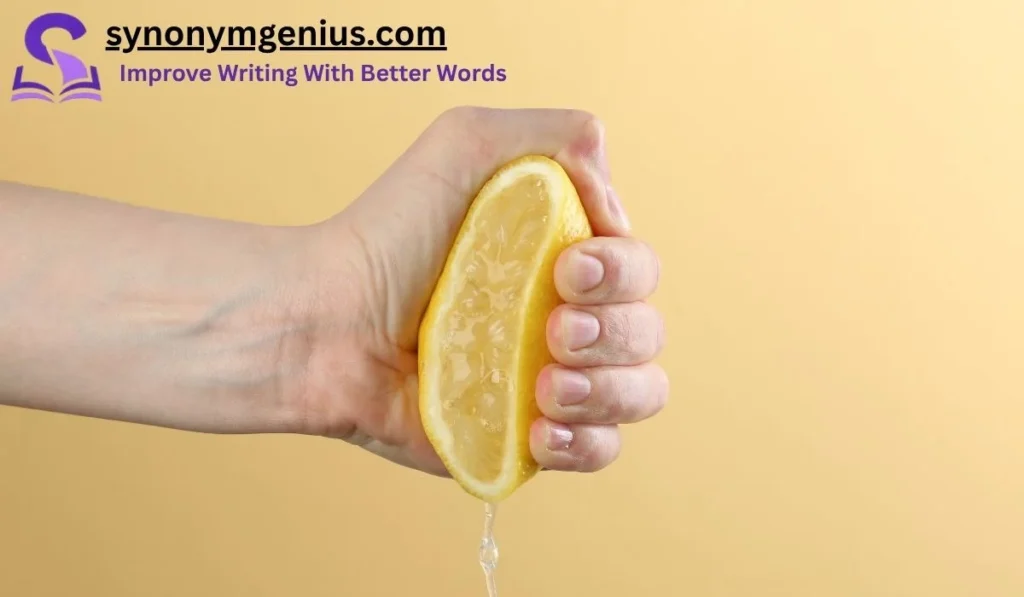
- Example 1: Squeeze fresh lemon juice over the grilled chicken salad.
- Example 2: She held my hand and gave it a gentle squeeze.
Urge (Verb) — US: /ɝːdʒ/ | UK: /ɜːdʒ/
- Meaning: To persistently persuade or press someone to take immediate action.
- Tone/Register: Professional / Persuasive
- Example 1: Doctors urge patients to drink plenty of water daily.
- Example 2: I urge you to review the contract terms carefully.
Compact (Verb) — US: /kəmˈpækt/ | UK: /kəmˈpækt/
- Meaning: To press materials firmly together to form a solid mass.
- Tone/Register: Industrial / Technical
- Example 1: Construction crews compact the soil before laying down asphalt.
- Example 2: The garbage truck can compact trash into dense blocks.
Crush (Verb) — US: /krʌʃ/ | UK: /krʌʃ/
- Meaning: To press something so hard that it loses its shape.
- Tone/Register: Strong / Physical
- Example 1: Heavy machinery can crush aluminum cans in seconds flat.
- Example 2: He accidentally stepped on the box and crushed it.
Flatten (Verb) — US: /ˈflæt.ən/ | UK: /ˈflæt.ən/
- Meaning: To press something until it becomes thin, level, or smooth.
- Tone/Register: General / Descriptive
- Example 1: Use a rolling pin to flatten the pastry dough.
- Example 2: Strong wind currents can flatten tall grass in fields.
Iron (Verb) — US: /ˈaɪ.ɚn/ | UK: /ˈaɪ.ən/
- Meaning: To press clothes with a heated appliance to remove wrinkles.
- Tone/Register: Domestic / Daily
- Example 1: I need to iron my shirt before the interview.
- Example 2: She spent Sunday evening ironing cotton bed sheets carefully.
Mash (Verb) — US: /mæʃ/ | UK: /mæʃ/
- Meaning: To press or crush food into a soft, uniform mixture.
- Tone/Register: Culinary / Casual
- Example 1: Mash the boiled potatoes with butter and warm milk.
- Example 2: Use a fork to mash the ripe avocado slices.
Jam (Verb) — US: /dʒæm/ | UK: /dʒæm/
- Meaning: To press or force something tightly into a tight space.
- Tone/Register: Informal / Expressive
- Example 1: Do not jam too many clothes into that suitcase.
- Example 2: Commuters jam onto the subway train every morning.
Drive (Verb) — US: /draɪv/ | UK: /draɪv/
- Meaning: To urge or force forward with steady, continuous pressure.
- Tone/Register: Energetic / Goal-Oriented
- Example 1: Market competition helps drive innovation across technology sectors.
- Example 2: Strong ambition can drive a person to succeed.
Pressure (Verb) — US: /ˈpreʃ.ɚ/ | UK: /ˈpreʃ.ər/
- Meaning: To strongly persuade or force someone into doing something.
- Tone/Register: Direct / Serious
- Example 1: Friends should never pressure you into risky behaviors.
- Example 2: Management tried to pressure workers into taking extra shifts.
Coerce (Verb) — US: /koʊˈɝːs/ | UK: /kəʊˈɜːs/
- Meaning: To force someone to act through threats or intimidation.
- Tone/Register: Formal / Legal
- Example 1: The law prevents suspects from being coerced into confessions.
- Example 2: Nobody should coerce you into signing an unfair lease.
Pinch (Verb) — US: /pɪntʃ/ | UK: /pɪntʃ/
- Meaning: To press tightly between two hard surfaces or fingers.
- Tone/Register: Physical / Precise
- Example 1: Be careful not to pinch your fingers in doors.
- Example 2: Pinch the edges of the pie dough together tightly.
Stamp (Verb) — US: /stæmp/ | UK: /stæmp/
- Meaning: To bring down a foot or tool with force on a surface.
- Tone/Register: Direct / Action-Oriented
- Example 1: The clerk will stamp your official document at reception.
- Example 2: Children love to stamp their feet in puddles.
Imprint (Verb) — US: /ɪmˈprɪnt/ | UK: /ɪmˈprɪnt/
- Meaning: To press a mark or design permanently onto a surface.
- Tone/Register: Formal / Creative
- Example 1: The craftsman will imprint your initials on leather goods.
- Example 2: Heavy boots imprint deep tracks in wet soil.
Tread (Verb) — US: /tred/ | UK: /tred/
- Meaning: To press or step down heavily on a ground surface.
- Tone/Register: Literary / Formal
- Example 1: Hikers tread lightly on fragile mountain plant ecosystems.
- Example 2: Mind where you tread when walking on slippery moss.
Smooth (Verb) — US: /smuːð/ | UK: /smuːð/
- Meaning: To press a wrinkled or rough surface until even.
- Tone/Register: Gentle / Daily
- Example 1: Smooth out the tablecloth before putting down plates.
- Example 2: She used her hands to smooth her folded coat.
Constrain (Verb) — US: /kənˈstreɪn/ | UK: /kənˈstreɪn/
- Meaning: To press limits upon someone or restrict freedom through force.
- Tone/Register: Academic / Formal
- Example 1: Limited budgets constrain our choices for new software.
- Example 2: Strict laws constrain how companies handle customer data.
Impel (Verb) — US: /ɪmˈpel/ | UK: /ɪmˈpel/
- Meaning: To force or press someone forward toward a specific action.
- Tone/Register: Elevated / Literary
- Example 1: Hunger can impel animals to hunt in dangerous places.
- Example 2: Duty might impel him to report the full truth.
Cram (Verb) — US: /kræm/ | UK: /kræm/
- Meaning: To force or press things forcefully into a small container.
- Tone/Register: Casual / Daily
- Example 1: Students cram their backpacks with thick books daily.
- Example 2: Do not cram all your study hours into one night.
Restrain (Verb) — US: /rɪˈstreɪn/ | UK: /rɪˈstreɪn/
- Meaning: To hold back or press down emotional or physical forces.
- Tone/Register: Formal / Serious
- Example 1: Security guards had to restrain the unruly concert audience.
- Example 2: She tried hard to restrain her anger during debates.
Clamp (Verb) — US: /klæmp/ | UK: /klæmp/
- Meaning: To press two objects firmly together with a holding tool.
- Tone/Register: Technical / Mechanical
- Example 1: Clamp the wooden boards firmly until the glue dries.
- Example 2: Workers clamp metal sheets together before welding seams.
Wad (Verb) — US: /wɑːd/ | UK: /wɒd/
- Meaning: To press paper or fabric into a tight round ball.
- Tone/Register: Informal / Visual
- Example 1: Wad the old newspaper paper up to light fires.
- Example 2: He would wad up scrap notes and throw them.
Nudge (Verb) — US: /nʌdʒ/ | UK: /nʌdʒ/
- Meaning: To press or push gently, often using an elbow.
- Tone/Register: Gentle / Social
- Example 1: She gave him a nudge to wake him up.
- Example 2: Smart reminders can nudge users toward healthy daily habits.

Prod (Verb) — US: /prɑːd/ | UK: /prɒd/
- Meaning: To press or poke with a finger or pointed instrument.
- Tone/Register: Direct / Persistent
- Example 1: Managers prod team members to meet weekly project deadlines.
- Example 2: He used a stick to prod the dying campfire.
Weighted (Verb) — US: /ˈweɪ.t̬ɪd/ | UK: /ˈweɪ.tɪd/
- Meaning: To press down by holding heavy items on a surface.
- Tone/Register: Descriptive / Practical
- Example 1: They weighted the tarp down using heavy stones outdoors.
- Example 2: Papers were weighted down to prevent blowing away.
Thrust (Verb) — US: /θrʌst/ | UK: /θrʌst/
- Meaning: To press or push forward suddenly with great physical strength.
- Tone/Register: Dynamic / Strong
- Example 1: He thrust the key into the lock and opened it.
- Example 2: Engines thrust the rocket high into the night sky.
Bear Down (Verb Phrase) — US: /beɚ daʊn/ | UK: /beə daʊn/
- Meaning: To exert heavy physical weight or intense pressure downwards.
- Tone/Register: Serious / Energetic
- Example 1: You must bear down on the pen to write clearly.
- Example 2: The storm will bear down on coastal towns overnight.
Lean (Verb) — US: /liːn/ | UK: /liːn/
- Meaning: To rest or press one’s body weight against a support.
- Tone/Register: Relaxed / Casual
- Example 1: Do not lean against freshly painted wooden walls indoors.
- Example 2: Customers lean on the counter while placing quick orders.
Exert (Verb) — US: /ɪɡˈzɝːt/ | UK: /ɪɡˈzɜːt/
- Meaning: To bring physical force or influence to bear heavily.
- Tone/Register: Professional / Scientific
- Example 1: Athletes exert force through their feet when jumping high.
- Example 2: Leaders exert strong influence over company policy decisions.
Condense (Verb) — US: /kənˈdens/ | UK: /kənˈdens/
- Meaning: To press or reduce text or substance into smaller form.
- Tone/Register: Academic / Editorial
- Example 1: Please condense your report into two clear summary pages.
- Example 2: Editors condense long stories to fit printed newspaper space.
Mass (Verb) — US: /mæs/ | UK: /mæs/
- Meaning: To press together in large numbers to form crowds.
- Tone/Register: Descriptive / Literary
- Example 1: Dark storm clouds mass over the mountain valley peaks.
- Example 2: Protesters mass near city halls to request systemic reform.
Flatten Out (Verb Phrase) — US: /ˈflæt.ən aʊt/ | UK: /ˈflæt.ən aʊt/
- Meaning: To press a bent item completely flat across space.
- Tone/Register: Informal / Practical
- Example 1: Smoothly flatten out the crumpled poster on your desk.
- Example 2: Machines flatten out recycled metal boxes for easy transit.
Crowd (Verb) — US: /kraʊd/ | UK: /kraʊd/
- Meaning: To press closely around a person or place tightly.
- Tone/Register: Daily / Descriptive
- Example 1: Fans crowd around the stage to see their favorite band.
- Example 2: Do not crowd the entrance door while waiting outside.
Squash (Verb) — US: /skwɑːʃ/ | UK: /skwɒʃ/
- Meaning: To crush or press flat into a soft or out-of-shape mass.
- Tone/Register: Casual / Expressive
- Example 1: Be careful not to squash the fresh berries in your bag.
- Example 2: He sat on his hat by mistake and managed to squash it.
Pack (Verb) — US: /pæk/ | UK: /pæk/
- Meaning: To press things tightly together into a tight container or space.
- Tone/Register: Daily / Practical
- Example 1: You need to pack the soil tightly around the new plant roots.
- Example 2: Volunteers pack emergency relief supplies into wooden crates.
Constrict (Verb) — US: /kənˈstrɪkt/ | UK: /kənˈstrɪkt/
- Meaning: To press inward or make narrow by encircling pressure.
- Tone/Register: Scientific / Formal
- Example 1: Cold temperatures can constrict blood vessels in your fingers.
- Example 2: Tight collars can constrict breathing during movement.
Enforce (Verb) — US: /ɪnˈfɔːrs/ | UK: /ɪnˈfɔːs/
- Meaning: To compel observance of rules through steady authority pressure.
- Tone/Register: Official / Legal
- Example 1: Officers enforce speed limits on busy city streets.
- Example 2: Schools enforce strict guidelines regarding digital safety.
Drive In (Verb Phrase) — US: /draɪv ɪn/ | UK: /draɪv ɪn/
- Meaning: To force or press an object deep into a surface with force.
- Tone/Register: Practical / Mechanical
- Example 1: Use a hammer to drive in the copper nail straight.
- Example 2: The heavy stakes were driven in deep to secure the tent.
Grind (Verb) — US: /ɡraɪnd/ | UK: /ɡraɪnd/
- Meaning: To press and rub harsh materials against each other heavily.
- Tone/Register: Physical / Industrial
- Example 1: Heavy wheels grind gravel into dust on country roads.
- Example 2: You can grind coffee beans fresh every morning.
Importune (Verb) — US: /ˌɪm.pɔːrˈtuːn/ | UK: /ˌɪm.pɔːˈtʃuːn/
- Meaning: To press someone persistently with urgent, annoying demands.
- Tone/Register: Formal / Literary
- Example 1: Beggars would importune passersby for spare change near the market.
- Example 2: Campaigners continue to importune officials for policy changes.
Oblige (Verb) — US: /əˈblaɪdʒ/ | UK: /əˈblaɪdʒ/
- Meaning: To press someone morally or legally into performing a duty.
- Tone/Register: Formal / Professional
- Example 1: The law will oblige drivers to show proof of insurance.
- Example 2: Sense of duty will oblige him to clear his debts.
Pressurize (Verb) — US: /ˈpreʃ.ə.raɪz/ | UK: /ˈpreʃ.ə.raɪz/
- Meaning: To maintain or increase artificial atmospheric force inside a space.
- Tone/Register: Technical / Aviation
- Example 1: Technicians pressurize aircraft cabins before high-altitude flights.
- Example 2: High heat will pressurize water inside closed boilers.
Pinch In (Verb Phrase) — US: /pɪntʃ ɪn/ | UK: /pɪntʃ ɪn/
- Meaning: To press inward on two opposing sides simultaneously.
- Tone/Register: Descriptive / Informal
- Example 1: Tailors pinch in the waist line to fit garments better.
- Example 2: The narrow canyon walls pinch in as you walk deeper.
Synonyms for “Press” by Tone
Positive Tone
- Nudge: Encourages action with gentle, caring persuasion.
- Smooth: Denotes gentle care aimed at bringing order and calmness.
- Urge: Focuses on positive, helpful encouragement toward beneficial outcomes.
Neutral Tone
- Push: Denotes basic physical contact without emotional weight.
- Compress: Used scientifically to explain flattening or physical forces objectively.
- Iron: Describes standard household chores or plain garment care.
Negative Tone
- Coerce: Implies unfair pressure, threats, or illegal force.
- Crush: Suggests total destruction through overpowering weight.
- Pressure: Hints at uncomfortable stress placed on someone.
Playful / Informal Tone
- Squeeze: Adds a warm, informal feel when applying force.
- Squash: Describes goofy or accidental flattening of soft items.
- Jam: Expresses fast-paced, casual physical actions.
Tone matters because using the wrong verb alters intent. Saying a manager “coerced” a team member sounds criminal, whereas saying they “nudged” them implies supportive coaching.
Mini Comparison: Press vs. Close Alternatives
| Word | Core Meaning | Tone | Best Context |
| Press | Applying steady physical or mental force firmly. | Neutral / Flexible | Button pushing, persuading people, ironing clothes. |
| Squeeze | Applying force from opposing sides using pressure. | Informal / Warm | Extracting fruit juice, hugging, holding hands. |
| Coerce | Forcing someone into action using threats or law. | Formal / Severe | Legal disputes, policy abuses, criminal cases. |
Context-Based Usage
Daily Conversation
Keep your phrasing direct and light. Using push, squeeze, or nudge fits naturally when speaking with family or coworkers.
“Could you please push that green button to start coffee brewing?”
Writing & Blogging
Blogging requires lively action verbs. Swap in flatten, cram, or drive to maintain reader interest across articles.
“Good articles condense facts to drive readers toward easy solutions.”
Professional & Academic Tone
Rely on formal, precise verbs. Words like coerce, exert, compress, or impel belong in reports, legal filings, and academic research.
“Management must not coerce staff into uncompensated overtime hours.”
Creative & Informal Use
Enhance descriptive prose using vivid physical actions. Work with thrust, imprint, or mass for rich storytelling.
“Heavy rain began to imprint dark patterns on dusty roads.”
Common Mistakes & Native Usage
Misuse Scenarios
- Confusing “Press” with “Express”: Saying “I want to press my feelings” is wrong. Say “express my feelings” instead.
- Overusing “Coerce” for Simple Requests: Telling a colleague they “coerced” you to share a pen sounds too aggressive. Use “asked” or “urged.”
Register Notes
- Formal vs. Informal: Keep coerce or constrain for formal writing. Use push or jam for spoken chats.
- Spoken vs. Written: Spoken English favors verb phrases like bear down. Written prose prefers single verbs like exert.
Real-Life Mini Scenarios
- Workplace: A team lead must condense long slide decks before presenting updates to busy executive managers.
- Social Situations: Friends crowd around dinner tables, laughing while trying to squeeze extra chairs into dining spaces.
- Media / Pop Culture: Journalists press political figures for direct answers regarding recent economic updates.
- Writing & Storytelling: An author describes how ancient footsteps imprint muddy trails through forest grounds.
Conclusion
Mastering diverse synonyms for press improves your written clarity significantly. It enables you to communicate exact physical forces or persuasive motives seamlessly.
Varying your vocabulary keeps readers engaged across blog posts, workplace essays, and everyday speech. Precise verbs transform generic descriptions into striking, clear language.
Try using two or three of these action verbs in your upcoming emails or social posts today. Small daily practice quickly builds natural vocabulary confidence.
Interactive Practice Quiz
- Which synonym best fits a formal legal document describing forced actions under threat?
- A) Squeeze
- B) Nudge
- C) Coerce
- D) Iron
- What is the primary part of speech for “press” when taking action against a button?
- A) Noun
- B) Adverb
- C) Verb
- D) Adjective
- If you want to describe gently reminding a friend to drink water, use:
- A) Crush
- B) Nudge
- C) Coerce
- D) Compact
- Which word specifically refers to applying heat to flatten clothes wrinkles?
- A) Iron
- B) Mash
- C) Stamp
- D) Thrust
- Select the best technical synonym for squeezing air or data into smaller volume:
- A) Jam
- B) Compress
- C) Tread
- D) Lean
- What Old French word is the direct origin of the Modern English verb “press”?
- A) Þryccan
- B) Presser
- C) Compresso
- D) Imprimere
- Which option indicates crushing food items like potatoes into smooth mixtures?
- A) Wad
- B) Mash
- C) Exert
- D) Clamp
- Which verb suggests stepping down heavily on ground surfaces while walking?
- A) Tread
- B) Pinch
- C) Smooth
- D) Impel
- Choose the synonym that carries a strong negative tone of total physical destruction:
- A) Smooth
- B) Nudge
- C) Crush
- D) Condense
- Which phrase best describes resting your body weight against a wall?
- A) Bear down
- B) Lean on
- C) Cram into
- D) Stamp out
Reflection Task
Write one original sentence describing an everyday workplace task using the synonym condense or nudge.
Answer Key
1: C | 2: C | 3: B | 4: A | 5: B | 6: B | 7: B | 8: A | 9: C | 10: B
Frequently Asked Questions
What is the most common formal synonym for press in business writing?
The most effective formal synonyms are urge, exert, or condense. These terms express persuasion, physical force, or textual brevity professionally without sounding overly casual or aggressive.
Can I use “squeeze” instead of “press” in every context?
No, squeeze implies applying force from opposite sides simultaneously (like extracting juice). Press often involves pushing against a single stationary surface, such as a wall button or door.
How does using varied synonyms for press benefit SEO writing?
Using semantic variations like compress, flatten, and urge prevents keyword stuffing. It helps search algorithms understand subject depth while offering a better experience for readers in 2026.
Is “coerce” always used with negative connotations?
Yes, coerce almost always carries a negative tone because it implies forcing someone to act against their free will through intimidation, authority abuse, or physical threats.
What is the difference between “push” and “press”?
Push usually involves moving an object away across a distance. Press focuses on applying firm contact or weight onto a surface without necessarily moving the object across space.
The word press is versatile and can express several different ideas. Choosing the right alternative depends on the meaning and context in which the word is used.
Conclusion
Exploring synonyms for press can make your vocabulary richer and your writing more precise. Alternatives such as push, squeeze, urge, and pressure can communicate slightly different meanings.
When selecting synonyms for press, always consider the sentence and intended meaning. A word that works for physical force may not be suitable when discussing newspapers or persuasion.
With regular practice, you can confidently use synonyms for press in conversations, essays, and professional writing. Learning these alternatives is a simple way to strengthen your English vocabulary.

Samia Noor is the founder and lead writer at SynonymGenius.com, where she creates accurate, reader-focused English language content that helps people communicate with clarity and confidence. She specializes in synonyms, antonyms, word meanings, idioms, and practical vocabulary guides that make complex language concepts simple and easy to understand. Every article is thoroughly researched, carefully fact-checked, and written in clear, accessible language using reliable sources and real-world examples. Her mission is to provide trustworthy, high-quality content that supports students, writers, educators, professionals, and English learners at every stage of their language journey.
Her editorial approach emphasizes accuracy, transparency, and genuine value for readers while following modern E-E-A-T and content quality standards. She regularly reviews and updates published content to ensure it remains current, reliable, and easy to understand. Through SynonymGenius.com, Samia Noor is committed to publishing dependable language resources that help readers expand their vocabulary, strengthen their writing skills, improve communication, and build confidence in academic, professional, and everyday English.