
Synonyms for satchel can make your descriptive writing much more vivid when you want to describe how people carry their daily essentials. Imagine a student rushing to a morning lecture, desperately searching through a leather bag for a lost notebook. Using the same general word over and over makes your descriptive storytelling feel repetitive and dry.
Learning different synonyms for satchel helps you bypass this issue by bringing immediate precision to your spoken and written language. The word itself evokes images of classic, strapped bags traditionally used by students and travelers. Exploring its alternatives helps you describe everyday items with much more color and variety.
This detailed vocabulary guide is perfect for students, creative bloggers, content writers, and daily English speakers who want to communicate clearly. By mastering these diverse options, you can easily match the tone of any scenario you describe. Let us look at how expanding your collection of semantic terms can boost your communication skills.
What Does “Satchel” Really Mean?
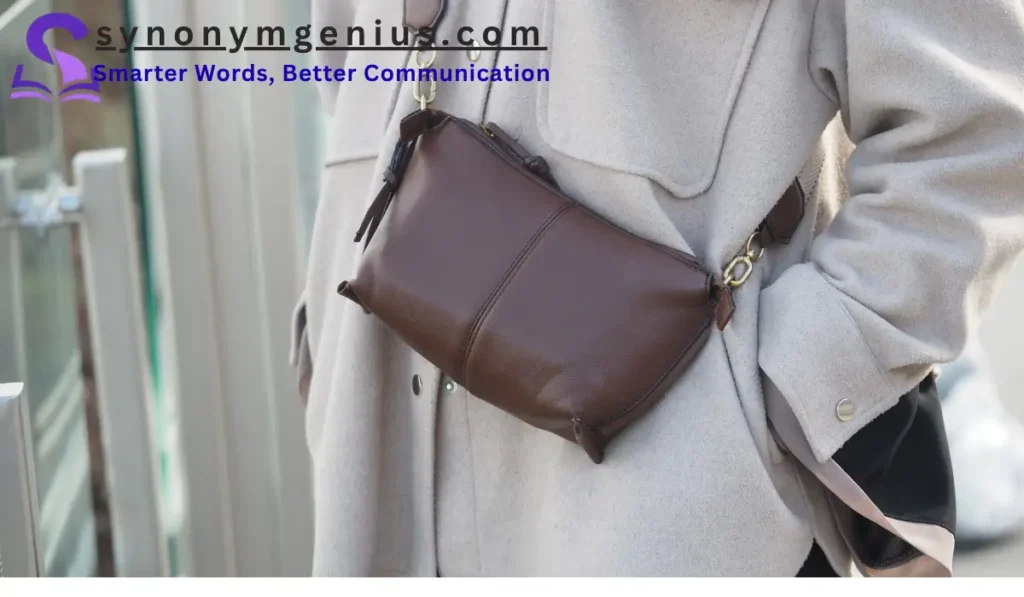
In basic English, a satchel is a small to medium bag that often features a long shoulder strap and a flap closing. It carries a comfortable, classic, and academic emotional tone that brings up images of traditional school days.
Native English speakers understand it as a practical yet stylish bag used to hold books, documents, or personal items. You will see this term regularly in classic literature, modern fashion blogs, and daily style conversations.
- Part of Speech: Noun
- Definition: A bag carried by a strap, often worn over the shoulder, used for carrying books or small items.
Connotative Meaning
Connotation is the emotional feeling or cultural meaning that a word carries or suggests in addition to its literal definition.
- Positive tone: Implies a smart, vintage, academic appearance and organized personal habits.
- Negative tone: Might occasionally sound old-fashioned or overly studious in purely modern contexts.
- Neutral tone: Focuses strictly on the physical item as a tool for carrying personal goods.
Etymology
The term comes from the Old French word sachel, which developed from the Latin saccellus, the diminutive form of saccus, meaning a sack.
- Old English (450–1100): The term was not used yet; people relied on basic Germanic words like pusa or codd to mean small bags.
- Middle English (1100–1500): The word entered the language as sachel after the Norman Conquest, referring to small pouches.
- Modern English (1500–Present): The spelling settled into its modern form, becoming deeply linked to schoolbags and strap-carried luggage.
Pronunciation
- US: /ˈsætʃəl/
- UK: /ˈsætʃəl/
Syllables
satch-el
Affixation Pattern
- Root: Sack (derived from Latin saccus)
- Prefix: None
- Suffix: -el (an old diminutive suffix indicating a smaller version of an item)
Synonyms List
Messenger bag (Noun) — US: /ˈmɛsəndʒər bæɡ/ | UK: /ˈmɛsɪndʒə bæɡ/
Meaning: A large bag with a long strap worn across the body, originally used by couriers.
Examples:
- The courier dropped his heavy messenger bag onto the office desk.
- She bought a waterproof messenger bag for her daily bicycle commute.
Haversack (Noun) — US: /ˈhævərˌsæk/ | UK: /ˈhævəsæk/
Meaning: A sturdy, single-strapped bag carried over the shoulder, traditionally used by soldiers or hikers.
Examples:
- The hiker packed extra water bottles into his canvas haversack.
- An old military haversack hung on the wall of the museum.
Schoolbag (Noun) — US: /ˈskuːlˌbæɡ/ | UK: /ˈskuːlbæɡ/
Meaning: A bag used by students to carry books and learning materials to school.
Examples:
- The young boy struggled to lift his heavy schoolbag on the first day.
- She left her zipped schoolbag near the front door.
Pack (Noun) — US: /pæk/ | UK: /pæk/
Meaning: A collection of items wrapped or packed together for easy carrying during travel.
Examples:
- He strapped the heavy pack tightly onto his back before the long climb.
- The traveler carried a simple pack containing all his earthly belongings.
Shoulder bag (Noun) — US: /ˈʃoʊldər bæɡ/ | UK: /ˈʃəʊldə bæɡ/
Meaning: Any bag designed to be carried over a single shoulder by a long strap.
Examples:
- She kept her keys in the outer pocket of her leather shoulder bag.
- He chose a sleek shoulder bag that matched his professional suit.
Briefcase (Noun) — US: /ˈbriːfˌkeɪs/ | UK: /ˈbriːfkeɪs/
Meaning: A flat, rectangular case with a handle, used chiefly for carrying business papers.
Examples:
- The lawyer opened his leather briefcase to pull out the contract documents.
- He carried a metallic briefcase locked with a secret combination code.
Attache (Noun) — US: /ˌætæˈʃeɪ/ | UK: /əˈtæʃeɪ/
Meaning: A slim, rigid briefcase used especially for carrying official business papers.
Examples:
- The diplomat carried a black attache case into the private meeting room.
- She packed her laptop neatly inside the slim attache.
Carryall (Noun) — US: /ˈkæriˌɔːl/ | UK: /ˈkæriɔːl/
Meaning: A large tote bag or spacious case designed to hold multiple personal items.
Examples:
- She threw her gym clothes and water bottle into a canvas carryall.
- His large carryall held everything he needed for a weekend trip.
Tote (Noun) — US: /toʊt/ | UK: /təʊt/
Meaning: A large, open bag with two parallel handles that emerge from the sides.
Examples:
- We brought a reusable canvas tote to the local farmers’ market.
- She carries a fashionable tote bag to the office every day.
Handbag (Noun) — US: /ˈhændˌbæɡ/ | UK: /ˈhændbæɡ/
Meaning: A small bag used by individuals to carry money, keys, and personal items.
Examples:
- She searched through her handbag for a piece of chewing gum.
- The store sells luxury handbag options made from fine materials.
Purse (Noun) — US: /pɜːrs/ | UK: /pɜːs/
Meaning: A small pouch or container used to hold money and small personal objects.
Examples:
- She kept her coins inside a small zipper purse.
- He accidentally left his leather purse on the restaurant table.
Pouch (Noun) — US: /paʊtʃ/ | UK: /paʊtʃ/
Meaning: A small flexible bag or pocket used for holding minor items.
Examples:
- The carpenter kept his sharp nails in a leather pouch on his belt.
- She stored her makeup brushes inside a velvet pouch.
Sack (Noun) — US: /sæk/ | UK: /sæk/
Meaning: A large,e simple bag made of strong, coarse material or flexible plastic.
Examples:
- He carried a sack of fresh potatoes from the grocery store.
- She put her old books into a large paper sack.
Backpack (Noun) — US: /ˈbækˌpæk/ | UK: /ˈbækpæk/
Meaning: A bag with two straps that goes over your shoulders to be carried on your back.
Examples:
- The university student loaded his heavy textbooks into his backpack.
- We packed a lunch inside the small nylon backpack.
Rucksack (Noun) — US: /ˈrʌkˌsæk/ | UK: /ˈrʌksæk/
Meaning: A rugged bag carried on the back, commonly used by hikers and climbers.
Examples:
- He adjusted the waist strap on his heavy canvas rucksack.
- The travelers carried matching rucksack gear across Europe.
Knapsack (Noun) — US: /ˈnæpˌsæk/ | UK: /ˈnæpsæk/
Meaning: A small canvas or leather bag carried on the back by soldiers or travelers.
Examples:
- The old soldier packed his basic rations into a worn knapsack.
- She tied her sweater to the top of her little knapsack.
Daypack (Noun) — US: /ˈdeɪˌpæk/ | UK: /ˈdeɪpæk/
Meaning: A small, lightweight backpack suitable for short day trips or hikes.
Examples:
- I only need a simple daypack for our short walk through the park.
- He packed his camera and a light jacket into the daypack.
Kit bag (Noun) — US: /ˈkɪt bæɡ/ | UK: /ˈkɪt bæɡ/
Meaning: A long, cylindrical canvas bag used for carrying a soldier’s or athlete’s equipment.
Examples:
- The football player threw his muddy cleats into his kit bag.
- The sailor packed his entire uniform into a canvas kit bag.
Duffel bag (Noun) — US: /ˈdʌfəl bæɡ/ | UK: /ˈdʌfl bæɡ/
Meaning: A large cylindrical bag made of cloth with a drawstring or zipper top.
Examples:
- He stuffed his gym gear into a durable blue duffel bag.
- She carried a small duffel bag onto the airplane as carry-on luggage.
Holdall (Noun) — US: /ˈhoʊldˌɔːl/ | UK: /ˈhəʊldɔːl/
Meaning: A large bag with handles and a shoulder strap, used for carrying clothes while traveling.
Examples:
- They packed their weekend outfits into a spacious leather holdall.
- He loaded the heavy holdall into the trunk of the car.
Portmanteau (Noun) — US: /pɔːrtˈmæntoʊ/ | UK: /pɔːtˈmæntəʊ/
Meaning: A large, classic suitcase that opens into two equal parts.
Examples:
- The wealthy Victorian traveler arrived with a heavy leather portmanteau.
- He stored his finest suits inside an antique portmanteau.
Valise (Noun) — US: /vəˈliːs/ | UK: /vəˈliːz/
Meaning: A small traveling bag or suitcase used for short journeys.
Examples:
- She carried a small velvet valise onto the passenger train.
- He packed his shaving kit inside an old leather valise.
Carpetbag (Noun) — US: /ˈkɑːrpɪtˌbæɡ/ | UK: /ˈkɑːpɪtæɡ/
Meaning: A traveling bag made of carpet fabric, popular in the 19th century.
Examples:
- The actor carried an authentic carpetbag for his role in the historic play.
- She found a vintage carpetbag at the local antique shop.
Gladstone bag (Noun) — US: /ˈɡlædstən bæɡ/ | UK: /ˈɡlædstən bæɡ/
Meaning: A small suitcase built on a hinged iron frame that opens wide at the top.
Examples:
- The old doctor always carried his medical tools in a black Gladstone bag.
- He admired the sturdy brass locks on the antique Gladstone bag.
Satchel-bag (Noun) — US: /ˈsætʃəl bæɡ/ | UK: /ˈsætʃəl bæɡ/
Meaning: A compound variant highlighting a bag designed with distinct satchel characteristics.
Examples:
- She preferred the structure of a classic satchel-bag for office work.
- He bought a vintage leather satchel-bag at the street market.
Saddlebag (Noun) — US: /ˈsædəlˌbæɡ/ | UK: /ˈsædlbæɡ/
Meaning: A bag attached to a saddle on a horse or bicycle for carrying loads.
Examples:
- The cyclist stored his repair tools in a small under-seat saddlebag.
- The cowboy packed extra ammunition into his leather saddlebag.
Crossbody bag (Noun) — US: /ˈkrɔːsˌbɒdi bæɡ/ | UK: /ˈkrɒsˌbɒdi bæɡ/
Meaning: A bag with a long strap designed to be worn diagonally across the chest.
Examples:
- A crossbody bag keeps your hands free while you explore a new city.
- She wore a stylish crossbody bag to the crowded music festival.

Sling bag (Noun) — US: /ˈslɪŋ bæɡ/ | UK: /ˈslɪŋ bæɡ/
Meaning: A bag with a single strap intended to be zipped and worn over the shoulder.
Examples:
- He prefers a lightweight sling bag for carrying his tablet around town.
- She adjusted the nylon strap of her sporty sling bag.
Pokebag (Noun) — US: /ˈpoʊkˌbæɡ/ | UK: /ˈpəʊkˌbæɡ/
Meaning: A dialect or regional term for a small bag, sack, or pouch.
Examples:
- The old shopkeeper placed the candy inside a simple paper pokebag.
- He kept his marbles hidden away in a small cloth pokebag.
Reticule (Noun) — US: /ˈrɛtɪˌkjuːl/ | UK: /ˈrɛtɪkjuːl/
Meaning: A small drawstring handbag popular in the 18th and 19th centuries.
Examples:
- The lady carried a delicate silk reticule that matched her ballgown.
- An embroidered reticule lay on the historical display table.
Sporran (Noun) — US: /ˈspɔːrən/ | UK: /ˈspɒrən/
Meaning: A small pouch worn around the waist with traditional Scottish highland dress.
Examples:
- He wore a formal leather sporran over his traditional tartan kilt.
- The dancer kept his keys secure inside his ceremonial sporran.
Scrip (Noun) — US: /skrɪp/ | UK: /skrɪp/
Meaning: A small bag or pouch historically carried by pilgrims or shepherds.
Examples:
- The ancient traveler carried his minimal dry rations in a leather scrip.
- The museum displayed a medieval scrip used by traveling monks.
Wallet (Noun) — US: /ˈwɑːlɪt/ | UK: /ˈwɒlɪt/
Meaning: A pocket-sized flat folding case for holding money and cards.
Examples:
- He pulled his driver’s license out of his leather wallet.
- She kept her credit cards organized inside a zippered wallet.
Billfold (Noun) — US: /ˈbɪlˌfoʊld/ | UK: /ˈbɪlfeʊld/
Meaning: A thin folding case for paper money, similar to a standard wallet.
Examples:
- He slipped the folded cash securely into his leather billfold.
- His grandfather carried a worn, classic brown billfold.
Clutch (Noun) — US: /klʌtʃ/ | UK: /klʌtʃ/
Meaning: A small flat handbag without handles or straps, designed to be held in the hand.
Examples:
- She carried a glittering silver clutch to the evening charity gala.
- He helped her hold her evening clutch during the dinner party.
Pocketbook (Noun) — US: /ˈpɑːkɪtˌbʊk/ | UK: /ˈpɒkɪtbʊk/
Meaning: A regional or traditional term used to describe a woman’s handbag or purse.
Examples:
- My grandmother never leaves the house without her favorite leather pocketbook.
- She placed her reading glasses inside her heavy pocketbook.
Kit (Noun) — US: /kɪt/ | UK: /kɪt/
Meaning: A container or bag used to hold a specific set of tools or equipment.
Examples:
- The mechanic carried his specialized repair kit directly to the broken car.
- She checked her medical kit to ensure all supplies were ready.
Baggage (Noun) — US: /ˈbæɡɪdʒ/ | UK: /ˈbæɡɪdʒ/
Meaning: Trunks, suitcases, or bags taken along by a traveler during a journey.
Examples:
- The airline staff loaded the passenger baggage onto the airplane.
- They collected their heavy baggage from the carousel at the airport.
Luggage (Noun) — US: /ˈlʌɡɪdʒ/ | UK: /ˈlʌɡɪdʒ/
Meaning: Suitcases or bags containing personal belongings for a trip.
Examples:
- He carried his lightweight luggage up the stairs to the hotel room.
- Please keep an eye on your luggage while waiting at the station.
Case (Noun) — US: /keɪs/ | UK: /keɪs/
Meaning: A container or box designed to hold and protect a specific object.
Examples:
- The musician carefully placed his acoustic guitar back inside its hard case.
- She bought a protective case for her expensive eyeglasses.
Suitcase (Noun) — US: /ˈsuːtˌkeɪs/ | UK: /ˈsuːtkeɪs/
Meaning: A rectangular case with a handle used for carrying clothes during travel.
Examples:
- He packed three casual shirts into his rolling suitcase.
- She struggled to close the overstuffed suitcase before her flight.
Grip (Noun) — US: /ɡrɪp/ | UK: /ɡrɪp/
Meaning: An old-fashioned term for a traveler’s small bag or handbag.
Examples:
- The passenger grabbed his small canvas grip and stepped off the bus.
- He packed a change of clothes into a vintage leather grip.
Bumbag (Noun) — US: /ˈbʌmˌbæɡ/ | UK: /ˈbʌmbæɡ/
Meaning: A small pouch attached to a belt worn around the waist or hips.
Examples:
- He wore a neon bumbag to keep his money safe during the concert.
- She buckled the small bumbag before heading out for a jog.
Fanny pack (Noun) — US: /ˈfæni pæk/ | UK: /ˈfæni pæk/
Meaning: The North American term for a small pouch worn on a belt around the waist.
Examples:
- The tourist adjusted his fanny pack before entering the amusement park.
- She prefers a black fanny pack for easy access to her phone.
Satchel-pouch (Noun) — US: /ˈsætʃəl paʊtʃ/ | UK: /ˈsætʃəl paʊtʃ/
Meaning: A hybrid container blending the flap design of a satchel with a small pouch size.
Examples:
- The artist kept his charcoal pencils in a custom satchel-pouch.
- She strapped the tiny satchel-pouch to her belt for the festival.
Synonyms for “Satchel” by Tone
Selecting the correct word depends on the mood or setting you are describing. Categorizing these synonyms by tone helps you match your word choices to your writing goals.
Positive Tone
These words suggest professional success, high quality, luxury, or fine organization.
- Attache, Bespoke, Briefcase, Clutch, Gladstone bag, Handbag, Portmanteau
Neutral Tone
These options simply name the functional object without any added positive or negative emotion.
- Backpack, Crossbody bag, Daypack, Luggage, Messenger bag, Shoulder bag, Suitcase
Negative Tone
These words might suggest old-fashioned styles, bulky items, or cheap utility depending on context.
- Baggage, Carpetbag, Grip, Pokebag, Sack
Playful / Informal Tone
These terms are ideal for casual storytelling, light blogs, or fun everyday conversations.
- Bumbag, Carryall, Fanny pack, Knapsack, Sling bag, Sporran, Tote
“Satchel” vs Close Alternatives
Understanding the structural differences between these common carrying choices prevents awkward descriptions. Let us examine three very close alternatives.
| Word | Core Meaning | Tone | Best Context |
| Satchel | A structured bag with a flap and long shoulder strap | Classic / Academic | Creative writing, style blogs, school descriptions |
| Messenger Bag | A larger, functional bag worn across the body | Casual / Professional | Commuting talk, modern office discussions, urban travel |
| Tote | An open, double-handled bag carried by hand or shoulder | Casual / Everyday | Shopping trips, casual beach days, relaxed office style |
How “Satchel” Changes by Context
Daily Conversation
In everyday speech, people usually opt for broad terms like bag or backpack. You might use crossbody bag or tote when chatting about daily errands with friends.
Writing or Blogging
Fashion and lifestyle writers frequently use “satchel” to highlight classic aesthetic choices. Incorporating terms like clutch or holdall adds stylistic variety to your content.
Professional or Academic Tone
When producing formal business text or academic reports, focus on exact industry terms like briefcase or attache. These variations project competence and maintain professional boundaries.
Creative or Informal Use
Fiction authors use distinct terms like haversack, knapsack, or valise to reveal historical context. Choosing these unique variants shapes the background of a character instantly.
Common Mistakes & Native Usage
Common Mistakes Learners Make
A frequent error is calling a large rolling suitcase a “satchel.” Remember that a satchel is explicitly characterized by its long shoulder strap and medium, portable size.
Another mistake is using historical terms like reticule or carpetbag to describe modern accessories. Doing this can confuse your audience unless you are writing historical fiction.
Register Notes
Always match the structural style of the bag to the setting you are writing about. Referring to an executive’s professional gear as a fanny pack in a corporate profile breaks formal expectations. For maximum impact, focus on terms that reflect the true atmosphere of the scene.

Real-Life Mini Scenarios
Workplace
A senior partner notices an associate preparing for a courtroom trial:
“Make sure you organize all those legal briefs inside your briefcase before the judge arrives.”
Social Situations
A friend helps another load up for a beach day:
“Just toss the sunblock and towels into this canvas tote so we can carry it easily.”
Media / Pop Culture
A movie critic discusses the classic aesthetic choices of a famous period film:
“The protagonist’s worn leather satchel acts as a brilliant visual symbol of his student life.”
Practice Exercise
Test your understanding of these utility bag synonyms by identifying the ideal option for each real-life scenario.
Multiple-Choice Questions
- Which term describes a slim, rigid case used by diplomats to carry important official papers?
- A) Bumbag
- B) Attache
- C) Sporran
- If an author writes a story about a medieval pilgrim, the character would most likely carry a:
- A) Fanny pack
- B) Briefcase
- C) Scrip
- A large, open bag featuring two parallel handles, perfect for grocery shopping, is a:
- A) Tote
- B) Gladstone bag
- C) Reticule
- What is the most appropriate term for a rugged bag carried on the back during a mountain climb?
- A) Clutch
- B) Rucksack
- C) Billfold
- Which synonym carries a highly playful or informal tone suitable for modern streetwear?
- A) Portmanteau
- B) Sling bag
- C) Valise
- A historic doctor from the 19th century would typically carry medical equipment in a:
- A) Fanny pack
- B) Gladstone bag
- C) Pocketbook
- Which option describes a tiny handbag without straps designed to be held directly in the hand at a gala?
- A) Haversack
- B) Carryall
- C) Clutch
- What term is widely used in North American English to describe a small utility pouch worn around the waist?
- A) Fanny pack
- B) Reticule
- C) Briefcase
- Which word is best suited for an academic discussion regarding heavy international travel luggage?
- A) Pokebag
- B) Baggage
- C) Grip
- A bag featuring a long strap worn diagonally across the chest to keep hands free is called a:
- A) Crossbody bag
- B) Billfold
- C) Case
Application Task
Write a short paragraph describing what you carry on a busy day using at least two synonyms from this vocabulary guide.
Answer Key
1: B | 2: C | 3: A | 4: B | 5: B | 6: B | 7: C | 8: A | 9: B | 10: A
Conclusion
Expanding your command of language with these descriptive variants allows you to communicate your ideas with wonderful clarity. Stepping away from basic, repetitive terms instantly elevates the quality of your expression and keeps your readers fully engaged.
Understanding how context and tone shape the meaning of everyday objects is a massive step forward in your English development. Writers can paint clearer pictures, students can compose better essays, and professionals can converse with absolute confidence.
We warmly encourage you to start using these alternative terms in your upcoming letters, stories, and daily conversations. The key to permanent learning is active and regular practice. Try picking out three unfamiliar options from our collection today and weave them naturally into your next conversation!

Samia Noor is the founder and lead writer at SynonymGenius.com, where she creates accurate, reader-focused English language content that helps people communicate with clarity and confidence. She specializes in synonyms, antonyms, word meanings, idioms, and practical vocabulary guides that make complex language concepts simple and easy to understand. Every article is thoroughly researched, carefully fact-checked, and written in clear, accessible language using reliable sources and real-world examples. Her mission is to provide trustworthy, high-quality content that supports students, writers, educators, professionals, and English learners at every stage of their language journey.
Her editorial approach emphasizes accuracy, transparency, and genuine value for readers while following modern E-E-A-T and content quality standards. She regularly reviews and updates published content to ensure it remains current, reliable, and easy to understand. Through SynonymGenius.com, Samia Noor is committed to publishing dependable language resources that help readers expand their vocabulary, strengthen their writing skills, improve communication, and build confidence in academic, professional, and everyday English.