
Synonyms for states in an essay include says, indicates, argues, asserts, explains, notes, and claims. The best choice depends on whether you are presenting information, expressing an argument, reporting an observation, or showing evidence.
Synonyms for states in an essay can make academic writing sound more precise. Instead of repeating “the author states,” you can choose a verb that shows exactly how the author presents an idea.
Imagine reading an essay that says “the researcher states” in every paragraph. The meaning stays clear, but the writing quickly becomes repetitive and dull.
For example, “the study states that sleep affects memory” can become “the study indicates that sleep affects memory.” The second version gives the sentence a slightly more evidence-based tone.
Learning synonyms for states in an essay helps students, bloggers, content writers, and daily English users vary their vocabulary while keeping their meaning clear and natural.
What Does “States” Mean in an Essay?
In essay writing, states usually means to express, present, declare, or communicate an idea clearly in words.
It is commonly used when a writer wants to report what an author, researcher, source, speaker, or organization has written or said.
For example:
The researcher states that regular exercise can support healthy sleep habits.
Here, states simply tells the reader that the researcher expressed this idea.
The word is usually neutral and formal. It does not automatically show whether the writer agrees with the statement.
Part of Speech
States is usually the third-person singular form of the verb state.
- I state
- You state
- We state
- They state
- He states
- She states
- The article states
The noun state has several other meanings, but those meanings are different from the reporting verb used in essays.
Simple Definition
States: expresses or presents an idea, fact, opinion, or position clearly in words.
🧠 Connotative Meaning of “States”
Connotation means the emotional or implied feeling that a word can carry beyond its basic dictionary meaning.
Positive Tone
“States” can sound confident and organized when someone presents information clearly.
The report states several practical solutions.
Negative Tone
The word itself is not normally negative. However, the surrounding sentence can make a statement sound doubtful, weak, misleading, or controversial.
The article states a claim that several studies question.
Neutral Tone
“States” is most often neutral.
The introduction states the main purpose of the research.
This neutrality makes it useful in academic and professional writing.
📖 Etymology of “State”
The verb state developed from the noun state, which came through Old French estat from Latin status, meaning a position, condition, or way of standing. The deeper root is connected with the idea of “standing.”
Old English: 450–1100
The modern verb state was not an established Old English reporting verb in its present form. English already had native words related to expressing, declaring, telling, and setting something forth.
The deeper historical idea behind state, however, connects with the Indo-European root associated with standing or being firmly placed.
Middle English: 1100–1500
During the Middle English period, forms related to Old French estat entered English. The word carried meanings involving position, condition, status, and circumstances.
This period helped establish the semantic foundation from which later uses of state developed.
Modern English: 1500–Present
The verb state emerged in the late sixteenth century with the idea of setting something in a particular position. By the seventeenth century, it had developed the sense of declaring, reciting, or setting information down in words.
Today, state is common in academic writing, journalism, reports, research papers, essays, business documents, and formal communication.
Affixation Pattern
Root: stat
Prefix: None in the basic word
Suffix: None in the basic word
Related forms include:
- state
- states
- stated
- stating
- statement
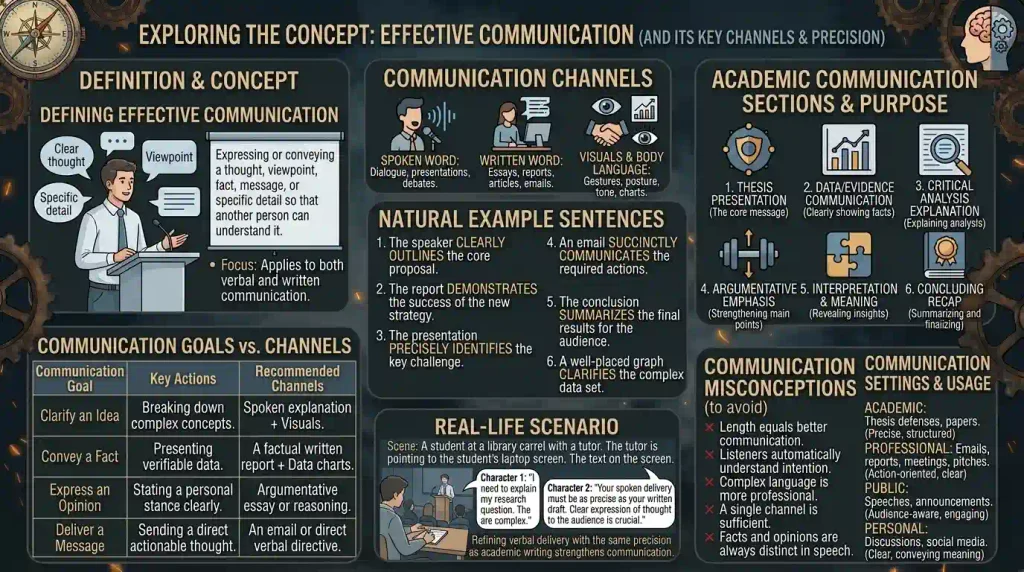
📚 45 Synonyms for “States” in an Essay
1. Says (Verb)
Meaning: Communicates an idea, opinion, or piece of information in spoken or written form.
Tone/Register: Neutral, general
Examples:
The author says that education can change people’s lives.
The article says that regular reading improves vocabulary.
2. Indicates (Verb)
Meaning: Shows or points toward a particular fact, result, or conclusion.
Tone/Register: Formal, academic
Examples:
The research indicates that sleep affects concentration.
The results indicate a connection between diet and energy levels.
3. Argues (Verb)
Meaning: Presents reasons or evidence to support a particular position or viewpoint.
Tone/Register: Academic, analytical
Examples:
The writer argues that schools should encourage creativity.
The researcher argues that early support can improve learning outcomes.
4. Asserts (Verb)
Meaning: Expresses an idea or position confidently and firmly.
Tone/Register: Formal, academic
Examples:
The author asserts that public education needs greater support.
The essay asserts the importance of independent thinking.
5. Explains (Verb)
Meaning: Makes an idea, process, or situation easier to understand by providing information.
Tone/Register: Neutral, academic
Examples:
The writer explains why the policy was introduced.
The article explains how regular reading builds vocabulary.
6. Notes (Verb)
Meaning: Draws attention to a particular fact, point, or detail.
Tone/Register: Formal, academic
Examples:
The researcher notes that the sample size was limited.
The author notes several changes in modern education.
7. Claims (Verb)
Meaning: Presents something as true, especially when the statement may require evidence or support.
Tone/Register: Academic, neutral
Examples:
The writer claims that technology improves classroom engagement.
The article claims that the approach saves time.
8. Reports (Verb)
Meaning: Gives information about something discovered, observed, measured, or recorded.
Tone/Register: Formal, academic, journalistic
Examples:
The study reports higher participation among older students.
The newspaper reports a rise in online learning.
9. Observes (Verb)
Meaning: Points out something noticed through careful attention, study, or analysis.
Tone/Register: Formal, academic
Examples:
The researcher observes a change in student behavior.
The author observes that public attitudes have shifted.
10. Declares (Verb)
Meaning: Announces or expresses something clearly and firmly.
Tone/Register: Formal, strong
Examples:
The author declares that equality should remain a central goal.
The speaker declares support for the proposed change.
11. Maintains (Verb)
Meaning: Continues to express or defend a particular opinion or position.
Tone/Register: Formal, academic
Examples:
The writer maintains that discipline improves academic performance.
The author maintains that the policy needs further review.
12. Contends (Verb)
Meaning: Argues strongly in favor of a particular position or viewpoint.
Tone/Register: Formal, academic
Examples:
The researcher contends that social factors influence learning.
The essay contends that access to education should be expanded.
13. Expresses (Verb)
Meaning: Communicates an idea, feeling, opinion, or position clearly.
Tone/Register: Neutral, formal
Examples:
The author expresses concern about environmental damage.
The writer expresses support for community programs.
14. Describes (Verb)
Meaning: Gives details about a person, situation, process, event, or idea.
Tone/Register: Neutral, academic
Examples:
The article describes the effects of urban growth.
The researcher describes several changes in workplace culture.
15. Defines (Verb)
Meaning: Explains the exact meaning or nature of a word, concept, or idea.
Tone/Register: Academic, formal
Examples:
The author defines success as personal growth.
The textbook defines the term in simple language.
16. Identifies (Verb)
Meaning: Points out or recognizes a particular fact, issue, feature, or cause.
Tone/Register: Academic, formal
Examples:
The study identifies stress as a major concern.
The article identifies several causes of poor communication.
17. Specifies (Verb)
Meaning: Gives exact or precise details about something.
Tone/Register: Formal, technical
Examples:
The report specifies three conditions for participation.
The author specifies the main requirements in the introduction.
18. Outlines (Verb)
Meaning: Presents the main points of an idea, argument, plan, or subject.
Tone/Register: Academic, professional
Examples:
The essay outlines the main causes of climate change.
The report outlines several possible solutions.
19. Emphasizes (Verb)
Meaning: Gives special importance or attention to a particular idea or point.
Tone/Register: Academic, formal
Examples:
The researcher emphasizes the importance of early education.
The author emphasizes the need for careful planning.
20. Highlights (Verb)
Meaning: Draws particular attention to an important fact, idea, or issue.
Tone/Register: Neutral, academic, professional
Examples:
The article highlights the benefits of regular exercise.
The study highlights several problems with the current system.
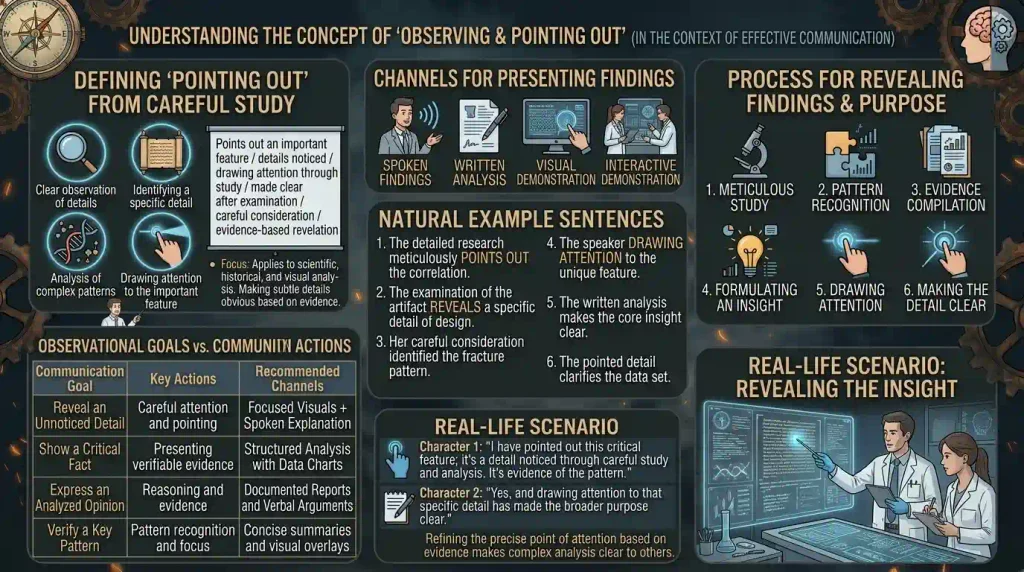
21. Points Out (Verb Phrase)
Meaning: Draws attention to a specific fact, detail, or problem.
Tone/Register: Neutral, conversational, academic
Examples:
The writer points out that the data is incomplete.
The researcher points out several weaknesses in the method.
22. Reveals (Verb)
Meaning: Makes previously unknown or hidden information clear or known.
Tone/Register: Formal, analytical
Examples:
The study reveals a strong relationship between sleep and memory.
The survey reveals changing attitudes toward remote work.
23. Demonstrates (Verb)
Meaning: Shows something clearly through evidence, examples, results, or actions.
Tone/Register: Formal, academic
Examples:
The experiment demonstrates the value of regular practice.
The research demonstrates how language changes over time.
24. Shows (Verb)
Meaning: Makes an idea, fact, result, or relationship clear or visible.
Tone/Register: Neutral, general
Examples:
The graph shows a steady increase in participation.
The evidence shows that practice improves performance.
25. Conveys (Verb)
Meaning: Communicates an idea, feeling, message, or impression.
Tone/Register: Formal, academic, literary
Examples:
The writer conveys a strong sense of responsibility.
The passage conveys the importance of family support.
26. Presents (Verb)
Meaning: Gives an idea, argument, fact, or piece of information for consideration.
Tone/Register: Academic, professional
Examples:
The author presents several reasons for the change.
The essay presents a different perspective on education.
27. Proposes (Verb)
Meaning: Suggests an idea, plan, solution, or explanation for consideration.
Tone/Register: Formal, academic
Example:
The researcher proposes a new approach to language learning.
The author proposes several solutions to the problem.
28. Implies (Verb)
Meaning: Communicates an idea indirectly without expressing it directly.
Tone/Register: Academic, analytical
Examples:
The evidence implies that the policy had limited effects.
The author’s wording implies a concern about inequality.
29. Confirms (Verb)
Meaning: Shows that something previously believed, reported, or suggested is true.
Tone/Register: Formal, academic
Examples:
The latest findings confirm the earlier results.
The study confirms the importance of regular revision.
30. Establishes (Verb)
Meaning: Shows or proves something clearly enough for it to become accepted or recognized.
Tone/Register: Formal, academic
Examples:
The research establishes a clear relationship between the variables.
The evidence establishes the importance of accurate information.
31. Acknowledges (Verb)
Meaning: Recognizes or accepts that a fact, issue, limitation, or argument exists.
Tone/Register: Formal, academic
Examples:
The author acknowledges the limitations of the study.
The researcher acknowledges that further investigation is needed.
32. Remarks (Verb)
Meaning: Makes a brief observation or comment about something.
Tone/Register: Formal, literary
Examples:
The author remarks that social habits have changed.
The researcher remarks on the importance of cultural context.
33. Comments (Verb)
Meaning: Gives an observation, opinion, or brief response about a subject.
Tone/Register: Neutral, conversational, formal
Examples:
The writer comments on the growing use of digital media.
The article comments on recent changes in education.
34. Suggests (Verb)
Meaning: Puts forward an idea or provides evidence that something may be true.
Tone/Register: Neutral, academic
Examples:
The research suggests that exercise can improve mood.
The evidence suggests a connection between reading and vocabulary growth.
35. Affirms (Verb)
Meaning: Expresses strong agreement with, support for, or confidence in an idea.
Tone/Register: Formal, academic
Examples:
The author affirms the value of lifelong learning.
The report affirms the importance of equal access to education.
36. Proclaims (Verb)
Meaning: Announces or expresses something publicly, clearly, and confidently.
Tone/Register: Strong, formal
Examples:
The writer proclaims the importance of individual freedom.
The speech proclaims a commitment to educational reform.
37. Reiterates (Verb)
Meaning: States an idea again to emphasize or reinforce its importance.
Tone/Register: Formal, academic
Examples:
The author reiterates the need for careful research.
The conclusion reiterates the essay’s central argument.
38. Restates (Verb)
Meaning: Expresses an idea again using different or clearer words.
Tone/Register: Academic, instructional
Examples:
The writer restates the main argument in the conclusion.
The final paragraph restates the central idea clearly.
39. Recounts (Verb)
Meaning: Tells or reports events, experiences, or details in a particular sequence.
Tone/Register: Formal, narrative
Examples:
The author recounts the events that shaped the community.
The essay recounts the writer’s experience during the journey.
40. Relates (Verb)
Meaning: Tells or presents information about an event, experience, or situation.
Tone/Register: Neutral, formal
Examples:
The writer relates the experience to a broader social issue.
The article relates several events from the author’s childhood.
41. Depicts (Verb)
Meaning: Represents or portrays a person, situation, event, or idea through words or images.
Tone/Register: Formal, literary, academic
Examples:
The novel depicts life in a rapidly changing society.
The essay depicts the difficulties faced by rural communities.
42. Characterizes (Verb)
Meaning: Describes the qualities or features that define a person, situation, period, or idea.
Tone/Register: Formal, analytical
Examples:
The author characterizes the period as socially challenging.
The essay characterizes modern communication as highly digital.
43. Illustrates (Verb)
Meaning: Makes an idea clearer through an example, fact, comparison, or demonstration.
Tone/Register: Academic, formal
Examples:
The example illustrates the importance of clear communication.
The study illustrates how small changes can affect results.
44. Documents (Verb)
Meaning: Records or provides evidence about an event, fact, development, or situation.
Tone/Register: Formal, academic, professional
Examples:
The report documents changes in workplace behavior.
The study documents several developments in language use.
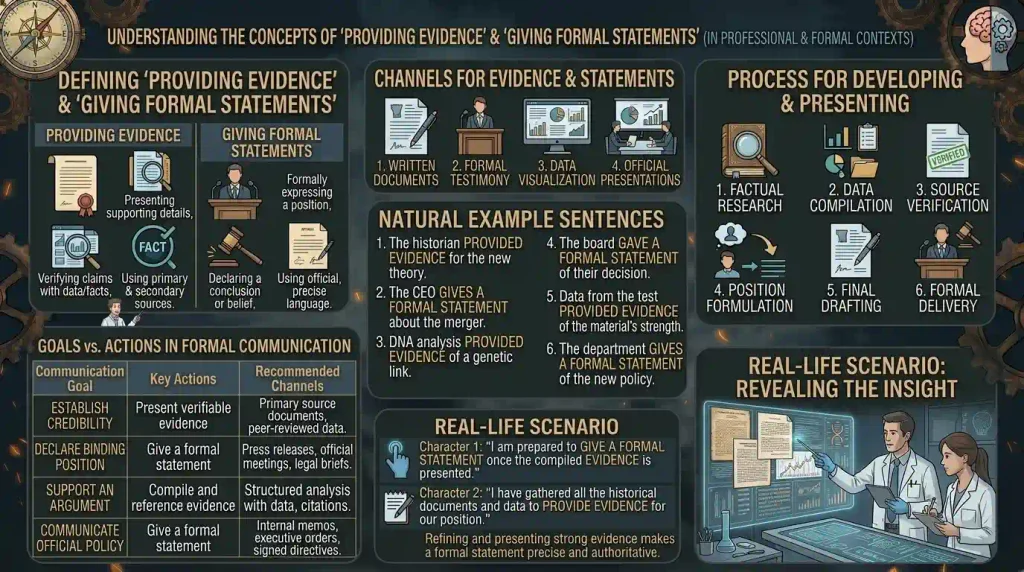
45. Testifies (Verb)
Meaning: Provides evidence or gives a formal statement about something.
Tone/Register: Formal, legal, academic
Examples:
The evidence testifies to the importance of careful planning.
The historical record testifies to major social changes.
🔍 Synonyms for “States” by Tone
Choosing an alternative depends on the message you want your sentence to communicate.
Positive or Supportive
These can work well when the source presents a favorable idea:
- affirms
- emphasizes
- highlights
- supports
- demonstrates
- confirms
Neutral
These are useful when you simply want to report information:
- says
- states
- notes
- reports
- explains
- describes
- presents
- comments
- observes
- shows
Analytical
These are especially useful in essays and research writing:
- analyzes
- identifies
- indicates
- demonstrates
- establishes
- illustrates
- suggests
- implies
- outlines
Strong or Assertive
These suggest that the writer presents an idea firmly:
- asserts
- argues
- contends
- maintains
- declares
- affirms
- proclaims
Potentially Skeptical
These can be useful when the source’s claim has not necessarily been proven:
- claims
- suggests
- implies
- proposes
- contends
Tone matters because states itself is relatively neutral. Replacing it with asserts can make an argument sound stronger, while suggests can make it sound more tentative.
⚖️ “States” vs Close Alternatives
Says vs States
States sounds more formal and deliberate.
Says is more general and conversational.
Use states in academic reporting:
The researcher states that the results are significant.
Use says when a less formal style is appropriate:
The author says that education changes lives.
States vs Argues
States simply reports an idea.
Argues suggests that the writer supports a position with reasons or evidence.
The author argues that technology should be used more carefully.
The second sentence communicates a stronger argumentative role.
States vs Claims
States does not automatically question the information.
Claims can suggest that the statement is an assertion that needs evidence or evaluation.
The report states that attendance increased.
The author claims that attendance increased.
The second sentence can sound more cautious or skeptical depending on context.
🧠 How “States” Changes by Context
Daily Conversation
In everyday conversation, says is usually more natural than states.
She says she will arrive later.
“States” can sound unnecessarily formal in casual speech.
Writing and Blogging
Bloggers can use says, explains, notes, points out, and highlights depending on the purpose.
The expert explains why regular reading improves vocabulary.
These alternatives make online writing easier to read.
Professional or Academic Writing
Academic writing often benefits from precise reporting verbs.
Use argues for an argument, indicates for evidence, reports for findings, and acknowledges for limitations.
The study indicates that regular practice improves retention.
Creative or Informal Writing
Creative writing may favor remarks, observes, recounts, describes, or relates.
The narrator observes that the town feels unusually quiet.
These verbs can add detail and personality.
⚠️ Common Mistakes Learners Make
Using Every Synonym as an Exact Replacement
Not all alternatives have identical meanings.
For example, argues implies reasoning or persuasion. Describes focuses on details. Indicates suggests evidence or signs.
Using “Claims” Without Considering Tone
“Claims” can sometimes sound doubtful.
The researcher claims that the method works.
If you simply want to report the research without suggesting doubt, states or reports may be more neutral.
Overusing Strong Reporting Verbs
Words such as asserts, declares, and proclaims can sound too forceful if the source simply presents ordinary information.
Choose a reporting verb that matches the source.
Using “Says” in Every Academic Sentence
“Says” is correct, but repeated use can make an essay feel basic.
Instead, vary your reporting verbs according to meaning.
Confusing “Suggests” With “Proves”
Suggests indicates a possibility or interpretation.
Proves communicates a much stronger level of certainty.
Do not replace “states” with a stronger verb unless the evidence supports that meaning.
📌 Native Usage and Register Notes
In academic English, writers often select reporting verbs carefully.
Neutral: says, states, notes, reports
Analytical: indicates, demonstrates, identifies, illustrates
Argumentative: argues, asserts, contends, maintains
Cautious: suggests, implies, proposes
Descriptive: describes, depicts, characterizes
Formal: declares, affirms, establishes, acknowledges
The key is not to replace verbs simply for variety. Replace it when another verb gives the reader more precise information.
For internal vocabulary practice, you can also compare these reporting verbs with other academic vocabulary pages on your site.
🧩 Real-Life Mini Scenarios
Workplace
A company report might state that employee training has increased.
A more precise sentence could be:
The report indicates that employee training has increased.
Here, indicates works because the report provides evidence.
Social Situation
A person may simply say:
Maria says she prefers working in the morning.
Using “states” here would sound more formal than necessary.
Media
A news article may report:
The report states that the investigation is continuing.
If the article is focusing on evidence, reports or indicates may be more appropriate.
Writing and Storytelling
A narrator may describe a character’s behavior:
The narrator observes that Daniel avoids crowded places.
Here, observes gives the sentence a more analytical tone.
✍️ How to Choose the Right Alternative
Before replacing states, ask one simple question:
What exactly is the source doing?
- If it gives information, use reports.
- If it presents evidence, use indicates.
- If it gives an argument, use argues.
- If it makes a strong position clear, use asserts.
- If it gives details, use describes.
- If it draws attention to an important point, use highlights.
- If it offers a possible interpretation, use suggests.
- If it recognizes a limitation, use acknowledges.
- If it gives an example, illustrates may be appropriate.
- This approach creates natural vocabulary variation without changing the original meaning.
📝 Examples of Replacing “States” in an Essay
Original
The author states that technology affects modern education.
Alternative
The author argues that technology affects modern education.
This version suggests that the author is presenting a position.
Original
The study states that students need more reading practice.
Alternative
The study indicates that students need more reading practice.
This version emphasizes evidence or findings.
Original
The researcher states that the method has limitations.
Alternative
The researcher acknowledges that the method has limitations.
This version shows recognition of a weakness.
Original
The article states that social media has changed communication.
Alternative
The article highlights how social media has changed communication.
This version gives special attention to the idea.
🎯 Why Reporting Verbs Matter in Essays
Reporting verbs help readers understand the relationship between a writer and a source.
Compare:
The researcher says that the method works.
with:
The researcher demonstrates that the method works.
- The first sentence only reports the researcher’s words.
- The second suggests that evidence or demonstration supports the conclusion.
Similarly:
The author claims that the system is effective.
sounds different from:
The author argues that the system is effective.
- The first emphasizes the claim. The second emphasizes the reasoning behind the position.
- This small vocabulary choice can make academic writing more precise.
🧪 Interactive Practice Quiz
Choose the most suitable alternative to states in each sentence.
1. The research ___ that students perform better after regular revision.
A. indicates
B. whispers
C. imagines
D. decorates
2. The author ___ that schools should encourage creative thinking.
A. argues
B. paints
C. walks
D. sleeps
3. The report ___ three major causes of the problem.
A. outlines
B. laughs
C. hides
D. borrows
4. The researcher ___ the limitations of the study.
A. acknowledges
B. dances
C. removes
D. forgets
5. The article ___ how climate affects agriculture.
A. explains
B. jumps
C. guesses
D. carries
6. The writer ___ several reasons for supporting the proposal.
A. presents
B. closes
C. washes
D. breaks
7. The evidence ___ a connection between sleep and memory.
A. suggests
B. throws
C. paints
D. folds
8. The author ___ the importance of careful research.
A. emphasizes
B. whispers
C. hides
D. drops
9. The study ___ the benefits of regular exercise through its results.
A. demonstrates
B. borrows
C. watches
D. touches
10. The writer ___ that the sample size was small.
A. notes
B. dances
C. creates
D. washes
11. The researcher ___ that the policy needs further review.
A. maintains
B. opens
C. catches
D. carries
12. The article ___ a detailed picture of life in the village.
A. depicts
B. counts
C. throws
D. mixes
Reflection Task
Write one sentence about an article, study, book, or essay using one synonym for states. Try using a different reporting verb such as indicates, argues, notes, highlights, suggests, or acknowledges.
Answer Key: 1-A | 2-A | 3-A | 4-A | 5-A | 6-A | 7-A | 8-A | 9-A | 10-A | 11-A | 12-A
❓ Frequently Asked Questions
1. What is a better word than “states” in an academic essay?
There is no single replacement that works in every academic sentence. Indicates, argues, reports, notes, suggests, explains, and asserts are common alternatives. Choose according to meaning. For example, use argues when an author gives reasons for a position and indicates when evidence points toward a conclusion.
2. What can I use instead of “the author states” in an essay?
You can use the author argues, explains, notes, suggests, observes, maintains, claims, highlights, or points out. The best option depends on what the author is doing. If the author presents a position with supporting reasons, argues is usually more precise than simply repeating states.
3. Is “says” acceptable in formal essay writing?
Yes. Says is grammatically correct and widely understood, but it is more general and less formal than some academic reporting verbs. In a formal essay, you can use reports, explains, argues, notes, indicates, or observes when those words accurately describe the source’s purpose.
4. Is “claims” stronger than “states” in academic writing?
“Claims” can carry a different implication from “states.” States usually reports information neutrally, while claims can suggest that an assertion requires evidence or further examination. Use claims when that distinction is meaningful rather than using it simply as a vocabulary variation.
5. Which synonym for “states” is best for presenting evidence?
Indicates, demonstrates, confirms, reveals, and establishes can work when evidence supports the statement. However, each communicates a different level or type of support. Indicates is useful when evidence points toward a conclusion, while demonstrates generally presents a clearer showing.
6. What synonym should I use when an author gives an opinion?
Use argues, asserts, maintains, contends, or claims when the author presents a position. The choice depends on strength and context. Argues is especially common in academic essays because it signals that the writer is developing a position through reasoning or evidence.
7. How can I avoid repeating “states” in an essay?
First, identify what the source is doing in each sentence. Then choose a precise reporting verb. Use notes for a detail, argues for a position, indicates for evidence, explains for clarification, and highlights for emphasis. This creates variety while preserving meaning.
Conclusion
Using different reporting verbs can make essays clearer and more precise. Words such as argues, indicates, notes, explains, and suggests each add a different shade of meaning.
Good academic vocabulary is not about replacing every repeated word. It is about selecting the word that accurately describes the source, evidence, argument, or observation.
Learning synonyms for states in an essay can improve writing, blogging, speaking, and everyday communication. It also helps writers express ideas with greater confidence.
Keep practicing these reporting verbs in your essays, emails, summaries, and daily conversations. The more naturally you use them, the stronger and more flexible your English vocabulary becomes.

Samia Noor is the founder and lead writer at SynonymGenius.com, where she creates accurate, reader-focused English language content that helps people communicate with clarity and confidence. She specializes in synonyms, antonyms, word meanings, idioms, and practical vocabulary guides that make complex language concepts simple and easy to understand. Every article is thoroughly researched, carefully fact-checked, and written in clear, accessible language using reliable sources and real-world examples. Her mission is to provide trustworthy, high-quality content that supports students, writers, educators, professionals, and English learners at every stage of their language journey.
Her editorial approach emphasizes accuracy, transparency, and genuine value for readers while following modern E-E-A-T and content quality standards. She regularly reviews and updates published content to ensure it remains current, reliable, and easy to understand. Through SynonymGenius.com, Samia Noor is committed to publishing dependable language resources that help readers expand their vocabulary, strengthen their writing skills, improve communication, and build confidence in academic, professional, and everyday English.