
Synonyms for statistical include words such as numerical, quantitative, data-driven, empirical, mathematical, analytical, and probability-based. The best choice depends on whether you are describing data, analysis, research, measurements, or numerical evidence.
Synonyms for statistical can make your writing more precise when discussing numbers, research, surveys, or data. A student may need a clearer term for an essay.
Imagine writing, “The report provides statistical evidence.” You could use “numerical evidence” when the focus is on numbers, or “data-driven evidence” when evidence comes from collected data.
The word statistical appears often in academic, business, scientific, and everyday writing. Learning its alternatives helps you avoid repetition while keeping your meaning accurate.
For students, bloggers, content writers, and daily English users, synonyms for statistical make explanations more varied. They also help readers understand the exact type of numerical information being discussed.
What Does “Statistical” Really Mean?
Statistical is an adjective that relates to statistics, numerical data, or methods used to collect, organize, analyze, and interpret data.
In simple English, something is statistical when it involves numbers or information gathered from data.
For example:
The researcher presented statistical evidence from the survey.
This means the researcher used numerical information from the survey to support a conclusion.
Part of Speech
Statistical is an adjective.
It usually describes nouns such as:
- statistical analysis
- statistical data
- statistical evidence
- statistical report
- statistical method
- statistical research
- statistical results
Native speakers generally understand statistical as a neutral, technical word. It is especially common in academic, scientific, business, medical, economic, and research contexts.
Connotative Meaning of “Statistical”
Connotation (the feeling or association a word can create beyond its basic dictionary meaning) varies slightly depending on context.
Positive Tone
In a positive context, statistical can suggest accuracy, evidence, careful research, and measurable results.
Negative Tone
In some contexts, it can sound cold, technical, or overly focused on numbers.
Neutral Tone
Most of the time, statistical has a neutral meaning. It simply describes something connected with statistics or numerical analysis.
Etymology of “Statistical”
The word statistical comes from statistics, which ultimately connects to the Latin word status, meaning “state” or “condition.”
The development passed through European languages. The Italian statistica referred to information concerning the state. The concept later developed into the systematic collection and analysis of numerical information.
Old English: 450–1100
The modern word statistical did not exist in Old English. However, Old English had words and expressions for counting, measuring, recording, and describing conditions.
Middle English: 1100–1500
During Middle English, English vocabulary increasingly absorbed words from French and Latin. The linguistic foundations for concepts involving measurement and organized information continued to develop.
Modern English: 1500–Present
The modern concept of statistics developed strongly in European scholarship. Statistical eventually became the standard adjective for matters involving statistics, numerical data, and statistical methods.
Syllables and Affixation Pattern
Statistical: sta-tis-ti-cal
Root: statistic / state-related concept
Prefix: None in the modern English formation.
Suffix: -al
The suffix -al commonly forms adjectives that mean “relating to” or “connected with.”
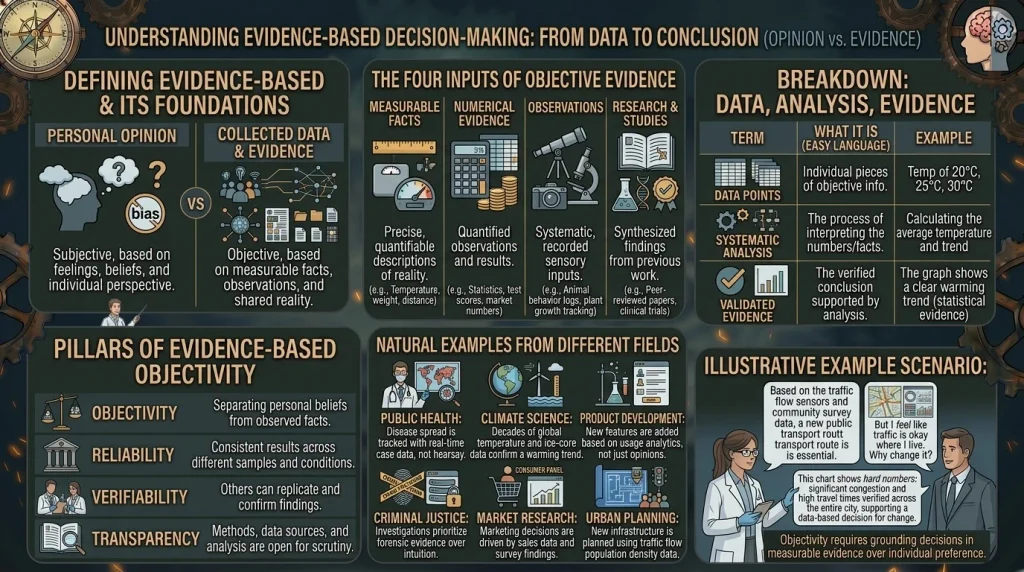
Synonyms List
The following alternatives are arranged to show useful shades of meaning. Some are direct substitutes, while others work best in specific contexts involving numbers, data, research, or quantitative analysis.
1. Numerical (Adjective)
Meaning: Related to numbers, numerical values, or quantities.
Tone/Register: Neutral, academic, general.
Examples:
The report contains numerical evidence from the survey.
We compared the numerical results from both groups.
2. Quantitative (Adjective)
Meaning: Based on quantities or measurable numerical information.
Tone/Register: Academic, scientific, formal.
Examples:
The study used quantitative data.
Researchers conducted a quantitative analysis of the results.
3. Data-Driven (Adjective)
Meaning: Based on collected data rather than personal opinion alone.
Tone/Register: Professional, business, modern.
Examples:
The team made a data-driven decision.
The article presents a data-driven explanation.
4. Data-Based (Adjective)
Meaning: Supported or developed using available data.
Tone/Register: Neutral, academic, professional.
Examples:
The conclusion is data-based.
We need a data-based explanation for the change.
5. Empirical (Adjective)
Meaning: Based on observation, experience, or evidence gathered from the real world.
Tone/Register: Academic, scientific.
Examples:
The researchers gathered empirical evidence.
The theory needs stronger empirical support.
6. Mathematical (Adjective)
Meaning: Related to mathematics, numerical calculations, or mathematical methods.
Tone/Register: Academic, technical.
Example:
The researchers used a mathematical model.
The mathematical results supported the prediction.
7. Analytical (Adjective)
Meaning: Involving careful examination of information to understand patterns or relationships.
Tone/Register: Academic, professional.
Examples:
The report provides an analytical review.
Her analytical approach revealed an important pattern.
8. Measurable (Adjective)
Meaning: Capable of being expressed or evaluated through measurement.
Tone/Register: Neutral, professional.
Examples:
The campaign produced measurable results.
The study identified measurable changes.
9. Measured (Adjective)
Meaning: Expressed or evaluated through a defined measurement.
Tone/Register: Neutral, academic.
Examples:
The study recorded measured changes in temperature.
The researchers compared the measured values.
10. Quantified (Adjective)
Meaning: Expressed in numerical or measurable terms.
Tone/Register: Formal, technical.
Example:
The report includes quantified results.
The researchers quantified the improvement.
11. Numerical-Based (Adjective)
Meaning: Built mainly around numerical information.
Tone/Register: Technical, less common.
Examples:
The model uses numerical-based calculations.
The numerical-based approach helped compare the results.
12. Numeric (Adjective)
Meaning: Relating to numbers or numerical values.
Tone/Register: Technical, general.
Examples:
The system stores numeric information.
We reviewed the numeric values carefully.
13. Arithmetic (Adjective)
Meaning: Relating to basic mathematical operations involving numbers.
Tone/Register: Academic, mathematical.
Examples:
The calculation requires basic arithmetic skills.
The arithmetic results were checked twice.
14. Probabilistic (Adjective)
Meaning: Based on probability or the likelihood of different outcomes.
Tone/Register: Scientific, technical.
Examples:
The researchers created a probabilistic model.
The probabilistic approach estimated possible outcomes.
15. Probability-Based (Adjective)
Meaning: Based on probabilities or estimated likelihoods.
Tone/Register: Technical, academic.
Examples:
The study uses a probability-based model.
The probability-based estimate changed after new data arrived.
16. Evidence-Based (Adjective)
Meaning: Supported by observed or collected evidence.
Tone/Register: Academic, professional.
Examples:
The report offers evidence-based conclusions.
We need an evidence-based explanation.
17. Research-Based (Adjective)
Meaning: Developed or supported through research.
Tone/Register: Academic, professional.
Examples:
The article presents research-based findings.
Students need research-based information for the assignment.
18. Data-Oriented (Adjective)
Meaning: Focused strongly on data when making decisions or reaching conclusions.
Tone/Register: Professional, academic.
Examples:
The company takes a data-oriented approach.
Her data-oriented analysis was detailed.
19. Data-Centered (Adjective)
Meaning: Organized around data as a primary source of information.
Tone/Register: Professional, technical.
Examples:
The project follows a data-centered strategy.
The data-centered report highlights key trends.
20. Information-Based (Adjective)
Meaning: Developed from available information or collected facts.
Tone/Register: Neutral, professional.
Examples:
The decision was information-based.
The report gives an information-based assessment.
21. Survey-Based (Adjective)
Meaning: Based on information collected through surveys.
Tone/Register: Academic, research.
Examples:
The researchers published a survey-based study.
The survey-based findings revealed changing opinions.
22. Observation-Based (Adjective)
Meaning: Based on information gathered through observation.
Tone/Register: Academic, scientific.
Examples:
The study uses observation-based evidence.
The observation-based findings were recorded carefully.
23. Research-Oriented (Adjective)
Meaning: Focused on investigation, evidence, and systematic study.
Tone/Register: Academic, formal.
Examples:
The project has a research-oriented approach.
Her research-oriented writing uses reliable evidence.
24. Measurement-Based (Adjective)
Meaning: Based on recorded measurements.
Tone/Register: Technical, scientific.
Examples:
The experiment produced measurement-based results.
The measurement-based method improved accuracy.
25. Quantifiable (Adjective)
Meaning: Able to be measured or expressed numerically.
Tone/Register: Formal, professional.
Examples:
The project produced quantifiable benefits.
We need quantifiable evidence of progress.
26. Measurable-Data (Adjective)
Meaning: Connected with data that can be measured objectively.
Tone/Register: Technical.
Examples:
The study focuses on measurable-data outcomes.
Researchers collected measurable-data indicators.
27. Objective (Adjective)
Meaning: Based on observable facts rather than personal feelings or preferences.
Tone/Register: Neutral, academic, professional.
Examples:
The report provides an objective assessment.
Researchers aimed for objective conclusions.
28. Factual (Adjective)
Meaning: Based on facts that can be checked or supported.
Tone/Register: Neutral, general.
Examples:
The article presents factual information.
We need a factual explanation of the results.
29. Scientific (Adjective)
Meaning: Connected with systematic research, observation, testing, or scientific methods.
Tone/Register: Academic, technical.
Examples:
The paper presents scientific evidence.
The scientific analysis supports the finding.
30. Experimental (Adjective)
Meaning: Related to testing ideas or methods under controlled conditions.
Tone/Register: Scientific, academic.
Examples:
The team collected experimental data.
The experimental results were promising.
31. Observational (Adjective)
Meaning: Based on information obtained by observing rather than directly controlling conditions.
Tone/Register: Scientific, academic.
Examples:
The researchers conducted an observational study.
The observational data revealed a clear trend.
32. Analytical-Data (Adjective)
Meaning: Relating to data that has been examined to identify patterns or meaning.
Tone/Register: Technical, professional.
Examples:
The report contains analytical-data findings.
The analytical-data process revealed several trends.
33. Trend-Based (Adjective)
Meaning: Based on patterns or changes identified in data over time.
Tone/Register: Professional, analytical.
Examples:
The company uses trend-based forecasting.
The trend-based report shows steady growth.
34. Pattern-Based (Adjective)
Meaning: Based on recognizable patterns in information or data.
Tone/Register: Analytical, technical.
Examples:
The system uses a pattern-based approach.
The pattern-based analysis revealed a repeated behavior.
35. Comparative (Adjective)
Meaning: Involving comparison between two or more groups, values, or situations.
Tone/Register: Academic, professional.
Examples:
The report provides comparative data.
We conducted a comparative analysis of the results.
36. Correlational (Adjective)
Meaning: Relating to a relationship or association between variables.
Tone/Register: Academic, scientific.
Examples:
The study found a correlational relationship.
The researchers used correlational analysis.
37. Predictive (Adjective)
Meaning: Used to estimate or forecast what may happen in the future.
Tone/Register: Technical, professional.
Examples:
The company developed a predictive model.
Predictive analysis helped estimate future demand.
38. Forecasting (Adjective)
Meaning: Related to estimating future conditions from existing information.
Tone/Register: Business, economic, professional.
Examples:
The team uses forecasting methods.
The forecasting model considers recent data.
39. Census-Based (Adjective)
Meaning: Based on information collected through a population census.
Tone/Register: Government, academic, formal.
Examples:
The researchers used census-based information.
The census-based figures helped describe population changes.
40. Demographic (Adjective)
Meaning: Related to measurable characteristics of a population or group.
Tone/Register: Academic, business, social science.
Examples:
The report examines demographic data.
The company studied demographic patterns.
41. Economic (Adjective)
Meaning: Related to financial, commercial, or economic measurements and conditions.
Tone/Register: Academic, professional.
Examples:
The report includes economic indicators.
Researchers examined economic trends.
42. Statistical-Analysis-Based (Adjective)
Meaning: Developed through systematic analysis of numerical data.
Tone/Register: Formal, technical.
Examples:
The paper presents a statistical-analysis-based conclusion.
The statistical-analysis-based method identified significant patterns.
43. Numerically Expressed (Adjective)
Meaning: Presented in the form of numbers or numerical values.
Tone/Register: Formal, academic.
Examples:
The findings are numerically expressed.
The results were numerically expressed for easy comparison.
44. Quantitatively Measured (Adjective)
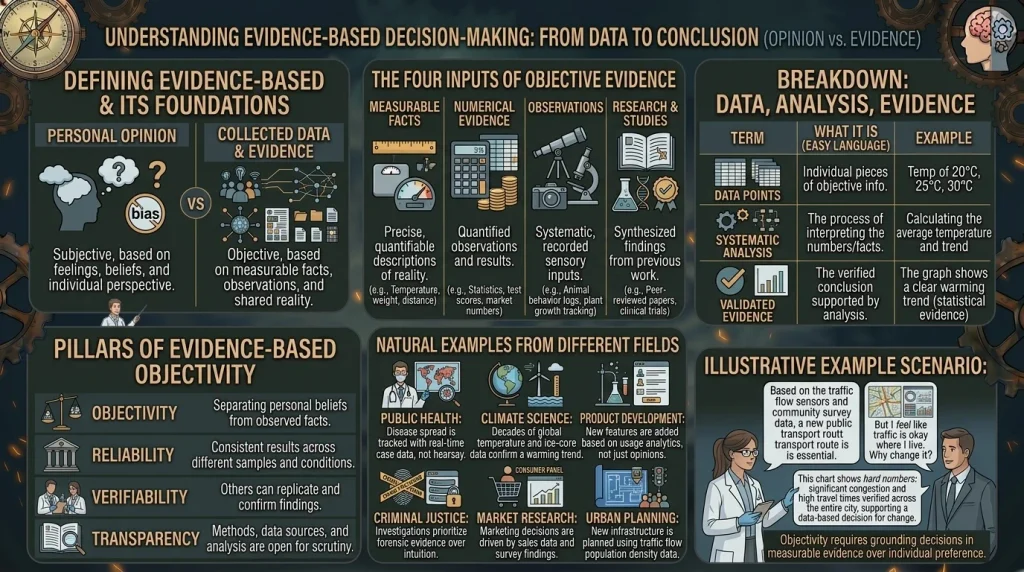
Meaning: Evaluated using numerical measurements.
Tone/Register: Academic, scientific.
Examples:
The researchers quantitatively measured the change.
The outcome was quantitatively measured over six months.
45. Data-Supported (Adjective)
Meaning: Supported by collected or analyzed data.
Tone/Register: Professional, academic.
Examples:
The proposal includes data-supported claims.
The conclusion is data-supported.
46. Fact-Based (Adjective)
Meaning: Built around facts rather than assumptions or personal opinions.
Tone/Register: Neutral, professional.
Examples:
The article gives a fact-based explanation.
We need a fact-based discussion of the issue.
47. Metric-Based (Adjective)
Meaning: Based on specific measurements or performance indicators.
Tone/Register: Business, technical.
Examples:
The team uses a metric-based evaluation.
The metric-based report tracks performance clearly.
48. Indicator-Based (Adjective)
Meaning: Based on measurable signs or indicators used to understand a condition.
Tone/Register: Academic, professional.
Examples:
The study uses indicator-based measurements.
The indicator-based approach tracks social changes.
49. Data-Analytical (Adjective)
Meaning: Relating to the examination and interpretation of data.
Tone/Register: Technical, professional.
Examples:
The project requires data-analytical skills.
Her data-analytical approach uncovered useful patterns.
50. Quantitative-Research (Adjective)
Meaning: Relating to research that relies mainly on numerical measurements and data.
Tone/Register: Academic, scientific.
Examples:
The paper uses a quantitative research method.
Quantitative research methods can reveal measurable trends.
Synonyms for “Statistical” by Tone
Positive
Words such as evidence-based, data-driven, measurable, objective, fact-based, and data-supported can sound strong because they emphasize evidence and measurable information.
Neutral
Statistical, numerical, quantitative, numeric, factual, analytical, comparative, and data-based are generally neutral.
Negative
There are no direct negative synonyms for statistical. However, words such as numerical or statistical can sound cold or impersonal when a writer wants to emphasize human experiences instead of numbers.
Playful or Informal
There is no widely accepted playful synonym for statistical. In casual English, people may simply say number-based or numbers-focused.
Tone matters because a technically correct word may still sound unnatural in a particular situation.
“Statistical” vs Close Alternatives
Numerical vs Statistical
Statistical specifically connects to statistics, data analysis, or statistical methods.
Numerical has a broader meaning and simply refers to numbers.
Use statistical for research and analysis. Use numerical when you only need to describe numbers.
Statistical vs Quantitative
Quantitative emphasizes measurable amounts or quantities.
Statistical focuses more directly on statistics and the analysis of data.
For example, “quantitative research” describes research based on numerical measurements, while “statistical analysis” describes methods used to analyze data.
Statistical vs Data-Driven
Data-driven emphasizes making decisions or conclusions from data.
Statistical can describe the data, method, analysis, or result itself.
How “Statistical” Changes by Context
Daily Conversation
In everyday conversation, statistical often appears when people discuss surveys, percentages, sports records, polls, or trends.
The statistical evidence supports that claim.
For casual speech, numbers, data, or figures may sound more natural.
Writing or Blogging
Bloggers can use statistical when presenting survey results, percentages, research findings, or numerical trends.
However, alternatives such as data-driven, numerical, and evidence-based can make repeated explanations more varied.
Professional or Academic Tone
Academic writing commonly uses statistical, quantitative, empirical, analytical, and correlational.
The best word depends on the exact research method.
Creative or Informal Use
Creative writing usually does not need technical alternatives unless numbers are important to the story.
A writer might use numbers-based or data-driven in a modern workplace setting.
Common Mistakes Learners Make
One common mistake is treating every alternative as a perfect replacement.
For example, numerical and statistical overlap, but they are not identical. A numerical value can exist without any statistical analysis.
Another mistake is using empirical whenever numbers appear. Empirical means based on observation or experience. It does not necessarily mean numerical.
Learners also sometimes use data-driven when they only mean “containing numbers.” Data-driven usually suggests that data influences a decision, strategy, or conclusion.
Register Notes
Statistical, quantitative, empirical, correlational, and probabilistic are more common in academic or technical writing.
Numerical, factual, measurable, and data-based work across a wider range of situations.
For natural English, always choose the synonym according to the meaning you want to emphasize.
Real-Life Mini Scenarios
Workplace
A manager reviews statistical information before deciding whether a new process is working.
A data-driven approach can help the team base its decision on collected evidence.
Social Situations
Someone discussing survey results may mention numerical findings to explain how many people selected each option.
Media and Pop Culture
A sports commentator may discuss statistical records, player numbers, or performance trends.
Writing and Storytelling
A blogger may replace repeated uses of statistical with numerical, data-based, or evidence-based when the context allows.
Native Usage Tips
Native speakers do not automatically replace statistical with any word related to numbers.
Consider the noun that follows the adjective.
- statistical analysis sounds natural.
- quantitative analysis also works, but has a slightly different focus.
- Numerical analysis has a more mathematical or computational sense.
- data-driven strategy focuses on decision-making.
- empirical evidence focuses on observation and evidence.
The noun often determines which synonym sounds most natural.
Common Collocations With “Statistical”
Some combinations appear frequently in English:
- statistical analysis
- statistical evidence
- statistical data
- statistical significance
- statistical methods
- statistical results
- statistical model
- statistical relationship
- statistical test
- statistical report
Knowing these combinations can help learners use statistical naturally instead of simply memorizing synonyms.
When Should You Use “Statistical”?
- Use statistical when your meaning involves statistics, numerical analysis, data interpretation, or statistical methods.
- Use numerical when you simply mean “related to numbers.”
- Use quantitative when the focus is on measurable amounts.
- Use empirical when evidence comes from observation or experience.
- Use data-driven when data guides a decision or conclusion.
- Use probabilistic when probability or likelihood is central.
- This approach gives your writing greater precision than replacing every occurrence with a random synonym.
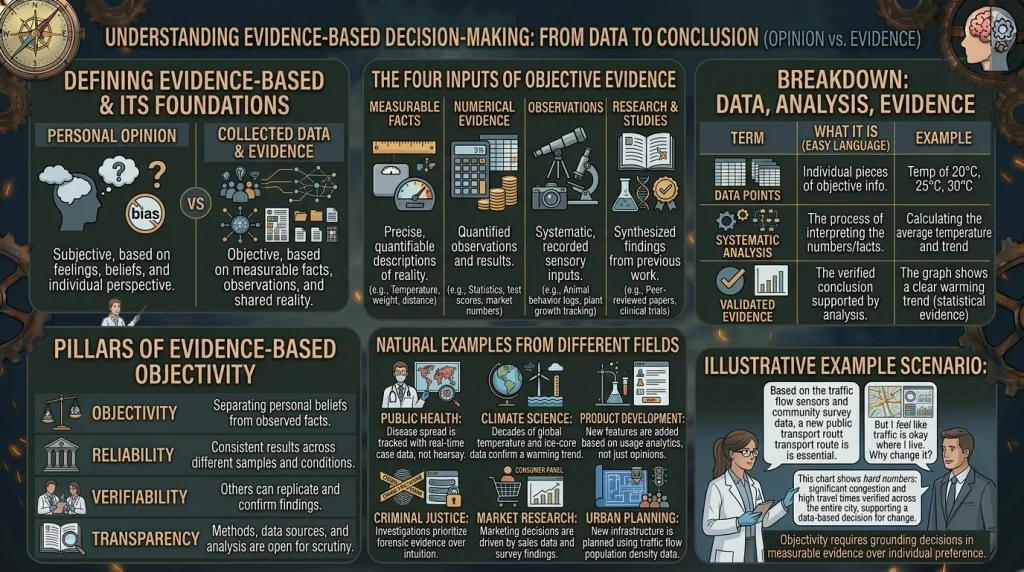
Practice: Choose the Best Synonym
1. The researcher analyzed survey results using formal ______ methods.
A. playful
B. statistical
C. emotional
D. fictional
2. The report contains ______ values showing the population change.
A. numerical
B. poetic
C. dramatic
D. imaginary
3. The company made a ______ decision after reviewing customer data.
A. data-driven
B. artistic
C. personal
D. fictional
4. The study focused on measurable amounts and used a ______ approach.
A. quantitative
B. emotional
C. literary
D. conversational
5. The researchers wanted evidence based on real-world observation.
A. empirical
B. decorative
C. informal
D. humorous
6. The model estimates the likelihood of several possible outcomes.
A. probabilistic
B. historical
C. conversational
D. visual
7. The article gives a ______ explanation supported by verifiable facts.
A. fact-based
B. imaginary
C. playful
D. dramatic
8. The researchers compared the results from two different groups.
A. comparative
B. fictional
C. emotional
D. informal
9. The company used specific performance measurements to evaluate employees.
A. metric-based
B. poetic
C. narrative
D. humorous
10. The study examined the relationship between two variables.
A. correlational
B. creative
C. casual
D. historical
11. The researchers recorded temperature changes through direct observation.
A. observational
B. fictional
C. playful
D. emotional
12. The forecast estimates future demand using existing information.
A. predictive
B. poetic
C. informal
D. personal
13. The report focuses on population characteristics such as age and location.
A. demographic
B. literary
C. emotional
D. conversational
14. The article presents conclusions supported by collected evidence.
A. evidence-based
B. imaginary
C. decorative
D. humorous
15. Create your own sentence using one synonym for statistical. Choose a word that fits an academic, workplace, or everyday situation.
Answer Key: 1-B, 2-A, 3-A, 4-A, 5-A, 6-A, 7-A, 8-A, 9-A, 10-A, 11-A, 12-A, 13-A, 14-A
Frequently Asked Questions
1. What is another word for statistical in academic writing?
In academic writing, useful alternatives include quantitative, empirical, numerical, analytical, data-based, evidence-based, and research-based. The best choice depends on the context. Use quantitative for measurable data, empirical for evidence from observation, and analytical when emphasizing the examination of information.
2. What is a simple synonym for statistical?
Numerical is one of the simplest alternatives to statistical, especially when you are describing information involving numbers. However, the two words are not always interchangeable. Statistical specifically connects to statistics and data analysis, while numerical simply means related to numbers.
3. Is quantitative the same as statistical?
Not exactly. Quantitative refers to measurable quantities or numerical information, while statistical specifically relates to statistics and the analysis or interpretation of data. They often overlap in academic writing, but they emphasize different aspects of numerical research.
4. What is the opposite of statistical?
There is no single perfect opposite of statistical. Depending on context, possible contrasts include qualitative, subjective, personal, descriptive, or anecdotal. For example, quantitative statistical information may be contrasted with qualitative information that focuses on experiences, meanings, or descriptions rather than numerical measurement.
5. Can I use data-driven instead of statistical?
Sometimes, but not always. Data-driven means that data strongly influences a decision, strategy, or conclusion. Statistical refers more broadly to statistics, numerical data, or statistical methods. For example, “data-driven strategy” is natural, while “statistical strategy” may have a different meaning.
6. What is a synonym for statistical data?
Depending on the context, you can use numerical data, quantitative data, empirical data, measured data, survey data, or research data. These expressions are not identical, so choose one according to how the information was collected and what it represents.
7. Which synonym for statistical sounds most formal?
Quantitative, empirical, correlational, probabilistic, and analytical can sound formal because they are common in academic and scientific contexts. However, formality should not be the only consideration. The synonym should accurately describe the type of information, evidence, or analysis involved.
Conclusion
Learning synonyms for statistical helps you choose words that explain numbers, data, research, and evidence with greater precision and variety.
Words such as numerical, quantitative, empirical, analytical, and data-driven each highlight a slightly different idea, making your writing clearer.
These alternatives can strengthen essays, blogs, reports, emails, and everyday conversations. The right synonym also helps you sound more natural and confident.
Keep practicing by using these words in your own sentences. Try them in essays, emails, reports, and daily conversations to build stronger vocabulary.

Samia Noor is the founder and lead writer at SynonymGenius.com, where she creates accurate, reader-focused English language content that helps people communicate with clarity and confidence. She specializes in synonyms, antonyms, word meanings, idioms, and practical vocabulary guides that make complex language concepts simple and easy to understand. Every article is thoroughly researched, carefully fact-checked, and written in clear, accessible language using reliable sources and real-world examples. Her mission is to provide trustworthy, high-quality content that supports students, writers, educators, professionals, and English learners at every stage of their language journey.
Her editorial approach emphasizes accuracy, transparency, and genuine value for readers while following modern E-E-A-T and content quality standards. She regularly reviews and updates published content to ensure it remains current, reliable, and easy to understand. Through SynonymGenius.com, Samia Noor is committed to publishing dependable language resources that help readers expand their vocabulary, strengthen their writing skills, improve communication, and build confidence in academic, professional, and everyday English.