
Synonyms for ultra include extreme, very, exceptionally, super, highly, intense, and extraordinary. These alternatives express a high degree, an advanced level, or something beyond the usual limit. The best choice depends on the sentence, context, and intended meaning.
Imagine describing a phone with impressive features. You might call it ultra-modern, but you could also say it is exceptionally advanced. Learning synonyms for ultra helps you express the same idea more precisely.
The word ultra appears in advertising, technology, fashion, sports, and everyday conversation. Writers use it to emphasize quality, intensity, or an unusually high level of something.
Students can use synonyms for ultra to strengthen essays and expand vocabulary. Bloggers and content writers can avoid repetitive wording, while everyday English users can express ideas more naturally.
Whether you describe an extreme situation or an exceptionally advanced product, choosing the right alternative makes your message clearer. A little vocabulary practice can help you use these words confidently.
What Does “Ultra” Really Mean?
Ultra means beyond the usual limit, extremely, or above normal. It often emphasizes intensity, quality, size, speed, or degree.
For example, an ultra-light laptop weighs very little, while an ultra-modern building features highly advanced design. The exact meaning depends on the word that follows it.
Part of Speech
Ultra can function as a prefix, an adjective, or a noun in certain contexts.
- Prefix: Adds the meaning of beyond, extreme, or very high, as in ultraviolet and ultramodern.
- Adjective: Describes an extreme or uncompromising position, as in an ultra-conservative viewpoint.
- Noun: Informally refers to a person with an extreme political or other ideological position, depending on context.
In everyday English, ultra often appears in compound adjectives and product descriptions. It can suggest impressive performance, unusual intensity, or a position beyond conventional limits.
Connotative Meaning
(Connotation means the feeling or association a word creates beyond its basic dictionary meaning.)
Positive tone: Ultra can suggest exceptional quality, innovation, or impressive performance. For example, an ultra-comfortable chair sounds especially comfortable.
Negative tone: It can suggest excess, extremism, or an unreasonable position. For example, an ultra-rigid policy may seem unnecessarily strict.
Neutral tone: It can simply describe a high degree or a technical category. For example, ultraviolet radiation is a scientific term.
Etymology and History
The word ultra comes from Latin, where it means “beyond” or “on the other side of.” English adopted it as a word-forming element that expresses something beyond an ordinary boundary.
- Old English (450–1100): Ultra was not an established native Old English word. English speakers generally expressed similar ideas using native words and phrases.
- Middle English (1100–1500): Latin and French influences expanded English vocabulary. Learned Latin elements gradually became more familiar in educated writing.
- Modern English (1500–present): Ultra became increasingly productive in scientific, political, commercial, and everyday language. Modern compounds include ultramodern, ultralight, and ultraviolet.
Pronunciation
- US: /ˈʌltrə/
- UK: /ˈʌltrə/
Syllables
ul-tra — 2 syllables.
Affixation Pattern of Ultra
- Root or base: ultra, from Latin ultra, meaning beyond.
- Prefix: ultra- in words such as ultrasonic and ultramodern.
- Suffix: None in the basic word ultra.
When ultra stands alone, it may act as an adjective or noun. When it joins another word, it usually functions as a prefix that adds emphasis or indicates something beyond a normal limit.
Synonyms List
The following 50 alternatives cover several meanings associated with ultra. Some express intensity, while others describe exceptional quality, advanced development, or an extreme position. They are not interchangeable in every sentence, so check the meaning and grammatical role before choosing one.
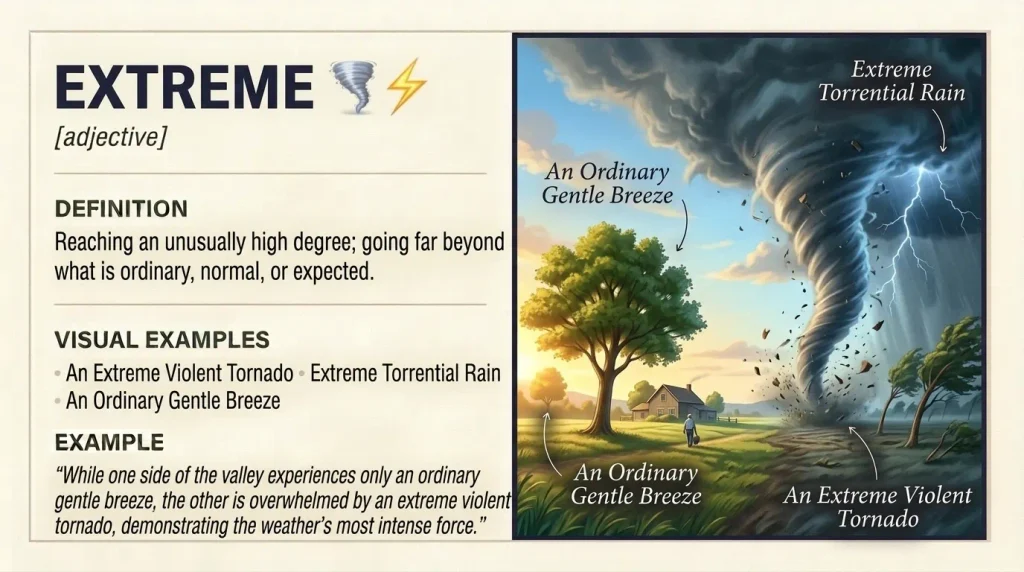
1. Extreme (Adjective)
Meaning: Extreme describes something that reaches an unusually high degree or goes far beyond what people consider normal.
Tone/Register: Neutral, formal, academic.
Example:
- The hikers prepared for extreme weather.
- Her extreme dedication helped the team succeed.
2. Extremely (Adverb)
Meaning: Extremely means to a very high degree or beyond what is usual.
Tone/Register: Neutral, everyday.
Example:
- This assignment is extremely challenging.
- The new headphones are extremely comfortable.
3. Super (Adjective/Adverb)
Meaning: Super expresses a high degree of quality or intensity, especially in informal conversation.
Tone/Register: Informal, conversational.
Example:
- We found a super convenient place to stay.
- Your presentation was super clear.
4. Exceptional (Adjective)
Meaning: Exceptional describes something unusually good or far above an ordinary standard.
Tone/Register: Positive, formal, professional.
Example:
- She delivered exceptional customer service.
- The restaurant is known for exceptional food.
5. Exceptionally (Adverb)
Meaning: Exceptionally means to an unusually high degree or in a way that stands apart from the ordinary.
Tone/Register: Formal, academic, professional.
Example:
- The instructions were exceptionally clear.
- He is exceptionally good at solving problems.
6. Extraordinary (Adjective)
Meaning: Extraordinary describes something remarkable that differs greatly from ordinary experience.
Tone/Register: Positive, descriptive.
Example:
- The artist created an extraordinary sculpture.
- Their team made extraordinary progress this year.
7. Highly (Adverb)
Meaning: Highly indicates a strong degree of a quality, achievement, or characteristic.
Tone/Register: Neutral, professional, academic.
Example:
- The company hired a highly skilled engineer.
- This book is highly recommended for beginners.
8. Very (Adverb)
Meaning: Very emphasizes the degree of an adjective or adverb and often replaces ultra in ordinary speech.
Tone/Register: Neutral, conversational.
Example:
- The classroom is very bright.
- This route is very convenient for commuters.
9. Intensely (Adverb)
Meaning: Intensely describes something experienced or performed with great strength, concentration, or emotion.
Tone/Register: Neutral, descriptive.
Example:
- She listened intensely during the interview.
- The two teams competed intensely.
10. Intense (Adjective)
Meaning: Intense describes a strong degree of activity, feeling, pressure, or experience.
Tone/Register: Neutral, descriptive.
Example:
- The players faced intense competition.
- We had an intense discussion about the proposal.
11. Maximum (Adjective/Noun)
Meaning: Maximum refers to the greatest amount, level, or limit that something can reach.
Tone/Register: Technical, neutral, professional.
Example:
- The device operates at maximum capacity.
- Please use the maximum available space efficiently.
12. Maximal (Adjective)
Meaning: Maximal describes something that reaches the greatest possible level within particular conditions.
Tone/Register: Technical, academic.
Example:
- The experiment required maximal concentration.
- The athlete trained for maximal performance.
13. Optimal (Adjective)
Meaning: Optimal describes the best or most favorable level for a particular purpose, rather than simply the greatest level.
Tone/Register: Professional, academic.
Example:
- Plants need optimal conditions to grow.
- The team chose the optimal time for the launch.
14. Supreme (Adjective)
Meaning: Supreme describes the highest level of authority, power, quality, or achievement.
Tone/Register: Formal, emphatic.
Example:
- The judge holds supreme authority in that matter.
- The chef takes supreme pride in every dish.
15. Utmost (Adjective/Noun)
Meaning: Utmost refers to the greatest possible degree of effort, importance, or care.
Tone/Register: Formal, professional.
Example:
- Please handle these documents with the utmost care.
- Her safety remains our utmost priority.
16. Unparalleled (Adjective)
Meaning: Unparalleled describes something with no equal or comparable example.
Tone/Register: Positive, formal, promotional.
Example:
- The museum offers unparalleled views of the city.
- Their service has earned an unparalleled reputation.
17. Unprecedented (Adjective)
Meaning: Unprecedented describes something that has never happened or existed in quite the same way before.
Tone/Register: Formal, journalistic, academic.
Example:
- The town experienced unprecedented rainfall.
- The project attracted unprecedented public interest.
18. Remarkable (Adjective)
Meaning: Remarkable describes something worthy of attention because it is unusually impressive or surprising.
Tone/Register: Positive, neutral.
Example:
- She showed remarkable patience with the children.
- The team achieved remarkable results in six months.
19. Outstanding (Adjective)
Meaning: Outstanding describes quality or performance that is noticeably better than average.
Tone/Register: Positive, professional.
Example:
- He received an award for outstanding service.
- Her essay demonstrated outstanding research skills.
20. Superb (Adjective)
Meaning: Superb means exceptionally good in quality, skill, or performance.
Tone/Register: Positive, conversational or formal.
Example:
- The orchestra gave a superb performance.
- This café serves superb homemade bread.
21. Phenomenal (Adjective)
Meaning: Phenomenal describes something extraordinarily impressive in scale, success, or ability.
Tone/Register: Enthusiastic, informal to professional.
Example:
- The small business experienced phenomenal growth.
- Her phenomenal memory surprised everyone.
22. Tremendous (Adjective)
Meaning: Tremendous describes something very large, powerful, impressive, or significant.
Tone/Register: Positive or neutral.
Example:
- The volunteers made a tremendous effort.
- The new system brought tremendous improvements.
23. Massive (Adjective)
Meaning: Massive describes something exceptionally large in size, scale, amount, or impact.
Tone/Register: Informal, journalistic, neutral.
Example:
- The company announced a massive expansion.
- A massive crowd gathered outside the stadium.
24. Enormous (Adjective)
Meaning: Enormous describes something extremely large or unusually great in quantity or degree.
Tone/Register: Neutral, descriptive.
Example:
- The new library has an enormous collection.
- She felt enormous relief after the exam.
25. Immense (Adjective)
Meaning: Immense describes something extremely large in size, importance, or extent.
Tone/Register: Neutral, formal.
Example:
- The discovery had immense scientific value.
- We felt immense gratitude toward our neighbors.
26. Gigantic (Adjective)
Meaning: Gigantic describes something extraordinarily large compared with ordinary examples.
Tone/Register: Informal, descriptive.
Example:
- A gigantic screen covered the stadium wall.
- They ordered a gigantic birthday cake.
27. Colossal (Adjective)
Meaning: Colossal describes something enormously large or impressive in scale.
Tone/Register: Emphatic, literary, journalistic.
Example:
- The construction project required a colossal investment.
- The statue made a colossal impression on visitors.
28. Monumental (Adjective)
Meaning: Monumental describes something exceptionally important, influential, or large in scale.
Tone/Register: Formal, descriptive.
Example:
- The scientists made a monumental discovery.
- Completing the project was a monumental achievement.
29. Extraordinary-High (Descriptive Phrase)

Usage note: Extraordinarily high is the natural English phrase; extraordinary-high is not a standard general-purpose synonym.
Meaning: Extraordinarily high describes a level far above what people normally expect.
Tone/Register: Neutral, analytical.
Example:
- The region recorded an extraordinarily high temperature.
- The survey showed an extraordinarily high level of interest.
30. Excessive (Adjective)
Meaning: Excessive describes an amount or degree that is greater than necessary, reasonable, or acceptable.
Tone/Register: Negative, formal.
Example:
- The hotel charged an excessive cancellation fee.
- Excessive screen time can interrupt a healthy routine.
31. Exaggerated (Adjective)
Meaning: Exaggerated describes something presented as larger, stronger, or more important than it really is.
Tone/Register: Critical, neutral.
Example:
- The advertisement made exaggerated claims.
- His reaction seemed exaggerated for such a small problem.
32. Over-the-Top (Adjective/Phrase)
Meaning: Over-the-top describes something excessively dramatic, elaborate, or intense.
Tone/Register: Informal, often critical or playful.
Example:
- The wedding decorations were completely over-the-top.
- His over-the-top reaction made everyone laugh.
33. Superlative (Adjective/Noun)
Meaning: Superlative describes the highest degree of quality or a form of comparison expressing the highest level.
Tone/Register: Formal, grammatical, evaluative.
Example:
- The critic gave the film a superlative review.
- “Best” is the superlative form of “good.”
34. Premier (Adjective)
Meaning: Premier describes something regarded as leading or first in importance, quality, or status.
Tone/Register: Formal, professional, promotional.
Example:
- The city is home to a premier research center.
- She attended a premier international design event.
35. Elite (Adjective/Noun)
Meaning: Elite describes a select group or level associated with exceptional ability, status, or performance.
Tone/Register: Professional, competitive.
Example:
- The academy trains elite athletes.
- She joined an elite team of researchers.
36. Advanced (Adjective)
Meaning: Advanced describes something highly developed, technically sophisticated, or beyond a basic level.
Tone/Register: Academic, technical, professional.
Example:
- The hospital uses advanced imaging technology.
- He enrolled in an advanced English course.
37. Cutting-Edge (Adjective)
Meaning: Cutting-edge describes the newest and most innovative stage of development in a field.
Tone/Register: Professional, technological.
Example:
- The laboratory develops cutting-edge medical devices.
- Their team uses cutting-edge design methods.
38. State-of-the-Art (Adjective/Phrase)
Meaning: State-of-the-art describes equipment or systems that use the most advanced technology currently available.
Tone/Register: Professional, technical.
Example:
- The hospital opened a state-of-the-art treatment center.
- Our studio features state-of-the-art recording equipment.
39. High-End (Adjective)
Meaning: High-end describes products or services positioned at the upper end of a market in quality, features, or price.
Tone/Register: Commercial, conversational.
Example:
- The store specializes in high-end furniture.
- She bought a high-end camera for her studio.
40. Premium (Adjective/Noun)
Meaning: Premium describes a product or service of superior quality or a higher market tier.
Tone/Register: Commercial, professional.
Example:
- The company introduced a premium membership.
- This brand uses premium materials in its jackets.
41. Ultra-Modern (Adjective)
Meaning: Ultra-modern describes something with a very contemporary design or highly advanced features.
Tone/Register: Neutral, descriptive.
Example:
- They moved into an ultra-modern apartment.
- The clinic has an ultra-modern interior.
42. Radical (Adjective)
Meaning: Radical describes a major departure from traditional ideas or established practices.
Tone/Register: Political, academic, sometimes critical.
Example:
- The school introduced radical changes to its curriculum.
- She proposed a radical solution to the problem.
43. Extremeist (Not Standard)
Usage note: Extremist is the standard word for a person who supports extreme views. It is not a general synonym for ultra in ordinary descriptions.
Meaning: An extremist is a person who advocates views far outside accepted political or ideological norms, sometimes supporting harmful methods.
Tone/Register: Political, often negative.
Example:
- The report examined how extremist groups recruit members.
- The organization rejected extremist rhetoric.
44. Fanatical (Adjective)
Meaning: Fanatical describes excessive and often unreasonable enthusiasm or devotion to a belief or activity.
Tone/Register: Strong, usually negative.
Example:
- He has a fanatical interest in vintage cars.
- The story explores the dangers of fanatical loyalty.
45. Zealous (Adjective)
Meaning: Zealous describes someone who shows intense energy and commitment toward a cause or goal.
Tone/Register: Formal, positive or critical depending on context.
Example:
- She is a zealous supporter of public libraries.
- The new manager became zealous about improving safety.
46. Uncompromising (Adjective)
Meaning: Uncompromising describes someone or something that refuses to relax standards, principles, or demands.
Tone/Register: Formal, neutral to negative.
Example:
- The editor maintained uncompromising quality standards.
- His uncompromising attitude made negotiations difficult.
47. Hardline (Adjective)
Meaning: Hardline describes a strict or inflexible position, particularly in politics or negotiations.
Tone/Register: Political, journalistic.
Example:
- The party adopted a hardline position on immigration.
- Negotiators struggled with the company’s hardline demands.
48. Intense-Feeling (Descriptive Phrase)
Usage note: Intense feeling is a natural phrase, but intense-feeling is not a common standalone synonym for ultra.
Meaning: Intense feeling refers to a powerful emotional experience that goes beyond mild reactions.
Tone/Register: Descriptive, conversational.
Example:
- She described an intense feeling of relief.
- The final scene created an intense feeling of suspense.
49. Supercharged (Adjective)
Meaning: Supercharged describes something energized, strengthened, or enhanced beyond its ordinary level.
Tone/Register: Informal, promotional, expressive.
Example:
- The update delivered a supercharged gaming experience.
- Coffee gave him a supercharged start to the morning.
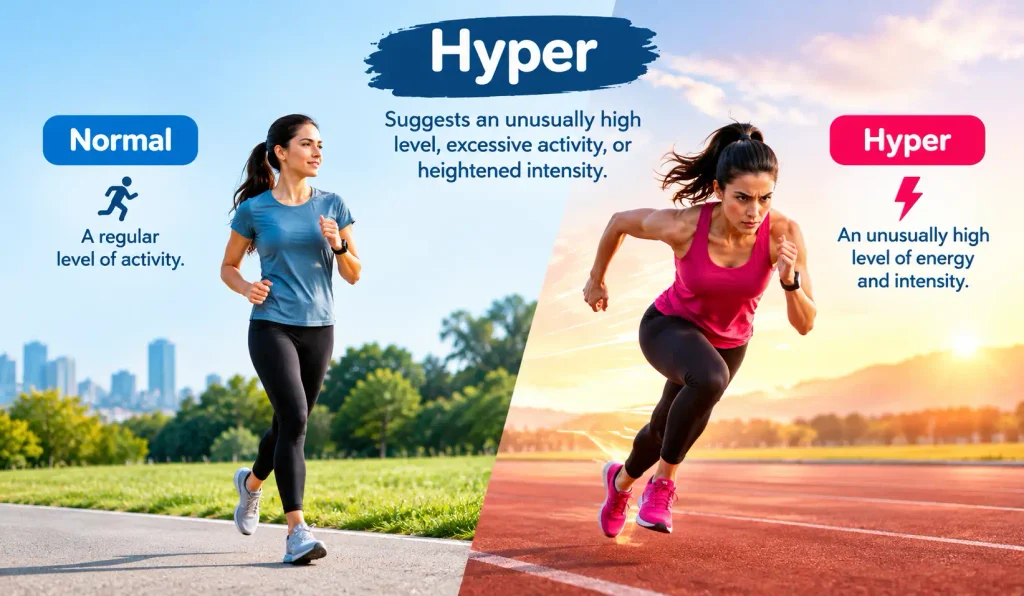
50. Hyper (Adjective/Prefix)
Meaning: Hyper suggests an unusually high level, excessive activity, or heightened intensity.
Tone/Register: Informal, scientific when used as a prefix.
Example:
- The children became hyper after eating too much candy.
- The specialist explained how hyperactivity can affect concentration.
Synonyms for Ultra by Tone
The right synonym depends on what you want readers to feel. A word that sounds impressive in marketing may sound exaggerated in an academic essay.
Positive
- Exceptional: Highlights unusually good quality.
- Superb: Communicates strong approval.
- Outstanding: Emphasizes performance above expectations.
- Phenomenal: Expresses amazement at an impressive result.
- Unparalleled: Suggests that nothing else compares.
Neutral
- Very: Adds straightforward emphasis.
- Extremely: Expresses a high degree.
- Highly: Fits professional and academic descriptions.
- Advanced: Highlights development or sophistication.
- Maximum: Refers to the greatest permitted or possible amount.
Negative
- Excessive: Suggests more than necessary.
- Over-the-top: Indicates too much drama or decoration.
- Fanatical: Suggests unreasonable devotion.
- Hardline: Highlights a strict, inflexible position.
- Uncompromising: Can imply unwillingness to negotiate.
Playful or Informal
- Super: A casual way to add emphasis.
- Hyper: Suggests heightened energy or activity.
- Supercharged: Makes something sound especially energetic.
- Massive: Adds conversational emphasis to size or impact.
Tone matters because synonyms carry different emotional associations. Choose words that match your audience, purpose, and the level of emphasis you intend.
“Ultra” vs. Close Alternatives
Super vs.Ultra
Ultra often suggests something beyond the ordinary limit, especially in compounds such as ultralight or ultramodern. Super sounds more casual and often communicates enthusiasm.
Use ultra-light in a product description and super comfortable in everyday conversation.
Extreme vs. Ultra
Ultra often acts as a prefix or intensifier, while extreme usually describes a condition, degree, or position directly.
Say ultra-thin screen when describing a product. Use extreme heat when discussing unusually high temperatures.
Ultra vs. Exceptional
Ultra emphasizes degree or intensity. Exceptional highlights something that stands out from the usual standard, often because of its quality.
An ultra-fast connection focuses on speed. Exceptional service focuses on quality.
How “Ultra” Changes by Context
Daily Conversation
In casual speech, super, very, and extremely often sound more natural than ultra. You might say, “That restaurant is super busy,” rather than “That restaurant is ultra busy.”
Writing and Blogging
Bloggers can use exceptional, advanced, remarkable, and highly effective to create more precise descriptions. The best choice depends on the topic and the claim being made.
For example, an ultra-fast laptop can become a high-performance laptop when the sentence discusses computing capability.
Professional and Academic Writing
In formal writing, choose specific words instead of relying on general intensifiers. Maximum capacity, optimal conditions, and unprecedented growth communicate different meanings.
Avoid using ultra repeatedly when a precise technical term explains the point more clearly.
Creative and Informal Writing
In stories, advertisements, and social posts, words such as supercharged, colossal, and phenomenal can add energy. Use them carefully so the description remains believable.
Common Mistakes Learners Make
Using Every Synonym in Every Context
Excessive is not a positive replacement for ultra, and exceptional does not simply mean “very.” Check whether the sentence emphasizes degree, quality, size, or extremity.
Confusing Prefixes With Standalone Words
Ultra- frequently joins another word, as in ultraviolet. You cannot automatically replace it with extremely without changing the sentence structure.
Overusing Intensifiers
Using very, extremely, super, and ultra repeatedly can make writing sound exaggerated. Replace vague emphasis with a precise description when possible.
Choosing Promotional Language for Academic Work
Words such as phenomenal and superb express strong opinions. Formal reports usually benefit from measurable descriptions and evidence.
Register Notes
- Formal: exceptional, unparalleled, optimal, unprecedented.
- Informal: super, massive, over-the-top, hyper.
- Technical: maximum, maximal, advanced, state-of-the-art.
- Critical: excessive, fanatical, hardline.
For more vocabulary practice, explore related synonym topics on your English-learning site and compare how different words work in complete sentences.
Real-Life Examples Using Ultra and Its Alternatives
Workplace
A manager might describe an employee’s performance as outstanding rather than simply saying it was ultra-good. The alternative sounds more professional and specific.
Social Situations
A friend might say, “That concert was phenomenal!” This conveys enthusiasm more naturally than a stiff phrase such as “That concert was ultra-impressive.”
Media and Pop Culture
A technology reviewer might describe a phone as state-of-the-art. A movie critic might call a dramatic scene intense or extraordinary.
Writing and Storytelling
A novelist could describe a storm as extreme, a character’s loyalty as uncompromising, or a discovery as unprecedented. Each word adds a distinct shade of meaning.
Practice Quiz
Choose the best alternative for each sentence. Consider the context and tone before answering.
1. The research team discovered anything previously recorded.
A. Excessive
B. Unprecedented
C. Over-the-top
2. The laptop uses the newest available technology.
A. State-of-the-art
B. Fanatical
C. Massive
3. The employee consistently performs better than expected.
A. Outstanding
B. Hardline
C. Excessive
4. The decorations were so elaborate that guests found them ridiculous.
A. Optimal
B. Over-the-top
C. Unparalleled
5. Please handle the fragile equipment with the greatest possible care.
A. Utmost
B. Hyper
C. Radical
6. The company spent more money than the project reasonably required.
A. Exceptional
B. Excessive
C. Superb
7. She is deeply committed to protecting local wildlife.
A. Zealous
B. Maximum
C. Gigantic
8. The team needs the best possible working conditions.
A. Optimal
B. Colossal
C. Fanatical
9. The new engine delivers far more power than the previous version.
A. Supercharged
B. Uncompromising
C. Utmost
10. The athlete trained with great focus and emotional energy.
A. Intensely
B. Premier
C. Massive
Reflection Task
Write one sentence about your school, workplace, favorite product, or daily routine. Replace ultra with a suitable synonym and explain why your chosen word fits the context.
Answer Key
1-B | 2-A | 3-A | 4-B | 5-A | 6-B | 7-A | 8-A | 9-A | 10-A
Suggested external sources:
- Cambridge Dictionary: https://dictionary.cambridge.org/
- Merriam-Webster Dictionary: https://www.merriam-webster.com/
Conclusion
Learning synonyms for ultra helps you express intensity, quality, and degree with greater precision. The right word makes everyday conversations and written descriptions clearer.
Students can use these alternatives to improve essays, while bloggers and content writers can create more varied and engaging content. Careful word choice also strengthens professional communication.
Practice the differences between extreme, exceptional, super, and advanced. Each word has a particular purpose, so use examples to understand when it works best.
Start today by writing three sentences using different synonyms for ultra. Try them in an email, an essay, or a daily conversation to build lasting vocabulary skills.
Frequently Asked Questions
1. What is the best synonym for ultra in formal writing?
The best choice depends on the intended meaning. Exceptional works well for outstanding quality, extreme describes an unusually high degree, and advanced highlights sophisticated development. In professional writing, choose the word that communicates the exact point rather than selecting the strongest-sounding alternative.
2. Can I use “very” instead of “ultra” in every sentence?
No. Very usually modifies an adjective or adverb, while ultra- often forms compound words. For example, an ultramodern building can become a very modern building, although a very modern building is grammatically natural. In technical terms such as ultraviolet, replacing ultra- with very changes the meaning.
3. What are the best synonyms for ultra-modern?
Useful alternatives include advanced, cutting-edge, state-of-the-art, and highly contemporary. State-of-the-art emphasizes the latest technology, while cutting-edge highlights innovation. Advanced is broader and suits both technology and skills. Choose according to whether you mean modern appearance, technical development, or new ideas.
4. Is “ultra” formal or informal English?
Ultra appears in both formal and informal English. Scientific words such as ultraviolet are technical, while ultra-modern appears in general descriptions. In casual speech, people often prefer super or extremely. Formal writing usually benefits from a precise alternative that communicates the intended meaning.
5. What is the difference between ultra, extreme, and excessive?
Ultra emphasizes something beyond the ordinary, often as a prefix. Extreme describes an unusually high degree or an outer limit. Excessive adds a negative judgment that something exceeds what is necessary or reasonable. For example, extreme heat is a condition, while excessive spending suggests unnecessary expense.
6. How can I avoid repeating “ultra” in SEO articles?
Use alternatives that match the subject rather than swapping words mechanically. A technology article might use advanced, high-performance, or state-of-the-art. A lifestyle article might use exceptional or extremely comfortable. Keep the wording natural, answer the reader’s question directly, and avoid inserting synonyms where they do not fit.
7. What is the origin of the word “ultra”?
Ultra comes from Latin and means “beyond” or “on the other side of.” English uses it as a standalone word and as a prefix in terms such as ultramodern and ultraviolet. Its meaning has expanded across science, politics, technology, and everyday descriptions.
8. Where can I verify the meaning and pronunciation of ultra?
Consult a reputable learner’s dictionary for definitions, pronunciation, grammatical labels, and examples. The Cambridge Dictionary and Merriam-Webster are useful starting points. Compare dictionary examples with the context of your sentence before choosing a synonym.

Samia Noor is the founder and lead writer at SynonymGenius.com, where she creates accurate, reader-focused English language content that helps people communicate with clarity and confidence. She specializes in synonyms, antonyms, word meanings, idioms, and practical vocabulary guides that make complex language concepts simple and easy to understand. Every article is thoroughly researched, carefully fact-checked, and written in clear, accessible language using reliable sources and real-world examples. Her mission is to provide trustworthy, high-quality content that supports students, writers, educators, professionals, and English learners at every stage of their language journey.
Her editorial approach emphasizes accuracy, transparency, and genuine value for readers while following modern E-E-A-T and content quality standards. She regularly reviews and updates published content to ensure it remains current, reliable, and easy to understand. Through SynonymGenius.com, Samia Noor is committed to publishing dependable language resources that help readers expand their vocabulary, strengthen their writing skills, improve communication, and build confidence in academic, professional, and everyday English.