
Synonyms for representative democracy include words and phrases that describe a system where people elect leaders to represent them. Learning these terms helps improve your vocabulary and writing.
Many students and writers search for synonyms for representative democracy to use the right word in essays, articles, and discussions. Some are direct synonyms, while others fit specific contexts.
This guide explains the meaning of synonyms for representative democracy with simple definitions and examples. It will help you choose the best alternative with confidence.
You’ll also learn when to use each term correctly, making it easier to write clearly and understand political vocabulary.
What Does “Representative Democracy” Really Mean?
Representative democracy is a noun phrase that describes a system of government where eligible citizens elect representatives to create laws and run the nation. Native English speakers use this term to contrast it directly with systems where everyday people vote on every single state issue themselves. You will frequently see this phrase appear in political science essays, news broadcasts, legal constitutions, and high school history classes.
Connotative Meaning
Connotation is the cultural or emotional feeling that a word invokes in addition to its literal or primary dictionary definition.
- Positive tone: It suggests human liberty, individual voting rights, institutional balance, systemic stability, and public accountability.
- Negative tone: It can sometimes imply bureaucratic delays, corrupt elite control, political party gridlock, or a system disconnected from the working class.
- Neutral tone: It simply describes an operational framework of state governance, election cycles, and constitutional public administration.

Etymology
The phrase combines representative (from Latin repraesentare, meaning to bring before or exhibit) and democracy (from Greek demokratia, meaning popular rule).
- Old English (450–1100): Early crews used terms like folcrise (people’s rule) or þeodscipe to describe community councils or general public fellowships.
- Middle English (1100–1500): The French word democratie entered the English legal system to describe historical Greek city-state assemblies.
- Modern English (1500–Present): The two terms merged structurally as global nations grew too large for all citizens to vote together on every minor law.
Pronunciation (US & UK – IPA)
- US: /ˌrep.rɪˈzen.t̬ə.t̬ɪv dɪˈmɑː.krə.si/
- UK: /ˌrep.rɪˈzen.tə.tɪv dɪˈmɒk.rə.si/
Syllables
rep-re-sen-ta-tive de-moc-ra-cy
Affixation Pattern
- Root: praesentare (Latin) & demos/kratos (Greek)
- Prefix: re- (meaning back or again)
- Suffix: -ative (forming an adjective) & -acy (forming a noun indicating a state)
Synonyms List
Indirect democracy (Noun) — US: /ˌɪn.dɪˈrekt dɪˈmɑː.krə.si/ | UK: /ˌɪn.daɪˈrekt dɪˈmɒk.rə.si/
Meaning: A democratic government where citizens choose officials to make decisions rather than voting directly on laws.
Examples:
- The text argues that an indirect democracy functions much better in large nations than a pure town hall system.
- Scholars analyzed how the country transitioned into a stable indirect democracy after the historic revolution.
Republic (Noun) — US: /rɪˈpʌb.lɪk/ | UK: /rɪˈpʌb.lɪk/
Meaning: A state in which supreme power belongs to the people and their elected representatives, featuring an elected president.
Examples:
- The constitution explicitly states that the newly independent territory shall remain a sovereign republic.
- Citizens celebrated the anniversary of the day their nation became a free republic.
Constitutional republic (Noun) — US: /ˌkɑːn.stəˈtuː.ʃən.əl rɪˈpʌb.lɪk/ | UK: /ˌkɒn.stɪˈtʃuː.ʃən.əl rɪˈpʌb.lɪk/
Meaning: A state where elected officials govern according to a foundational constitution that limits government power over citizens.
Examples:
- The United States operates fundamentally as a constitutional republic with clear balances of political power.
- Law students examined how a constitutional republic protects minority viewpoints from majority votes.
Democratic republic (Noun) — US: /ˌdem.əˈkræt̬.ɪk rɪˈpʌb.lɪk/ | UK: /ˌdem.əˈkræt.ɪk rɪˈpʌb.lɪk/
Meaning: A government that operates as both a republic and a democracy, where people elect leaders through regular public votes.
Examples:
- The country proudly declared itself a democratic republic after holding its first open national elections.
- The newly written charter outlines the administrative rules for the democratic republic.
Parliamentary democracy (Noun) — US: /ˌpɑːr.ləˈmen.t̬ɚ.i dɪˈmɑː.krə.si/ | UK: /ˌpɑː.lɪˈmen.tər.i dɪˈmɒk.rə.si/
Meaning: A governance model where the political party with the most seats in parliament forms the executive government.
Examples:
- The United Kingdom stands as a classic global example of a stable parliamentary democracy.
- Voters select their local representatives to determine which party would lead the parliamentary democracy.
Presidential democracy (Noun) — US: /ˌprez.əˈden.ʃəl dɪˈmɑː.krə.si/ | UK: /ˌprez.ɪˈden.ʃəl dɪˈmɒk.rə.si/
Meaning: A democratic system where the head of government is a president who is elected independently of the legislature.
Examples:
- The Latin American nation adopted a presidential democracy to separate executive powers from parliament.
- Debates sparked over whether a presidential democracy provides more stability than a prime minister system.
Liberal democracy (Noun) — US: /ˌlɪb.ɚ.əl dɪˈmɑː.krə.si/ | UK: /ˌlɪb.ər.əl dɪˈmɒk.rə.si/
Meaning: A democratic system that pairs representative elections with the strict protection of individual human rights and civil liberties.
Examples:
- Free speech and an independent press are vital pillars of any healthy liberal democracy.
- The international alliance seeks to defend the core values of liberal democracy worldwide.
Representative government (Noun) — US: /ˌrep.rɪˈzen.t̬ə.t̬ɪv ˈɡʌv.ɚn.mənt/ | UK: /ˌrep.rɪˈzen.tə.tɪv ˈɡʌv.ən.mənt/
Meaning: An overarching term for any political system where the public elects individuals to represent their legislative interests.
Examples:
- Early colonists strongly demanded a voice in their own representative government.
- The political science professor lectured on the structural evolution of modern representative government.
Electoral democracy (Noun) — US: /iˈlek.tɚ.əl dɪˈmɑː.krə.si/ | UK: /iˈlek.tər.əl dɪˈmɒk.rə.si/
Meaning: A political framework focused primarily on the process of holding clean, regular, and competitive elections.
Examples:
- International monitors confirmed the small state had met the basic requirements of an electoral democracy.
- Some critics argue that an electoral democracy is empty if individual civil rights are ignored.
Constitutional democracy (Noun) — US: /ˌkɑːn.stəˈtuː.ʃən.əl dɪˈmɑː.krə.si/ | UK: /ˌkɒn.stɪˈtʃuː.ʃən.əl dɪˈmɒk.rə.si/
Meaning: A structural democracy where the structure of the government is strictly defined and limited by a constitution.
Examples:
- A true constitutional democracy protects individual citizens from arbitrary legal arrest by state leaders.
- Judges play a critical role in maintaining legal balance within a constitutional democracy.
Popular government (Noun) — US: /ˈpɑː.pjə.lɚ ˈɡʌv.ɚn.mənt/ | UK: /ˈpɒp.jə.lər ˈɡʌv.ən.mənt/
Meaning: A government that is controlled, formed, and sustained by the consensus of the voting population.
Examples:
- The revolutionary leaders aimed to establish a stable popular government for all citizens.
- Philosophers wrote detailed essays about the long-term benefits of regular popular government.
Majoritarian democracy (Noun) — US: /məˌdʒɔːr.əˈter.i.ən dɪˈmɑː.krə.si/ | UK: /məˌdʒɒr.ɪˈteə.ri.ən dɪˈmɒk.rə.si/
Meaning: A democratic system based primarily on the political principle that the absolute majority of citizens should make choices.
Examples:
- Critics worry that a pure majoritarian democracy might easily trample the rights of smaller cultural groups.
- The election outcome demonstrated the powerful mechanics of a functioning majoritarian democracy.
Pluralist democracy (Noun) — US: /ˈplʊr.əl.ɪst dɪˈmɑː.krə.si/ | UK: /ˈplʊə.rəl.ɪst dɪˈmɒk.rə.si/
Meaning: A political system where multiple competing interest groups hold power and influence over legislative choices.
Examples:
- In a pluralist democracy, business groups, environmentalists, and labor unions all compete for political attention.
- The open political debate highlighted the diverse perspectives present in our pluralist democracy.
Republican government (Noun) — US: /rɪˈpʌb.lɪ.kən ˈɡʌv.ɚn.mənt/ | UK: /rɪˈpʌb.lɪ.kən ˈɡʌv.ən.mənt/
Meaning: A form of state administration administered by representatives chosen directly or indirectly by the voting citizenry.
Examples:
- The federal constitution guarantees a stable republican government to every province in the land.
- Historians traced the ancient Roman roots of the modern republican government model.
Free state (Noun) — US: /friː steɪt/ | UK: /friː steɪt/
Meaning: A sovereign nation where the citizens live under a free, democratically elected political system.
Examples:
- The brave soldiers fought hard to ensure their homeland would remain a proud free state.
- The treaty officially recognized the newly formed territory as a completely independent free state.
Elective government (Noun) — US: /iˈlek.tɪv ˈɡʌv.ɚn.mənt/ | UK: /iˈlek.tɪv ˈɡʌv.ən.mənt/
Meaning: A governmental system where leaders obtain their administrative power solely through public ballot boxes.
Examples:
- The country successfully replaced its military rule with a transparent elective government.
- An elective government relies heavily on the active participation of informed public voters.
Multi-party democracy (Noun) — US: /ˌmʌl.tiˈpɑːr.t̬i dɪˈmɑː.krə.si/ | UK: /ˌmʌl.tiˈpɑː.ti dɪˈmɒk.rə.si/
Meaning: A system where multiple separate political parties have the realistic capability to gain government control.
Examples:
- The new amendments opened the door for a vibrant multi-party democracy after years of single-party rule.
- Voters appreciated having diverse choices in the newly formed multi-party democracy.
Party democracy (Noun) — US: /ˈpɑːr.t̬i dɪˈmɑː.krə.si/ | UK: /ˈpɑː.ti dɪˈmɒk.rə.si/
Meaning: A democratic system heavily dominated by organized political parties that curate candidates and structure debates.
Examples:
- Modern political analysts sometimes refer to national elections as a structured party democracy.
- The internal dynamics of a party democracy often require politicians to vote along strict party lines.
Delegated democracy (Noun) — US: /ˈdel.ə.ɡeɪ.t̬ɪd dɪˈmɑː.krə.si/ | UK: /ˈdel.ɪ.ɡeɪ.tɪd dɪˈmɒk.rə.si/
Meaning: A system where individuals delegate their legislative voting power to specific representatives for a period.
Examples:
- The speaker described the current parliamentary setup as a practical delegated democracy.
- Citizens in a delegated democracy expect their chosen officials to honor their public campaign promises.
Polyarchy (Noun) — US: /ˈpɑː.li.ɑːr.ki/ | UK: /ˈpɒl.i.ɑː.ki/
Meaning: A political system where power is invested in multiple people, used by scholars to describe modern democracies.
Examples:
- The sociologist classified the country as a polyarchy due to its open elections and diverse groups.
- Academic books use the term polyarchy to distinguish modern systems from ancient Greek city rule.
Madisonian democracy (Noun) — US: /ˌmæd.əˈsoʊ.ni.ən dɪˈmɑː.krə.si/ | UK: /ˌmæd.ɪˈsəʊ.ni.ən dɪˈmɒk.rə.si/
Meaning: A structure of representative government that incorporates checks and balances to prevent a tyranny of the majority.
Examples:
- The structural framework of the federal courts reflects the deep principles of Madisonian democracy.
- Historians have discussed how Madisonian democracy balances state power with individual citizen safety.
Jeffersonian democracy (Noun) — US: /ˌdʒef.ɚˈsoʊ.ni.ən dɪˈmɑː.krə.si/ | UK: /ˌdʒef.əˈsəʊ.ni.ən dɪˈmɒk.rə.si/
Meaning: A political philosophy favoring equal voting rights, public education, and small agrarian representative rule.
Examples:
- The local farm collective frequently praised the early American ideals of Jeffersonian democracy.
- The university offered a detailed seminar covering the historical impact of Jeffersonian democracy.
Representative state (Noun) — US: /ˌrep.rɪˈzen.t̬ə.t̬ɪv steɪt/ | UK: /ˌrep.rɪˈzen.tə.tɪv steɪt/
Meaning: A politically organized country that utilizes an elected body of citizens to construct its national laws.
Examples:
- The international assembly welcomed the young representative state into the global trade organization.
- Diplomats worked tirelessly to support the creation of a stable representative state.
Elite democracy (Noun) — US: /iˈliːt dɪˈmɑː.krə.si/ | UK: /ɪˈliːt dɪˈmɒk.rə.si/
Meaning: A model of democracy where a small number of well-educated or wealthy people influence political decisions.
Examples:
- Some political critics describe the current funding of election campaigns as an elite democracy.
- The research paper analyzed the social backgrounds of politicians within our elite democracy.
Pluralistic government (Noun) — US: /ˌplʊr.əlˈɪs.tɪk ˈɡʌv.ɚn.mənt/ | UK: /ˌplʊə.rəlˈɪs.tɪk ˈɡʌv.ən.mənt/
Meaning: A government structure that recognizes and shares political power among many distinct cultural or political groups.
Examples:
- Building a peaceful nation after the civil war required a truly pluralistic government.
- The prime minister praised the collaborative spirit of the new pluralistic government coalition.
Western democracy (Noun) — US: /ˌwes.tɚn dɪˈmɑː.krə.si/ | UK: /ˌwes.tən dɪˈmɒk.rə.si/
Meaning: A term used for the representative democratic systems found primarily in Western Europe and North America.
Examples:
- The treaty aimed to strengthen economic ties between modern Western democratic nations.
- The journalist compared the social media safety laws across different Western democracy models.
Free democracy (Noun) — US: /friː dɪˈmɑː.krə.si/ | UK: /friː dɪˈmɒk.rə.si/
Meaning: A democratic system that operates with absolute transparency, open markets, and protected civil liberties.
Examples:
- Citizens marched through the capital city square to celebrate their newly formed free democracy.
- An independent judicial system is vital to preserving the foundations of a free democracy.
Constitutional governance (Noun) — US: /ˌkɑːn.stəˈtuː.ʃən.əl ˈɡʌv.ɚ.nəns/ | UK: /ˌkɒn.stɪˈtʃuː.ʃən.əl ˈɡʌv.ə.nəns/
Meaning: A system of running a country based strictly on established constitutional principles and laws.
Examples:
- The international court helps developing nations transition toward peaceful constitutional governance.
- The prime minister reaffirmed the administration’s total dedication to constitutional governance.
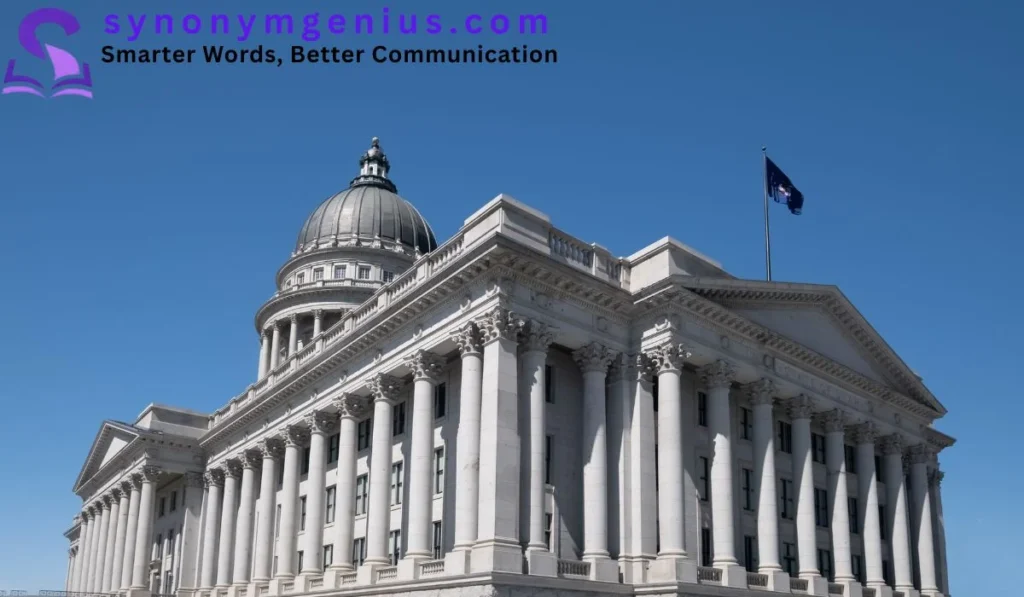
Responsible government (Noun) — US: /rɪˈspɑːn.sə.bəl ˈɡʌv.ɚn.mənt/ | UK: /rɪˈspɒn.sə.bəl ˈɡʌv.ən.mənt/
Meaning: A political concept where the executive branch is directly accountable to an elected parliament.
Examples:
- The history class studied how the colony won the legal right to a responsible government.
- Accountability is the most important element of a truly responsible government system.
Parliamentary system (Noun) — US: /ˌpɑːr.ləˈmen.t̬ɚ.i ˈsɪs.təm/ | UK: /ˌpɑː.lɪˈmen.tər.i ˈsɪs.təm/
Meaning: A democratic state setup where the executive power is held by a cabinet chosen from the legislature.
Examples:
- Canada utilizes a parliamentary system modeled after the historical British Westminster tradition.
- The newly formed political party won several key seats in the national parliamentary system.
Presidential system (Noun) — US: /ˌprez.əˈden.ʃəl ˈsɪs.təm/ | UK: /ˌprez.ɪˈden.ʃəl ˈsɪs.təm/
Meaning: A democratic framework where a president serves as both head of state and head of government independently.
Examples:
- The country voted to retain its traditional presidential system during the national referendum.
- Political commentators explained how bills become laws under a presidential system.
Representative regime (Noun) — US: /ˌrep.rɪˈzen.t̬ə.t̬ɪv reɪˈʒiːm/ | UK: /ˌrep.rɪˈzen.tə.tɪv reɪˈʒiːm/
Meaning: A formal political administration based strictly on the election of legislative representatives.
Examples:
- The political essay analyzed the internal structural flaws of the old representative regime.
- Historians observed the brief rise and tragic fall of the first representative regime.
Republican state (Noun) — US: /rɪˈpʌb.lɪ.kən steɪt/ | UK: /rɪˈpʌb.lɪ.kən steɪt/
Meaning: A sovereign territory organized as a republic where the public holds ultimate political power.
Examples:
- The international boundary lines of the new republican state were officially drawn last year.
- The local museum features historical documents from the founding of the republican state.
Popular republic (Noun) — US: /ˈpɑː.pjə.lɚ rɪˈpʌb.lɪk/ | UK: /ˈpɒp.jə.lər rɪˈpʌb.lɪk/
Meaning: A republic that claims its administrative authority originates directly from the working population.
Examples:
- The global public watched as the popular republic held its annual leadership assembly.
- The state media broadcast patriotic stories across the entire popular republic.
Electoral government (Noun) — US: /iˈlek.tɚ.əl ˈɡʌv.ɚn.mənt/ | UK: /iˈlek.tər.əl ˈɡʌv.ən.mənt/
Meaning: A public administration system that relies entirely on fair voting processes to cycle leaders.
Examples:
- The local citizens expressed deep faith in the integrity of their electoral government.
- Independent watchdogs monitored the voting booths to protect the electoral government.
Representative system (Noun) — US: /ˌrep.rɪˈzen.t̬ə.t̬ɪv ˈsɪs.təm/ | UK: /ˌrep.rɪˈzen.tə.tɪv ˈsɪs.təm/
Meaning: A general term for the political mechanism used to choose delegates to speak for a population.
Examples:
- The small island community developed a unique representative system to handle local fishing rules.
- Scholars debated how to fix the structural imbalances in the modern representative system.
Democratic system (Noun) — US: /ˌdem.əˈkræt̬.ɪk ˈsɪs.təm/ | UK: /ˌdem.əˈkræt.ɪk ˈsɪs.təm/
Meaning: Any comprehensive political organization that integrates democratic voting into its state management.
Examples:
- Educating young children about civic duties helps maintain a strong democratic system.
- The local town council is a vital micro-level component of our national democratic system.
Constitutional republic government (Noun) — US: /ˌkɑːn.stəˈtuː.ʃən.əl rɪˈpʌb.lɪk ˈɡʌv.ɚn.mənt/ | UK: /ˌkɒn.stɪˈtʃuː.ʃən.əl rɪˈpʌb.lɪk ˈɡʌv.ən.mənt/
Meaning: A precise political phrase describing a state ruled by law through elected citizen representatives.
Examples:
- The founders worked hard to establish a balanced constitutional republic government.
- Learning the core rules of a constitutional republic government is essential for legal students.
Elective republic (Noun) — US: /iˈlek.tɪv rɪˈpʌb.lɪk/ | UK: /iˈlek.tɪv rɪˈpʌb.lɪk/
Meaning: A sovereign republic that places a massive systemic focus on choosing its president via public ballots.
Examples:
- The historical essay chronicled the dramatic rise of the first true elective republic.
- Citizens in an elective republic carry a massive civic duty to vote responsibly.
Free republic (Noun) — US: /friː rɪˈpʌb.lɪk/ | UK: /friː rɪˈpʌb.lɪk/
Meaning: A republic characterized by the absolute freedom of its citizenry and lack of authoritarian control.
Examples:
- The classic monument stands tall as a universal symbol for a free republic.
- People migrated from around the globe to build new lives within the free republic.
Representative framework (Noun) — US: /ˌrep.rɪˈzen.t̬ə.t̬ɪv ˈfreɪm.wɝːk/ | UK: /ˌrep.rɪˈzen.tə.tɪv ˈfreɪm.wɜːk/
Meaning: The foundational legal structure that allows elected delegates to run public institutions.
Examples:
- The legal team drafted a comprehensive representative framework for the new territory.
- The regional conference analyzed the overall success of the local representative framework.
Legal democracy (Noun) — US: /ˈliː.ɡəl dɪˈmɑː.krə.si/ | UK: /ˈliː.ɡəl dɪˈmɒk.rə.si/
Meaning: A democratic system that operates with an intense focus on judicial processes and the rule of law.
Examples:
- A legal democracy ensures that even the most powerful political leaders face trial for crimes.
- The local court system serves as the ultimate shield for our legal democracy.
Civil democracy (Noun) — US: /ˈsɪv.əl dɪˈmɑː.krə.si/ | UK: /ˈsɪv.əl dɪˈmɒk.rə.si/
Meaning: A democracy that places public citizen groups, community clubs, and individual civic duties at its center.
Examples:
- Volunteering at the community library helps strengthen the local civil democracy.
- The speaker highlighted the massive importance of civic pride in a civil democracy.
Egalitarian republic (Noun) — US: /iˌɡæl.əˈter.i.ən rɪˈpʌb.lɪk/ | UK: /ɪˌɡæl.ɪˈteə.ri.ən rɪˈpʌb.lɪk/
Meaning: A republic structured specifically to promote social, legal, and economic equality among its citizens.
- The new social laws moved the country closer to becoming a true egalitarian republic.
- Philosophers argued that an egalitarian republic must provide equal educational tools to all children.
Shared democracy (Noun) — US: /ʃerd dɪˈmɑː.krə.si/ | UK: /ʃeəd dɪˈmɒk.rə.si/
Meaning: A collaborative representative system where power is deliberately split across diverse regional communities.
Examples:
- The multi-ethnic nation adopted a shared democracy to ensure every cultural group had a voice.
- The local leaders met at the summit to refine the mechanics of their shared democracy.
Synonyms for “Representative Democracy” by Tone
Positive
These words convey an uplifting sense of individual freedom, legal protection, human rights, and political justice.
- Constitutional republic, Liberal democracy, Constitutional democracy, Free state, Madisonian democracy, Jeffersonian democracy, Free democracy, Free republic, Responsible government
Neutral
These options describe operational political frameworks, state structures, or administrative systems without bias.
- Indirect democracy, Republic, Democratic republic, Parliamentary democracy, Presidential democracy, Representative government, Electoral democracy, Popular government, Pluralist democracy, Republican government, Elective government, Multi-party democracy, Delegated democracy, Polyarchy, Representative state, Pluralistic government, Constitutional governance, Parliamentary system, Presidential system, Republican state, Electoral government, Representative system, Democratic system, Constitutional republic government, Elective republic, Representative framework, Legal democracy, Civil democracy, Shared democracy
Negative
These terms carry a critical weight, often used by analysts to describe systems controlled by elites or rigid parties.
- Elite democracy, Party democracy, Majoritarian democracy, Representative regime, Popular republic
Choosing the correct political tone prevents serious missteps in political communication. Using a term like representative regime instead of constitutional republic can accidentally make a free nation sound like a harsh, undemocratic dictatorship to native readers.
“Representative Democracy” vs Close Alternatives
| Word | Core Focus | Best Context | Example |
| Representative democracy | Citizens vote for leaders who create national policies | Political science essays and general civics lessons | Canada operates as a classic representative democracy. |
| Direct democracy | Citizens vote on every single individual law themselves | Ancient Athens history or modern Swiss local referendums | Pure direct democracy is hard to scale in big nations. |
| Polyarchy | A modern representative state with many competing groups | Advanced academic sociology papers and textbooks | The professor classified the political structure as a polyarchy. |
Other Words for Democracy and Direct Democracy
The word democracy refers broadly to a system in which political authority comes from the people. Depending on the context, writers may use related terms to describe popular rule, citizen participation, elected government, or a political system based on public voting. However, these terms are not always exact synonyms, so the context matters.
Synonyms and Similar Words for Democracy
Some commonly related words and phrases for democracy include:
- Popular government — a government that derives its authority from the people.
- Representative government — a system in which citizens elect people to represent them in government.
- Republic — a state in which political authority is exercised through elected representatives or other public institutions.
- Democratic government — a government organized around democratic participation and public choice.
- Popular rule — a broad expression emphasizing political power held by the people.
- Elective government — a system in which public officials gain their positions through elections.
- Electoral government — a government structure that relies on elections to select or change leaders.
- People’s government — a general expression emphasizing government by or for the people.
- Self-government — the ability of a population to govern itself rather than being controlled by an outside authority.
- Constitutional democracy — a democratic system in which government power operates within constitutional limits.
These expressions can work as similar words for democracy, but they do not all have exactly the same meaning. For example, republic describes a particular form of government, while popular rule focuses more directly on the idea that political authority comes from the people.
Another Word for Democracy
If you need another word for democracy, the best choice depends on what you want to emphasize. Popular government highlights rule by the people, while representative government emphasizes elected representatives. Self-government focuses on a population governing itself, and elective government emphasizes the role of elections.
For general writing, popular government, representative government, and democratic government can be useful related expressions. For academic or political writing, it is better to select the term that matches the specific political structure being discussed.
Direct Democracy Synonyms and Similar Terms
Direct democracy describes a system in which citizens participate directly in making political decisions rather than relying entirely on elected representatives. The article’s earlier comparison shows that this differs from representative democracy because citizens themselves vote on particular laws or decisions.
Related expressions for direct democracy include:
- Direct rule — a broad expression for citizens participating directly in political decisions.
- Popular participation — emphasizes direct involvement by members of the public.
- Popular decision-making — focuses on citizens making political decisions themselves.
- Citizen decision-making — highlights the direct role of citizens in determining public matters.
- Direct popular rule — emphasizes political authority exercised directly by the population.
- Participatory democracy — a broader term for democratic systems that encourage active citizen involvement in political processes.
- Direct popular government — describes government in which people have a direct role in political decisions.
These terms are related to direct democracy, but they should not automatically be treated as perfect interchangeable synonyms. Some describe a broader principle of participation rather than a specific constitutional system.
Direct Democracy vs. Representative Democracy
The difference between these two terms is important when choosing a synonym. In direct democracy, citizens take part directly in decisions such as voting on particular laws or proposals. In representative democracy, citizens elect officials who make governmental decisions on their behalf.
For example, a statement about citizens voting directly on a public proposal points toward direct democracy. A statement about voters electing legislators to create laws points toward representative democracy.
Democracy: Similar Words by Context
The most appropriate related word can change according to the context:
- For general writing:
Use democratic government, popular government, or self-government when discussing democracy broadly. - For elected leadership:
Use representative government or elective government when the role of elected officials is important. - For political structure:
Use republic or constitutional democracy when discussing the formal organization and legal framework of government. - For direct citizen participation:
Use direct democracy, popular participation, or direct popular rule when citizens themselves take part in political decisions. - Understanding these distinctions helps you avoid using a related political term as though it were an exact synonym. The best alternative is the one that preserves the specific meaning of the original sentence.
How “Representative Democracy” Changes by Context
Daily Conversation
In casual everyday talks, native speakers rarely use long phrases like constitutional republic government. Instead, they choose direct, simple terms like democracy, republic, or free country to describe their nation’s open political system.
Writing or Blogging
Online bloggers and social essayists love using descriptive, engaging terms like free democracy, multi-party democracy, or popular government. These vocabulary choices help explain structural concepts to general readers without putting them to sleep.
Professional or Academic Tone
Political science research papers, constitutional legal briefs, and university journals require precise, cold terms like polyarchy, Madisonian democracy, indirect democracy, or constitutional governance. These options ensure analytical clarity.
Creative or Informal Use
Dystopian novels, historical plays, and creative story scripts often incorporate intense terms like representative regime, free republic, or popular republic. These choices help build dramatic tension and set up struggles against state power.
Common Mistakes Learners Make
A very common mistake language learners make is using direct democracy and representative democracy as if they mean the same thing. In a direct system, every citizen votes on every law, while in a representative system, they elect politicians to do the voting for them. Mixing these up can completely ruin the factual accuracy of a history essay or political blog post.
Another frequent error is assuming that every country with the words popular republic in its official name is a free, fair representative democracy. Historically, many authoritarian states have used that phrase to sound democratic when they actually allow no free voting at all. Paying close attention to historical context prevents these misleading vocabulary errors.

Real-Life Mini Scenarios
Workplace
A corporate union adopts a representative framework, electing one regional delegate from each office floor to negotiate fair salary adjustments with company executives.
Social Situations
Neighbors at a city block meeting decide to form a small committee rather than having sixty people argue over the new park design, practicing a simple indirect democracy.
Media / Pop Culture
Political news channels broadcast round-the-clock live updates analyzing how modern social media platforms influence the foundational structures of Western democracy.
Writing or Storytelling
A science fiction novelist writes a thrilling chapter describing the complex political breakdown of an interstellar free republic spanning three distinct planets.
Practice Exercise
- Which term describes a democracy where citizens vote on every individual law themselves rather than electing officials?
A) Representative regime
B) Direct democracy
C) Polyarchy
D) Elite democracy - If a state government is strictly guided and limited by a foundational text of laws, it is a:
A) Popular republic
B) Party democracy
C) Constitutional democracy
D) Majoritarian democracy - Which term carries a highly academic connotation used by sociologists to describe rule by multiple groups?
A) Free state
B) Republic
C) Polyarchy
D) Truce - Complete the sentence: “The newly independent nation established a _______ to separate presidential powers from the courts.”
A) Representative regime
B) Constitutional republic government
C) Intermission
D) Sham - Which word describes a democratic system that places an intense focus on protecting individual human rights?
A) Elite democracy
B) Majoritarian democracy
C) Liberal democracy
D) Popular republic - When the executive cabinet is directly accountable to an elected parliament, it is a:
A) Representative regime
B) Responsible government
C) Polyarchy
D) Free state - Indirect democracy means that eligible voting citizens:
A) Elect trusted officials to vote on national laws for them
B) Have absolutely no voice in the government administration
C) Vote on every single minor road repair project directly
D) Are ruled by a single monarch who inherited the throne - Which phrase is often used specifically for democratic systems in North America and Western Europe?
A) Popular republic
B) Western democracy
C) Elite democracy
D) Representative regime - A foundational political philosophy that balances state power with checks and balances is:
A) Majoritarian democracy
B) Madisonian democracy
C) Party democracy
D) Direct democracy - If a democratic system is criticized because only wealthy people hold real power, it is called an:
A) Liberal democracy
B) Elite democracy
C) Constitutional republic
D) Free state
Reflection Task
Write two short, original sentences about your personal views on civic duties or national elections. In the first sentence, use a formal synonym like constitutional republic to describe a government structure. In the second sentence, use an accessible synonym like free country to describe living in a democratic society.
Answer Key
1: B | 2: C | 3: C | 4: B | 5: C | 6: B | 7: A | 8: B | 9: B | 10: B
Conclusion
Expanding your English vocabulary by mastering these specific word choices allows you to articulate complex ideas with incredible precision. When you swap out generic terms for precise variations, your essays, business emails, and daily conversations instantly sound more professional and engaging.
Every single synonym carries its own unique emotional weight, specific history, and proper grammatical context. Taking the time to understand these subtle differences keeps your writing fresh, avoids boring repetition, and ensures your message lands perfectly every time.
Try your absolute best to practice incorporating a few of these fresh terms into your upcoming creative projects, daily journals, or work emails this week. With just a little bit of consistent, conscious effort, you will quickly notice your natural communication confidence soaring to brand new heights.

Samia Noor is the founder and lead writer at SynonymGenius.com, where she creates accurate, reader-focused English language content that helps people communicate with clarity and confidence. She specializes in synonyms, antonyms, word meanings, idioms, and practical vocabulary guides that make complex language concepts simple and easy to understand. Every article is thoroughly researched, carefully fact-checked, and written in clear, accessible language using reliable sources and real-world examples. Her mission is to provide trustworthy, high-quality content that supports students, writers, educators, professionals, and English learners at every stage of their language journey.
Her editorial approach emphasizes accuracy, transparency, and genuine value for readers while following modern E-E-A-T and content quality standards. She regularly reviews and updates published content to ensure it remains current, reliable, and easy to understand. Through SynonymGenius.com, Samia Noor is committed to publishing dependable language resources that help readers expand their vocabulary, strengthen their writing skills, improve communication, and build confidence in academic, professional, and everyday English.